This post is also available in Russian 🐻
Frankly speaking, this post is even more redundant than usual. I could have just duplicated the last one, replaced every ‘Porto’ mention, amplified my subjective judgments, and that would have made for a good enough write-up on Lisbon.
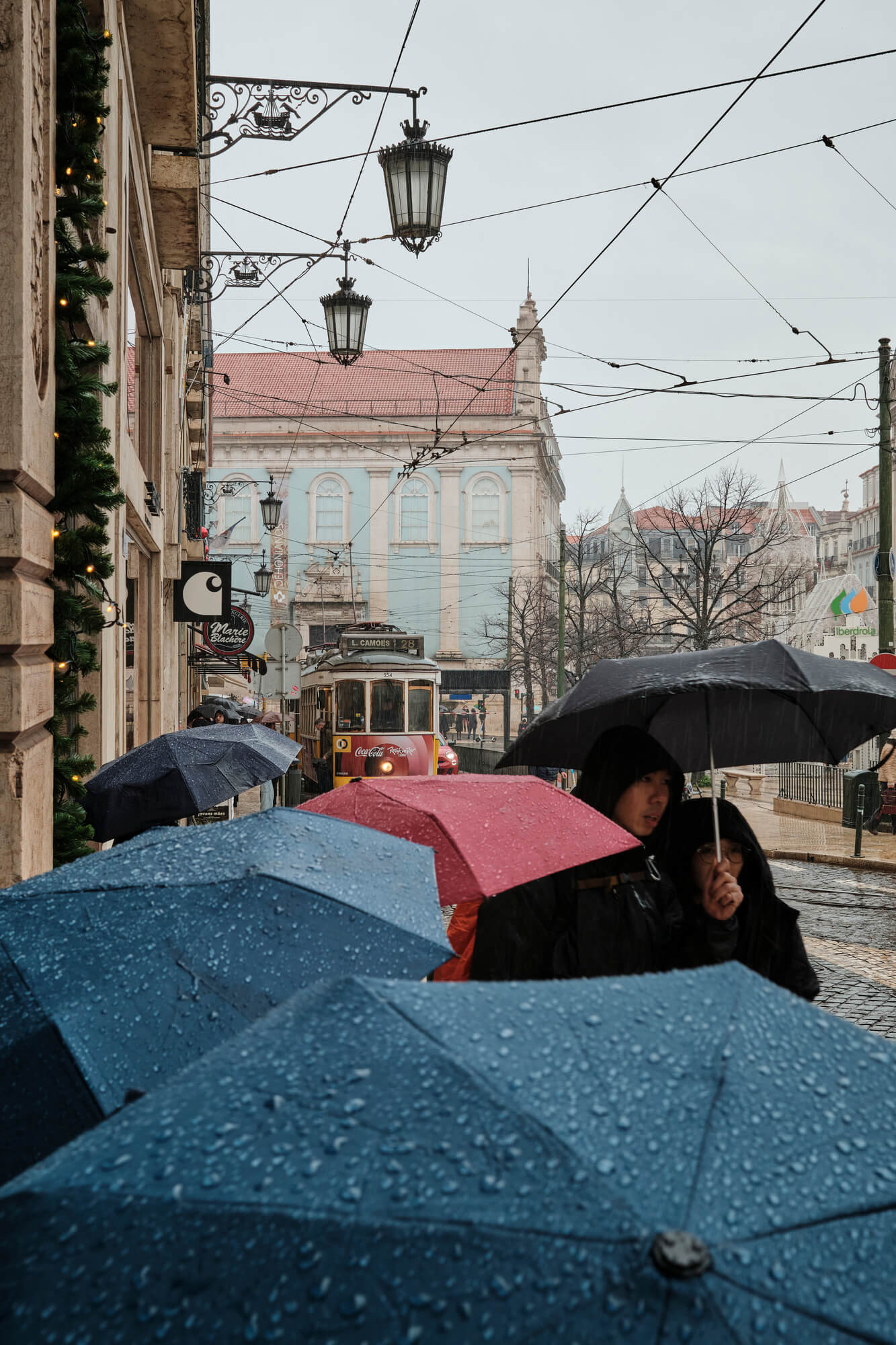
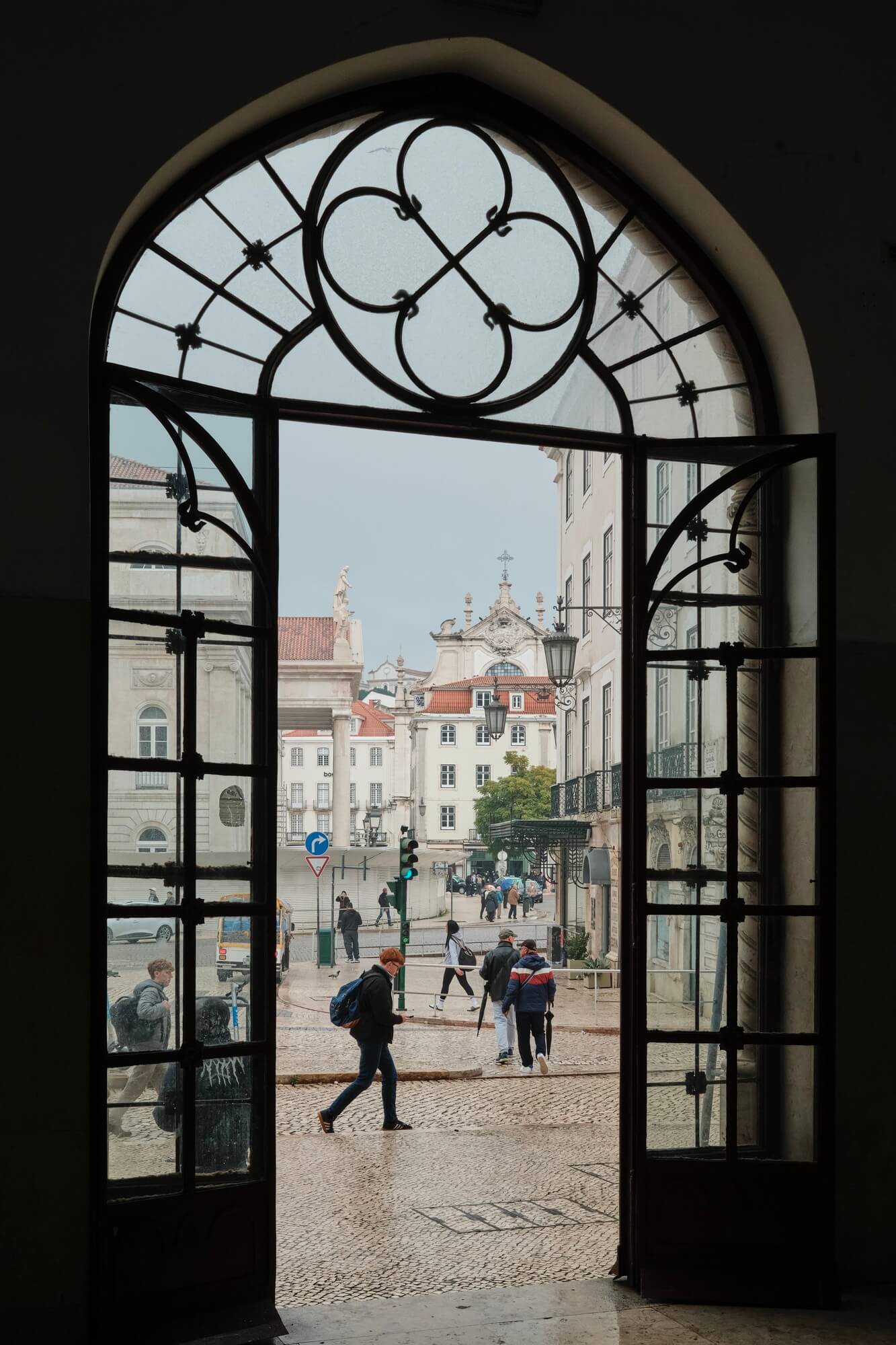
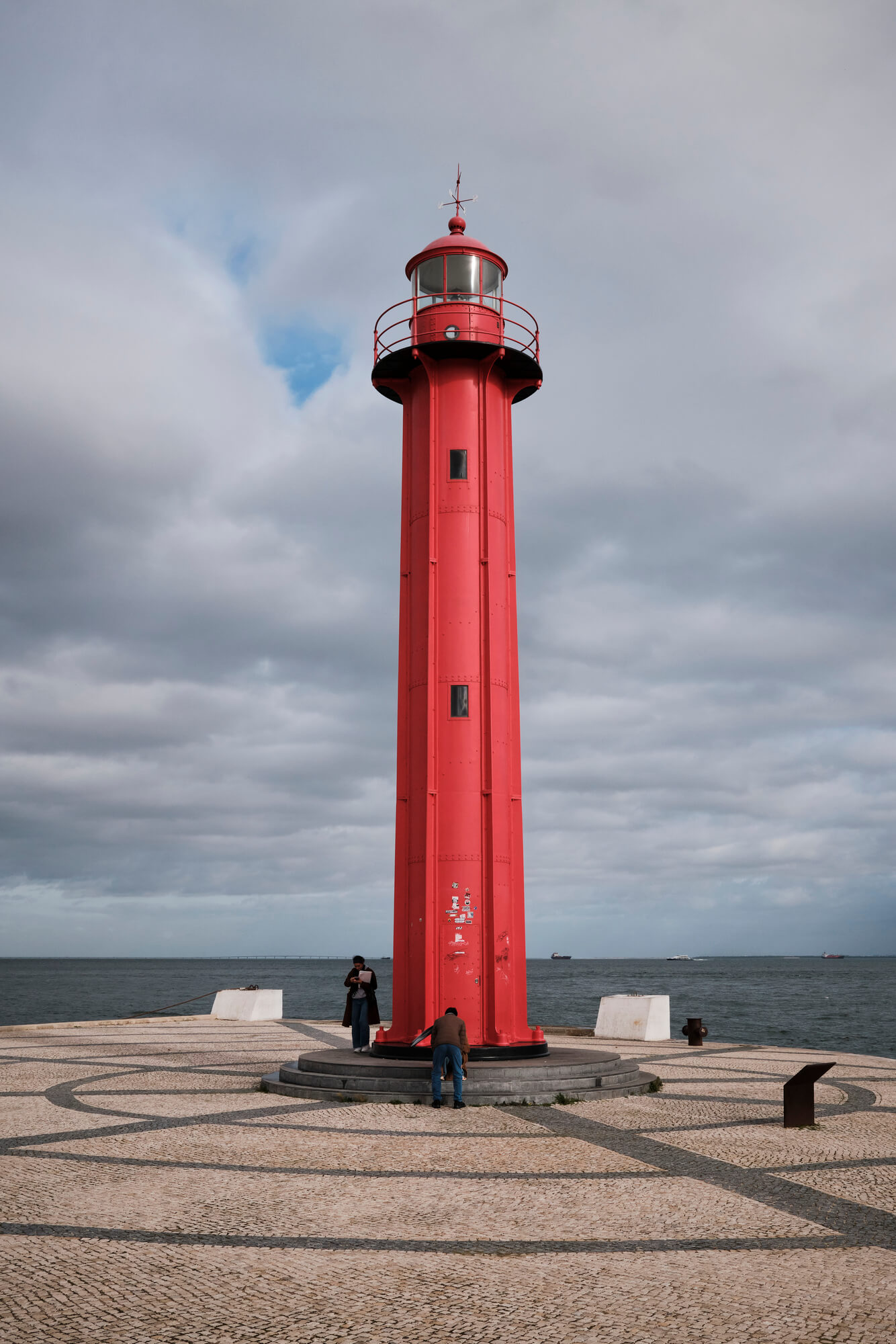
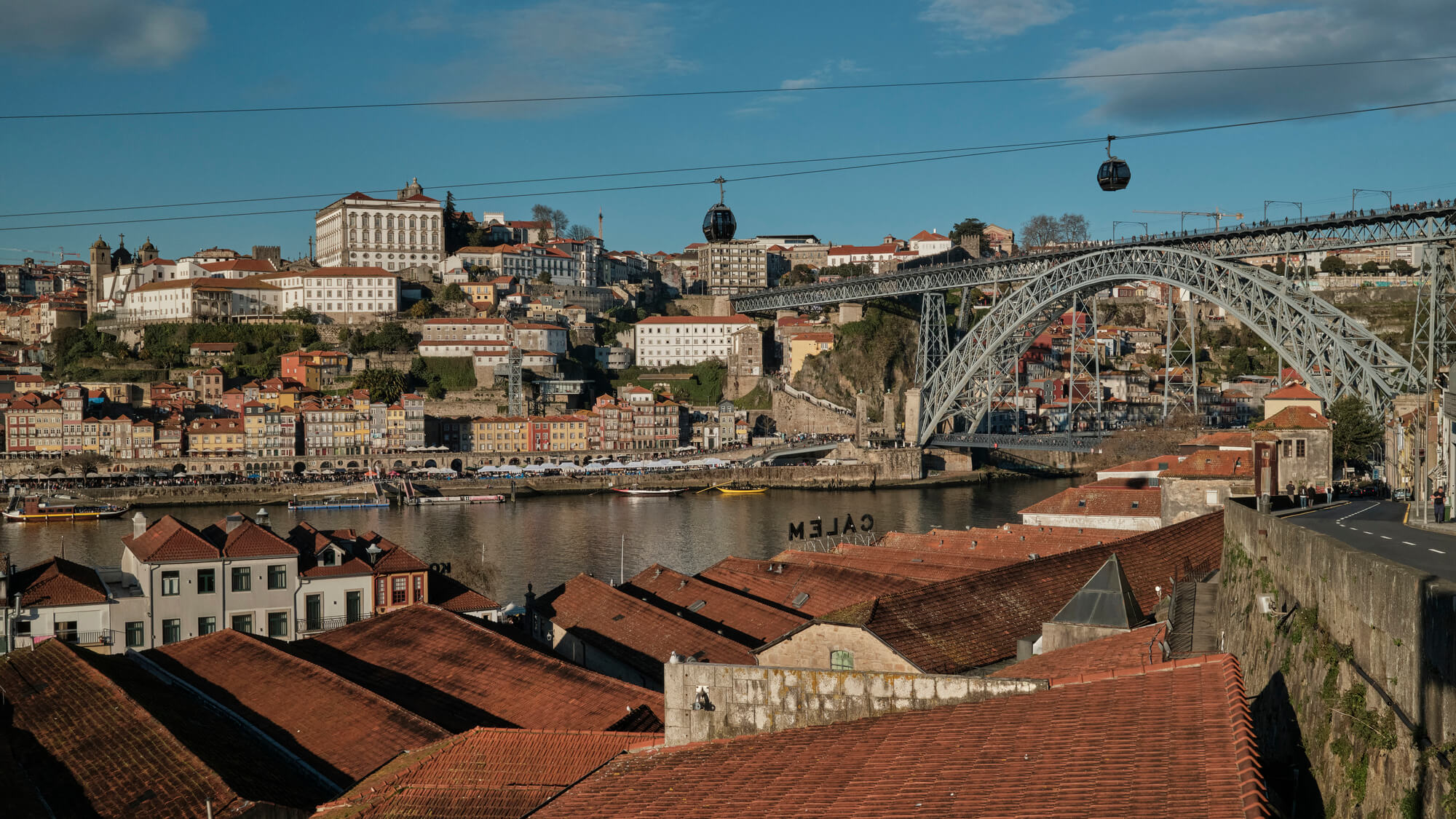
Porto and Lisbon share lots of traits and quirks, and relate to one another just like any other second / former / cultural capital, that claims superior authenticity, to an actual / administrative / economic center, entertaining disdain and ignorance.
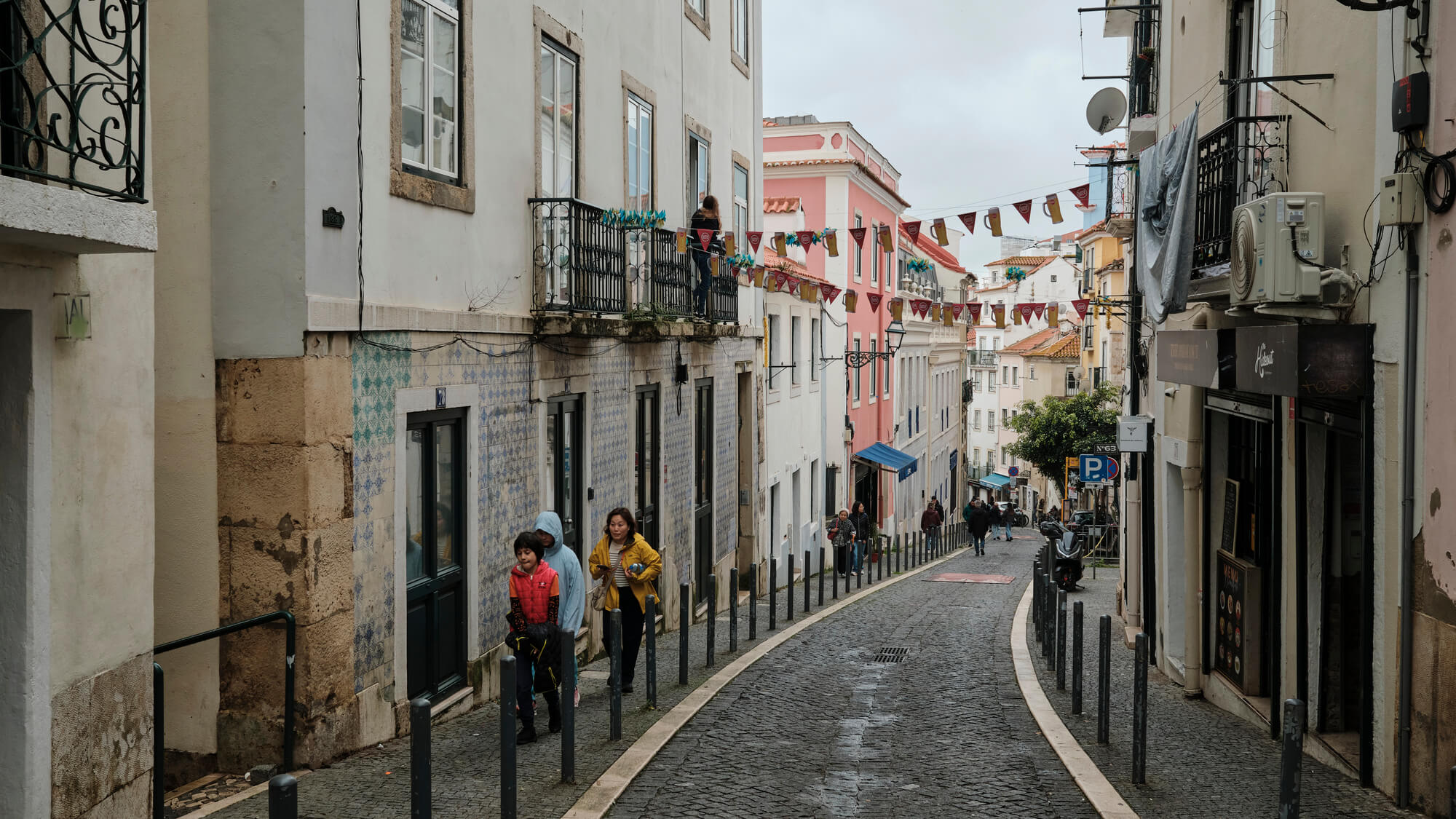
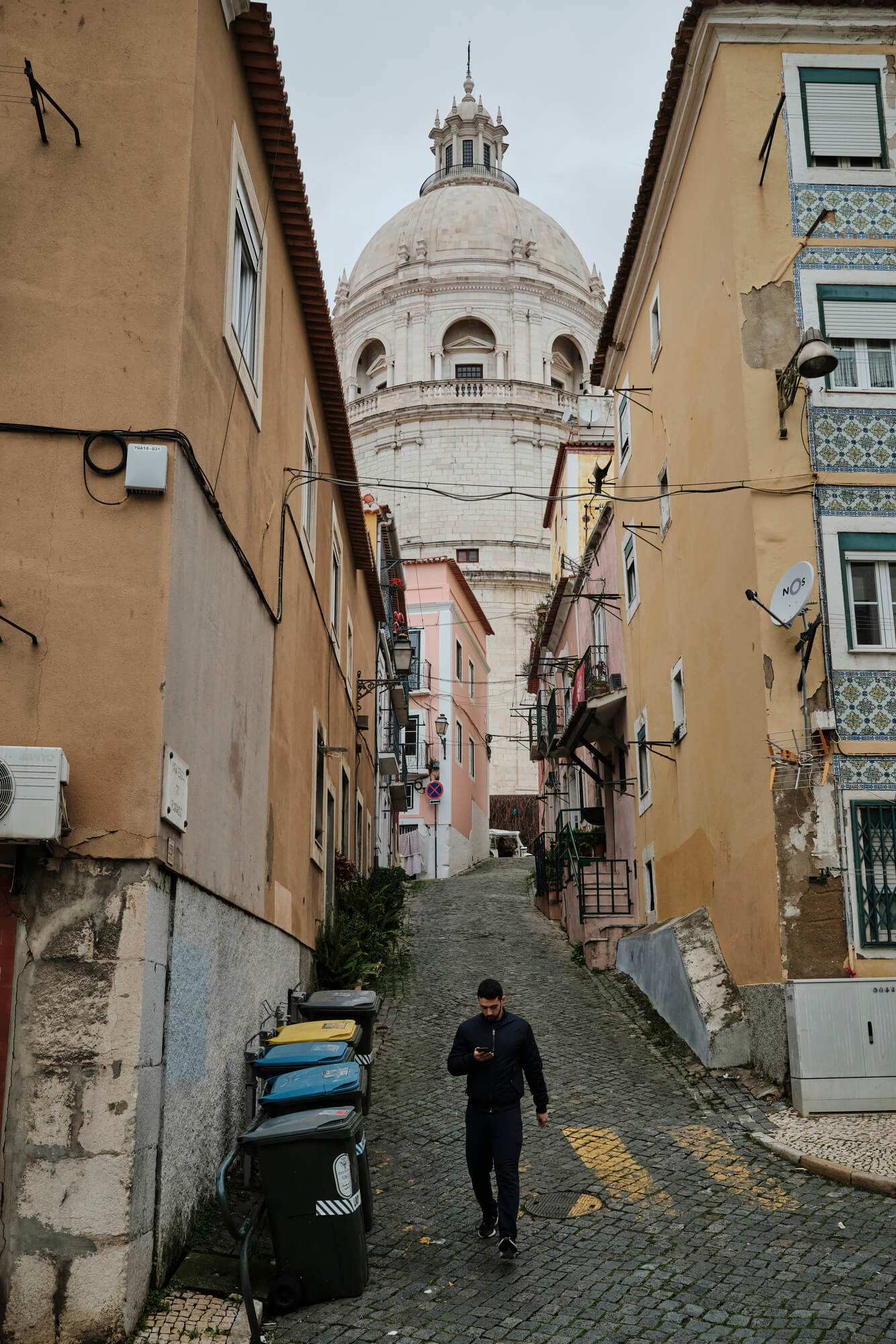
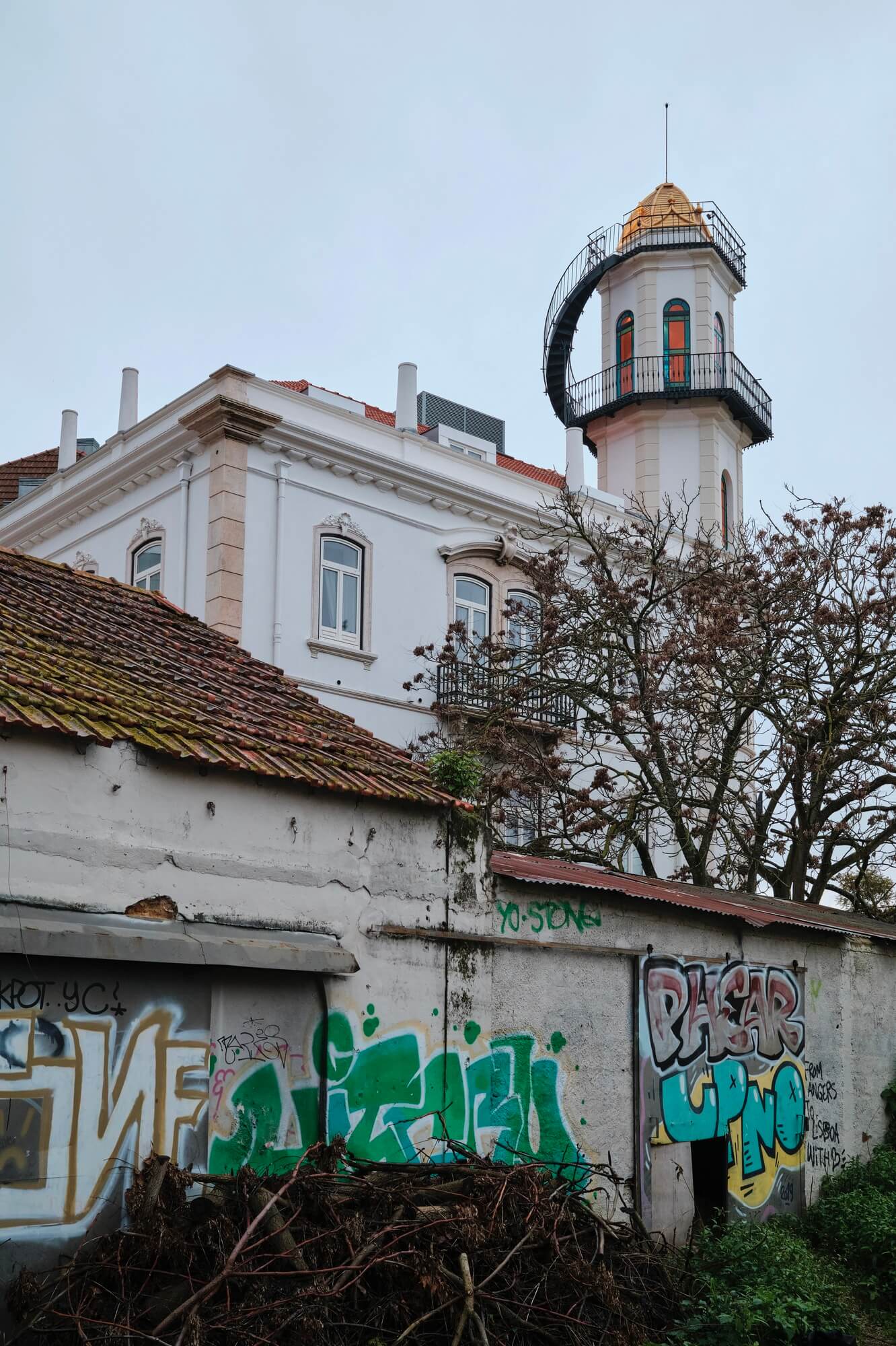
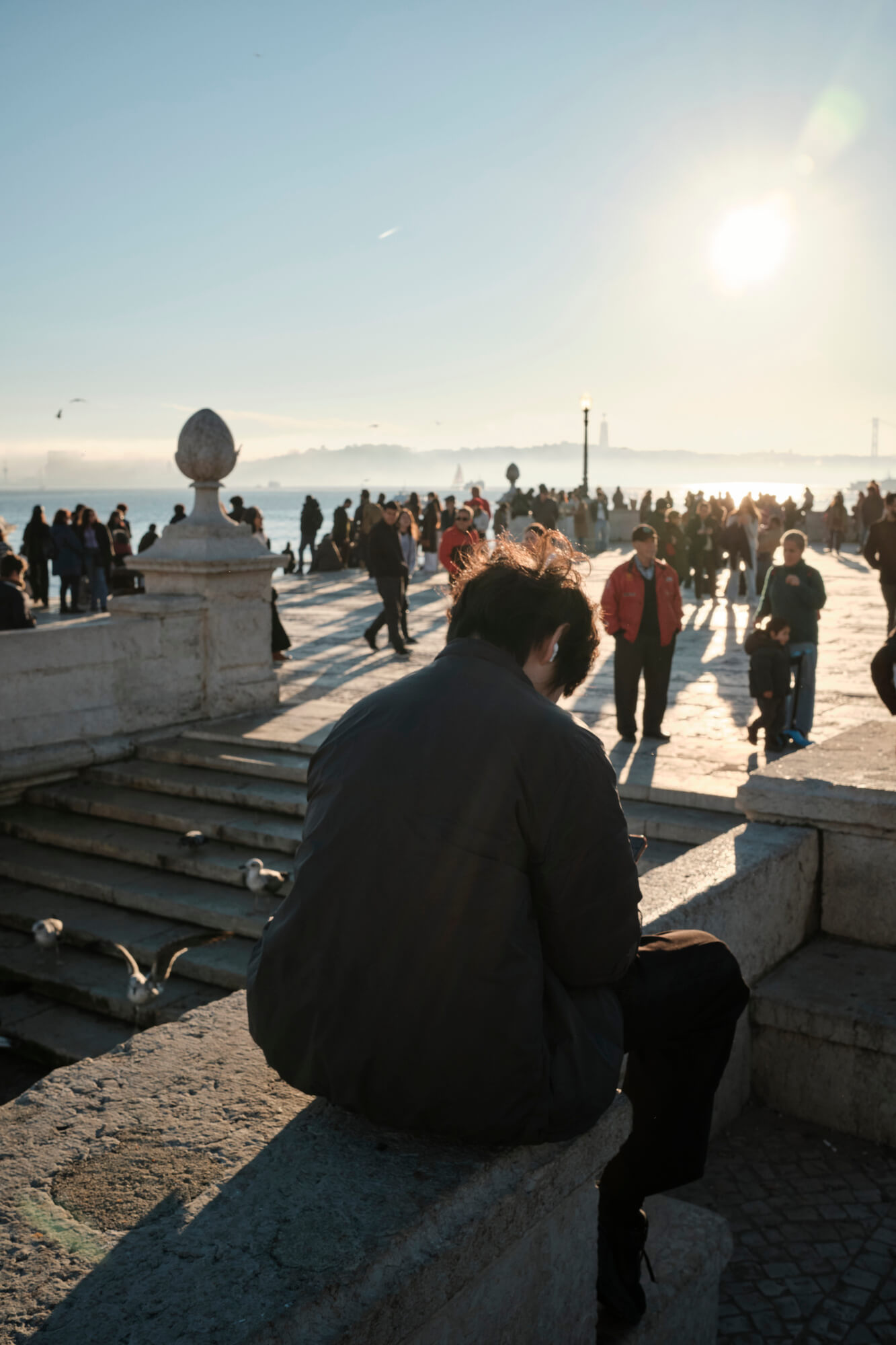
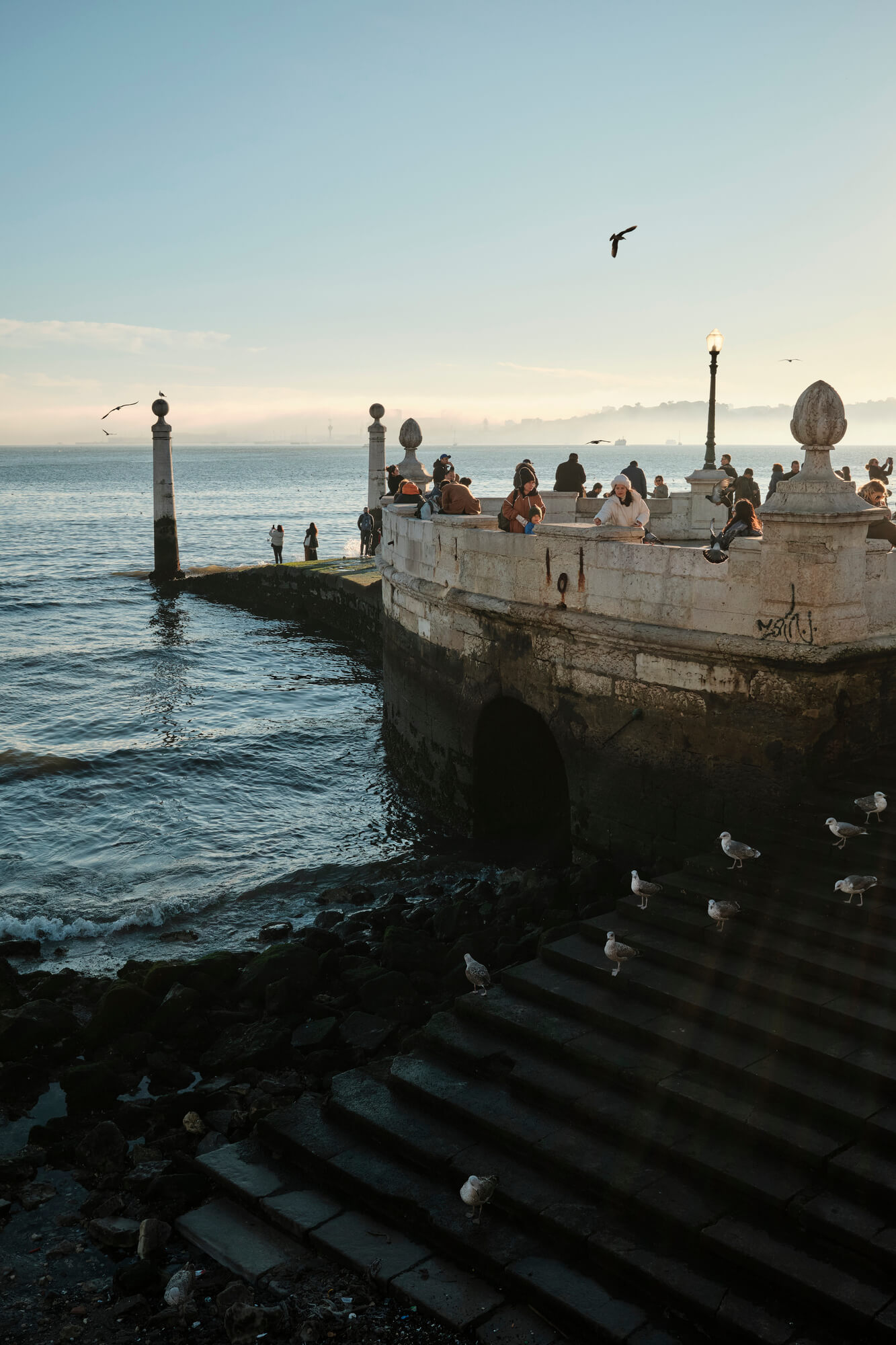
That said, Lisbon is, of course, way bigger, louder, more intense in every sense, which quickly turns from a compliment to a complaint as soon as you notice all the issues that are similar, but more apparent in qualitative and quantitative terms.
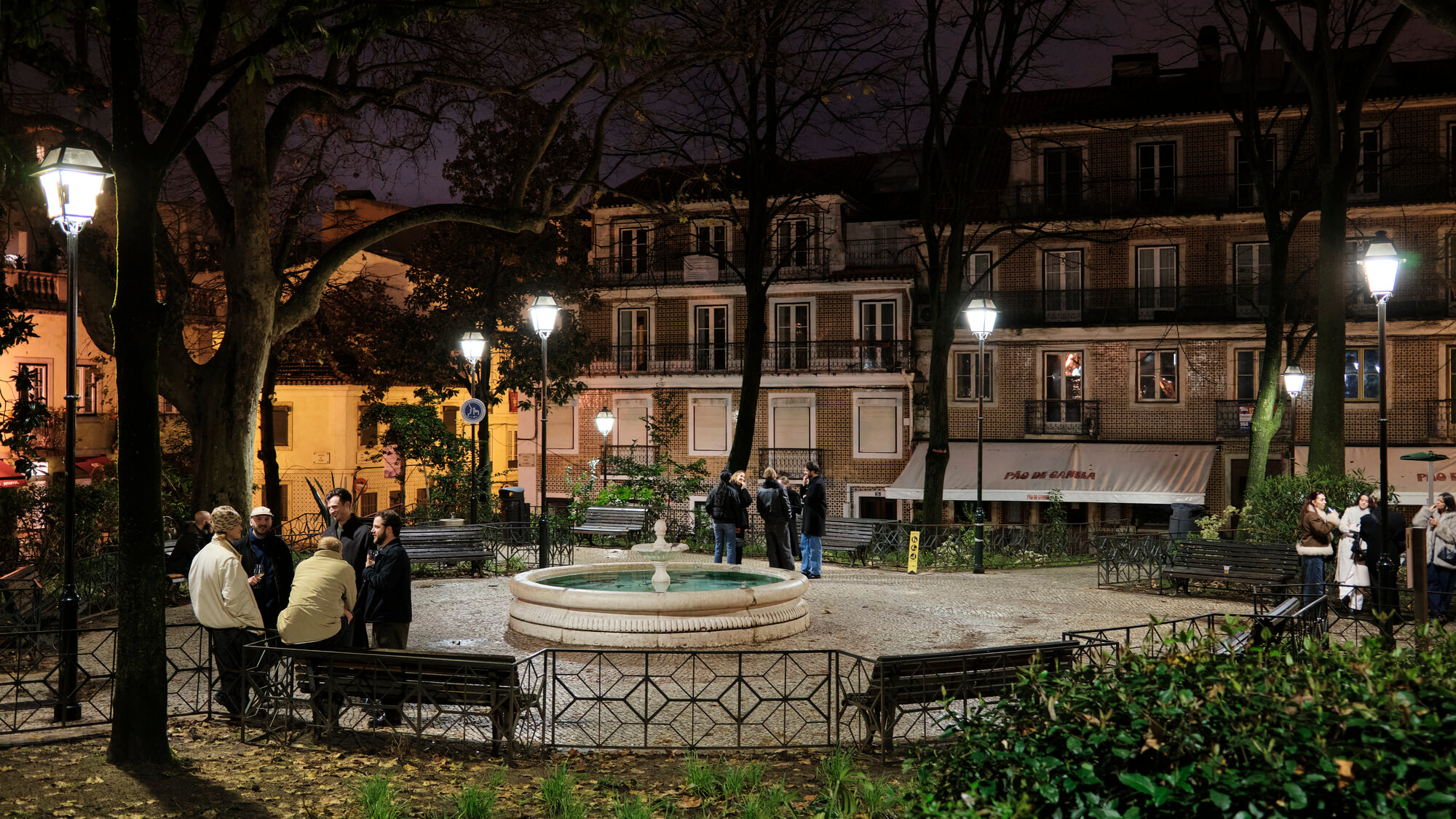
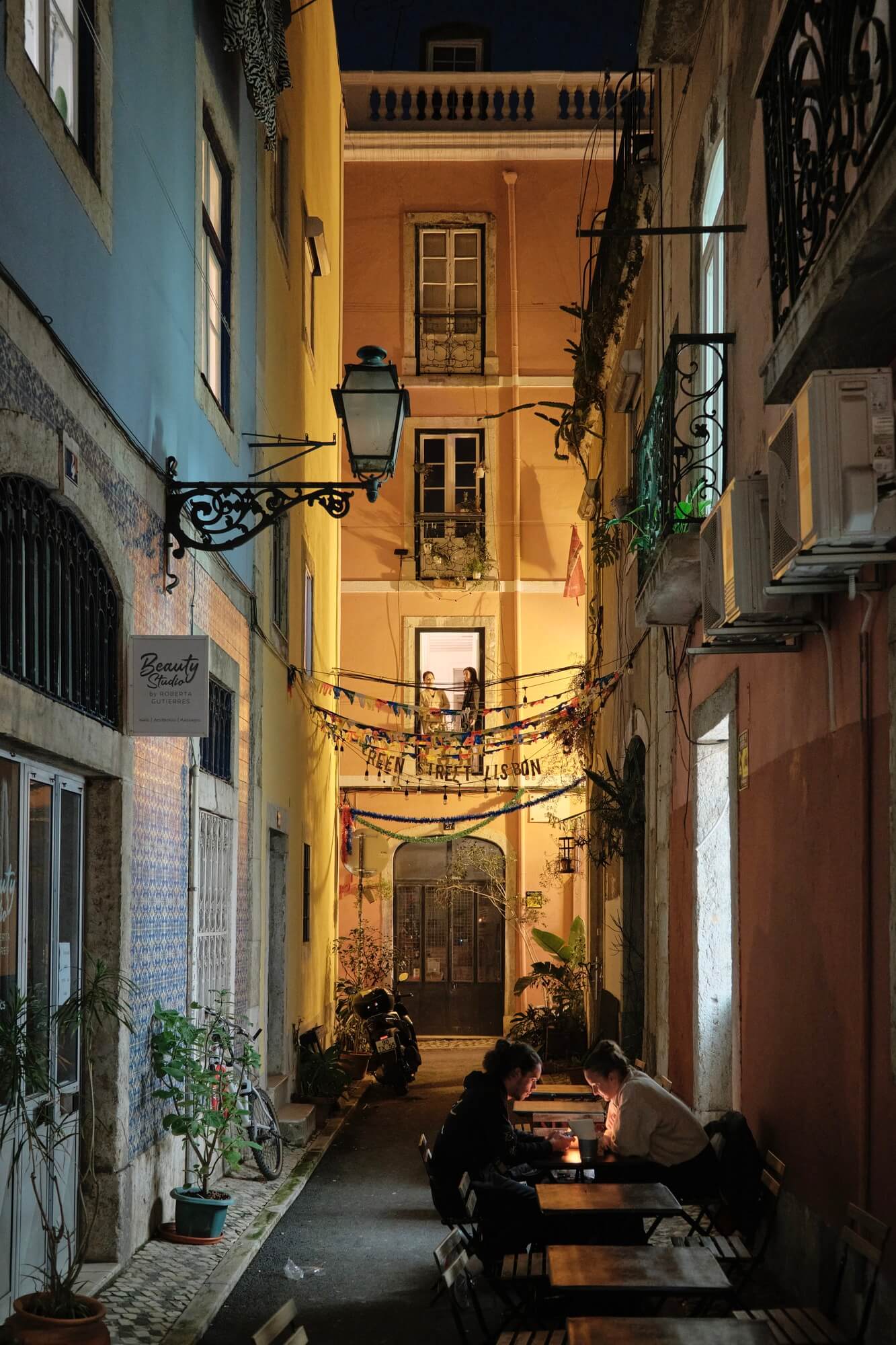
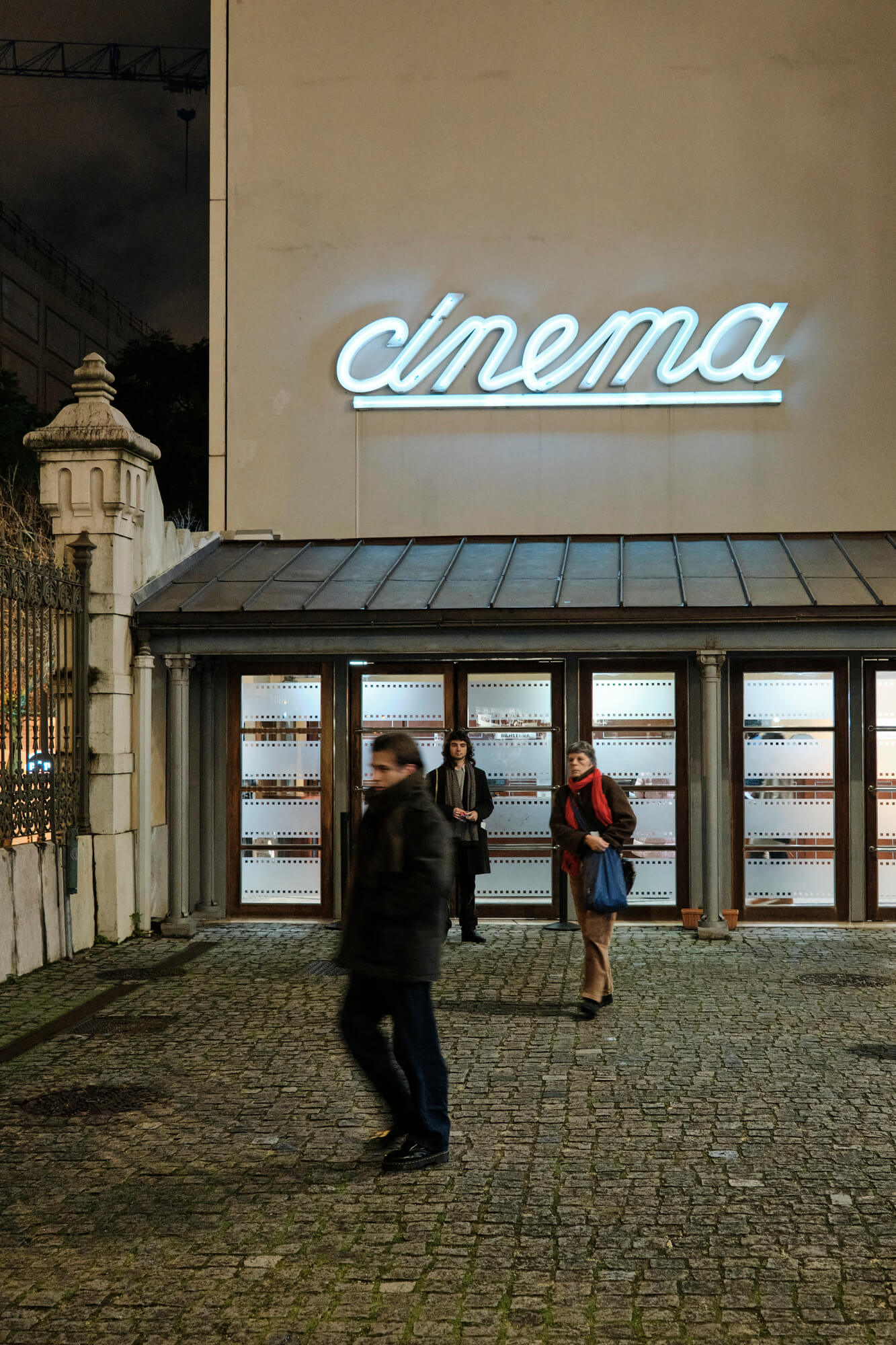
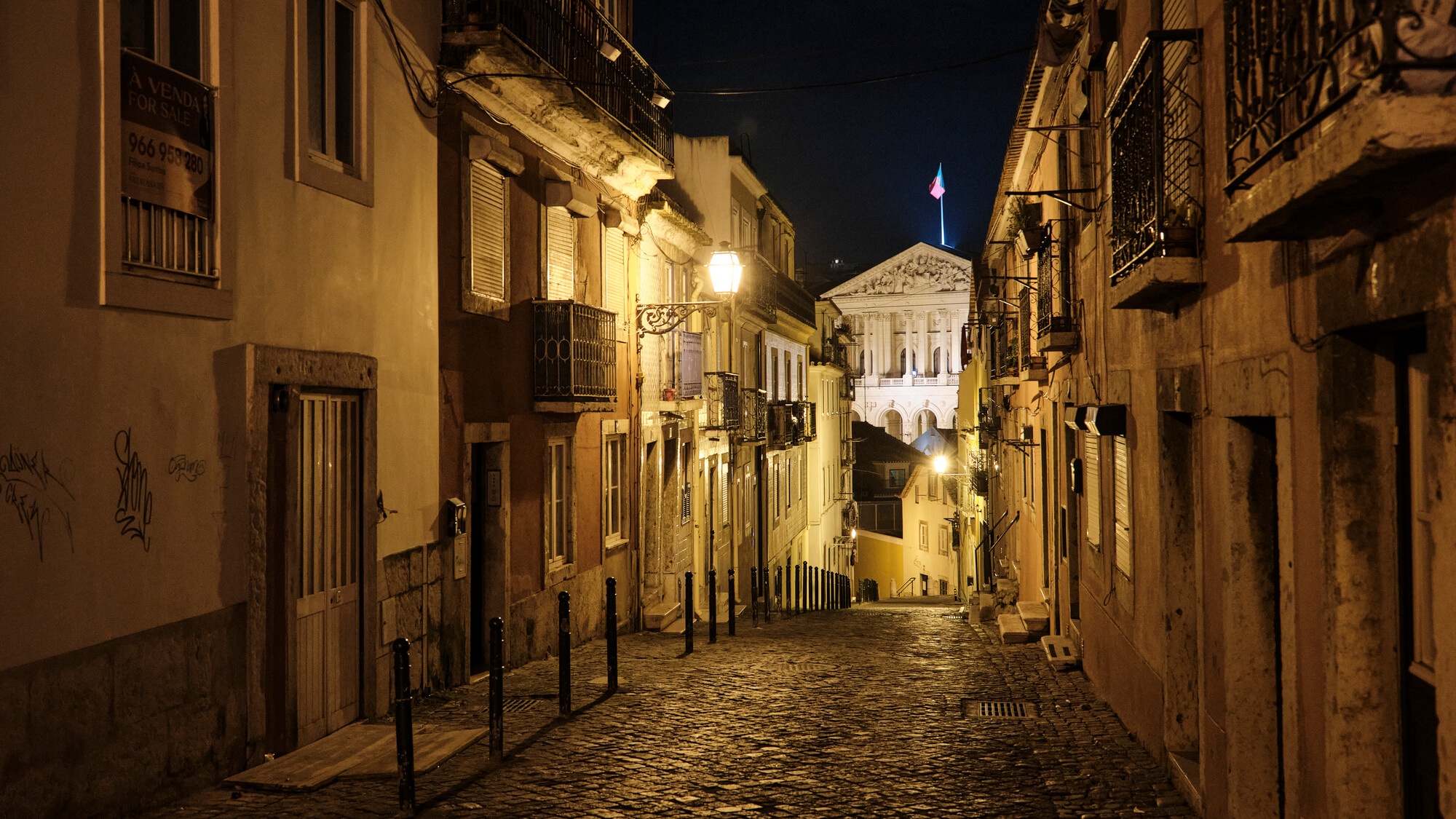
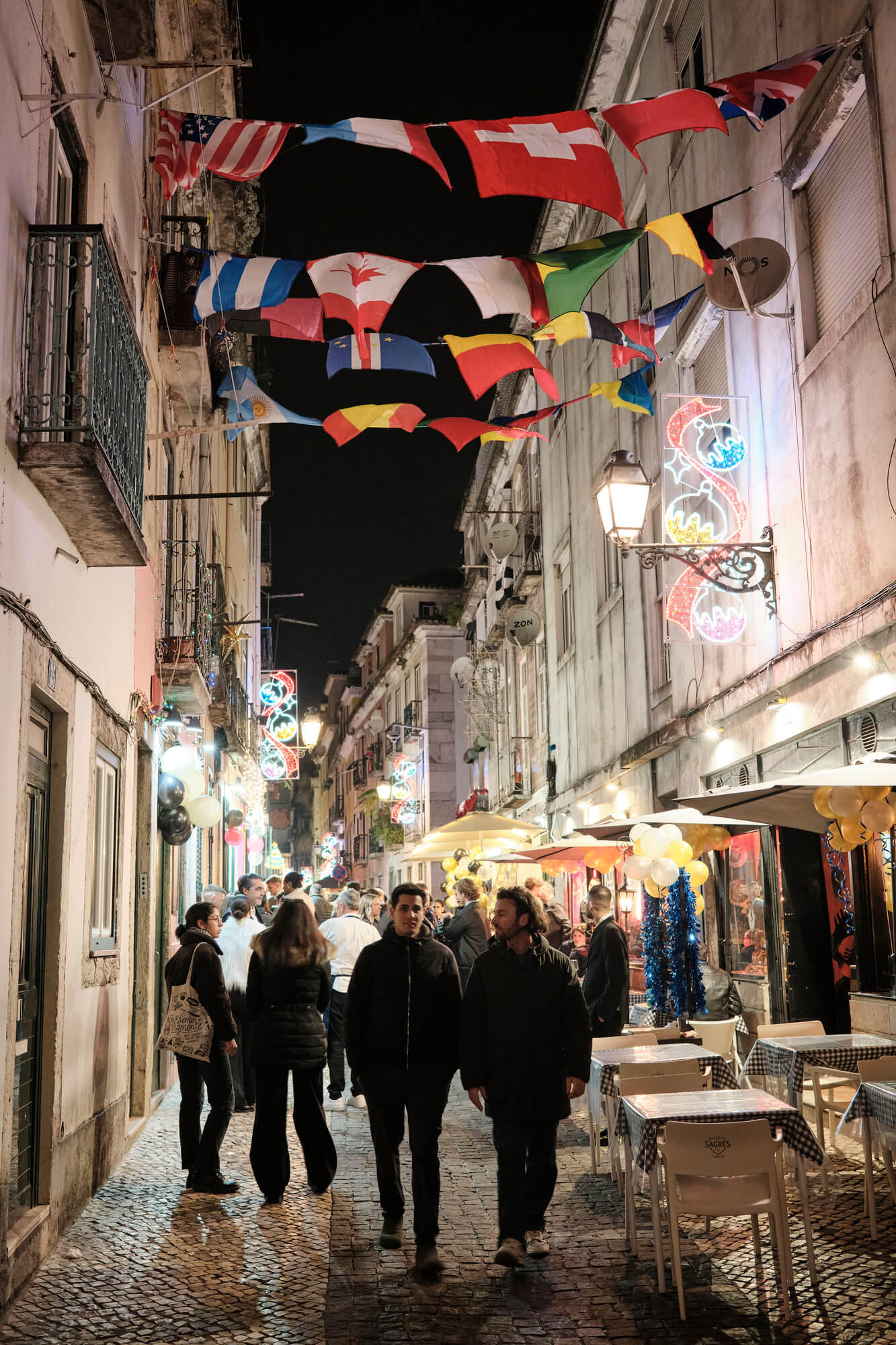

It works with most anything: multiply Porto’s population by two, double the area, make the river three times wider, and you’ll have Lisbon. But alongside that you’re getting more tourist crowds, annoying drug pushers and infrastructural fuck-ups.
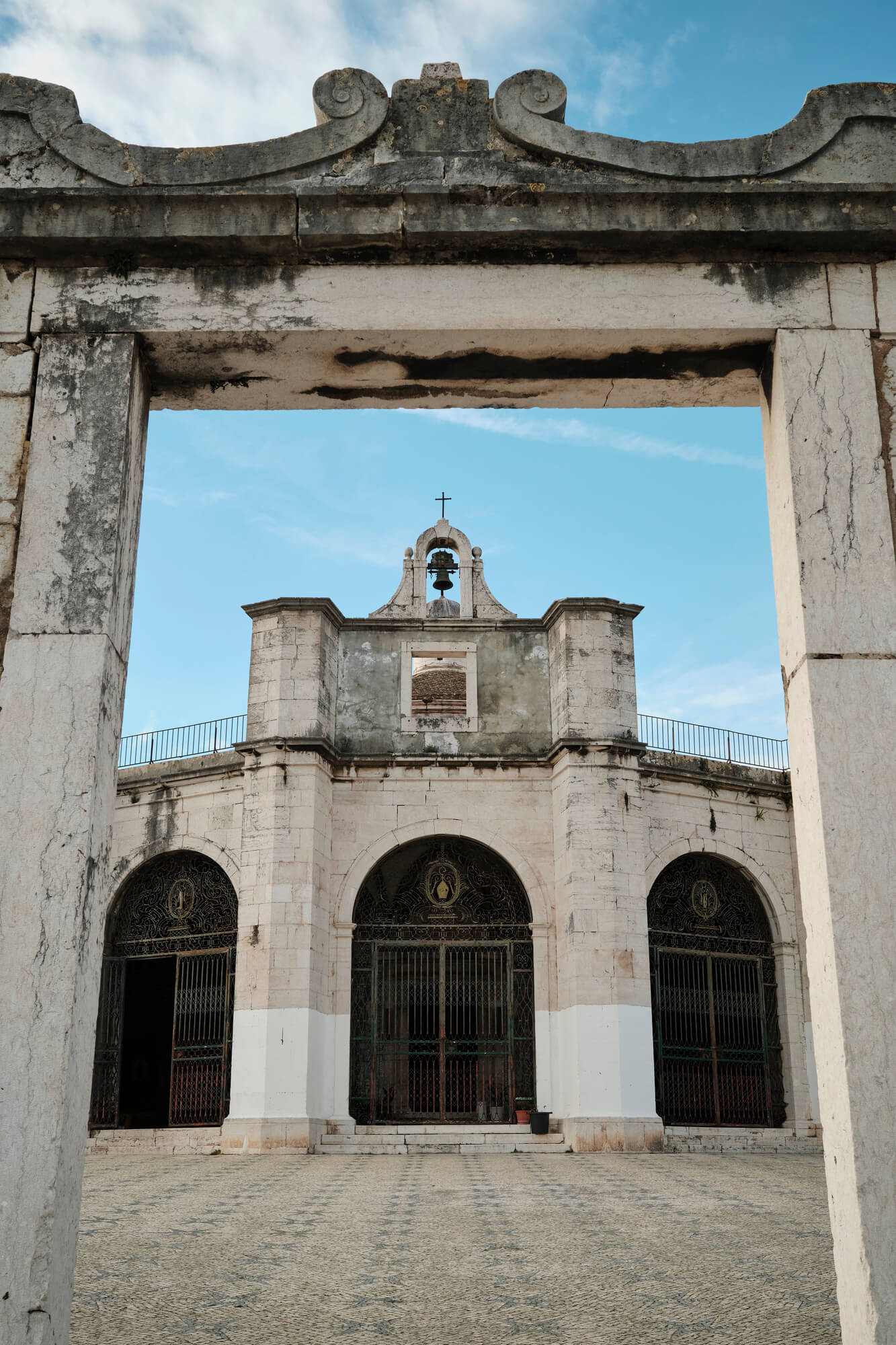
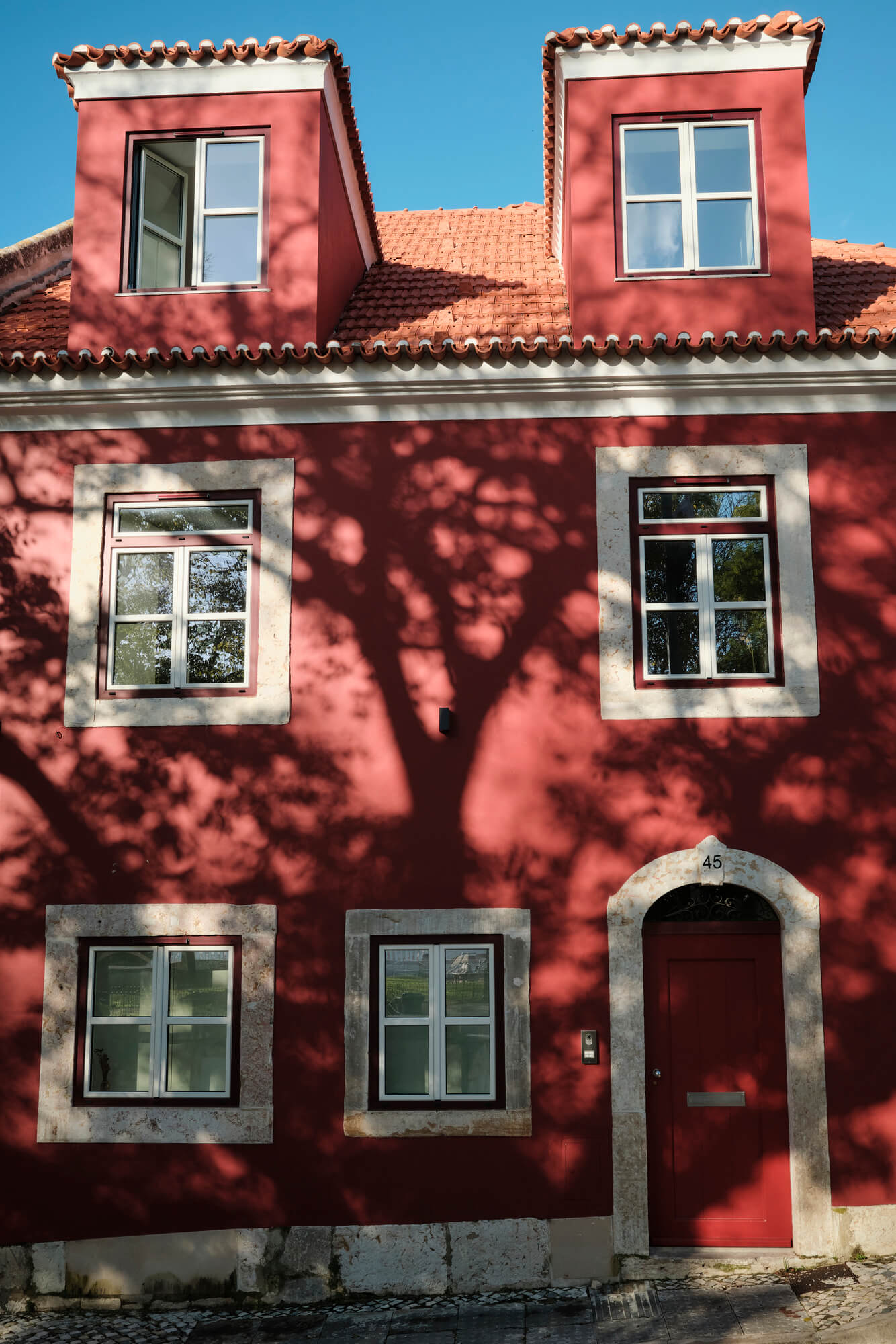
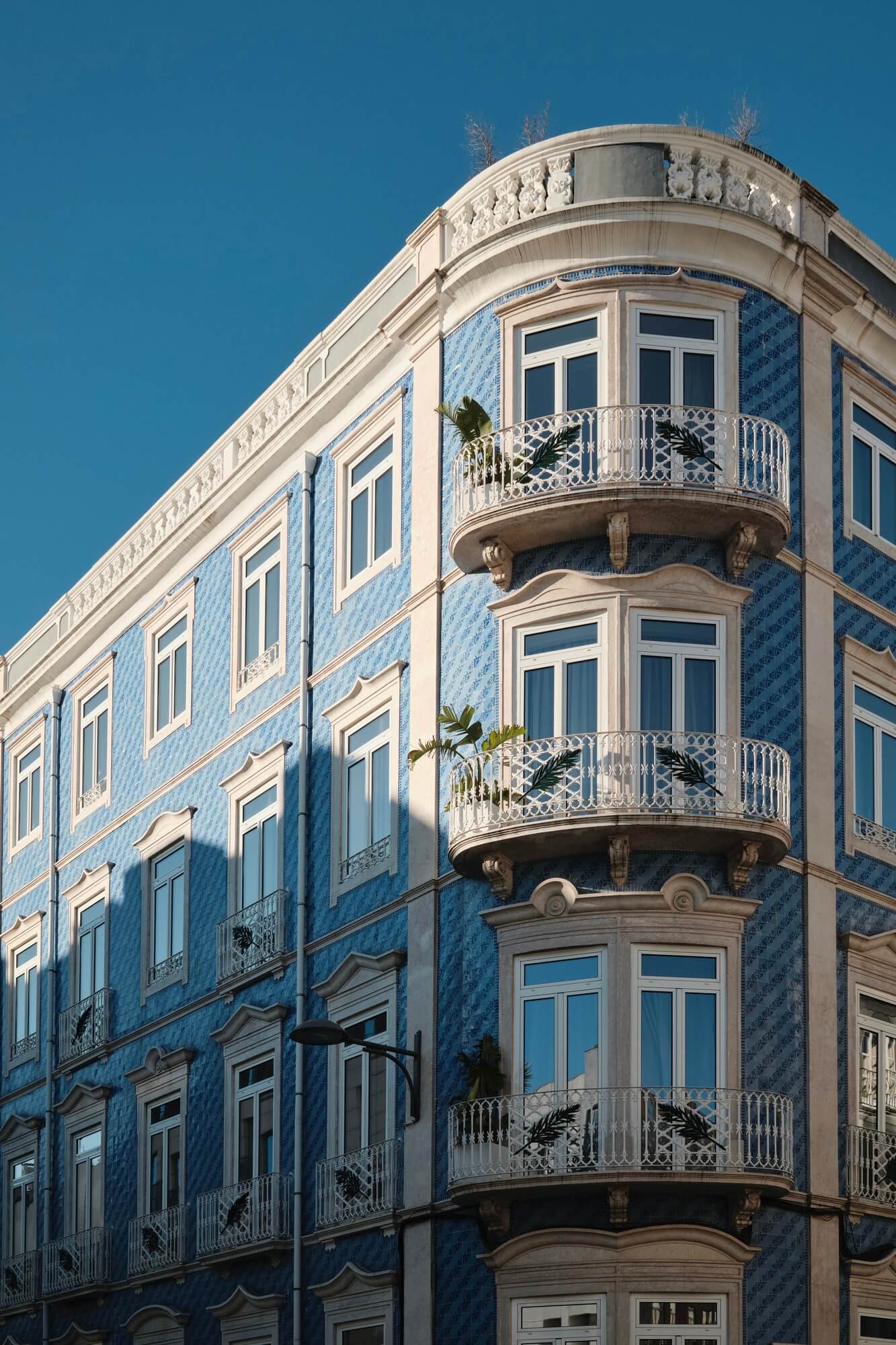
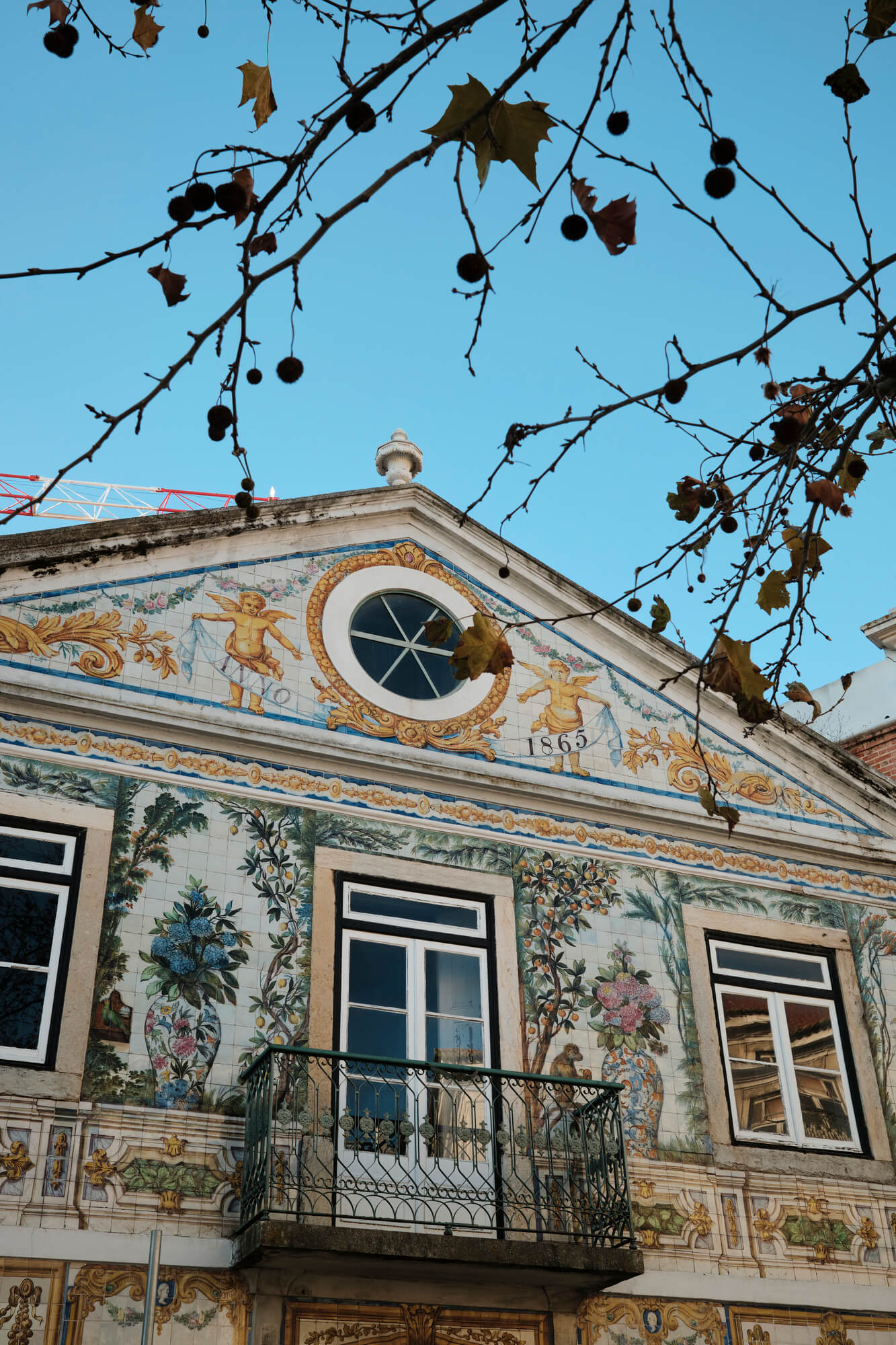
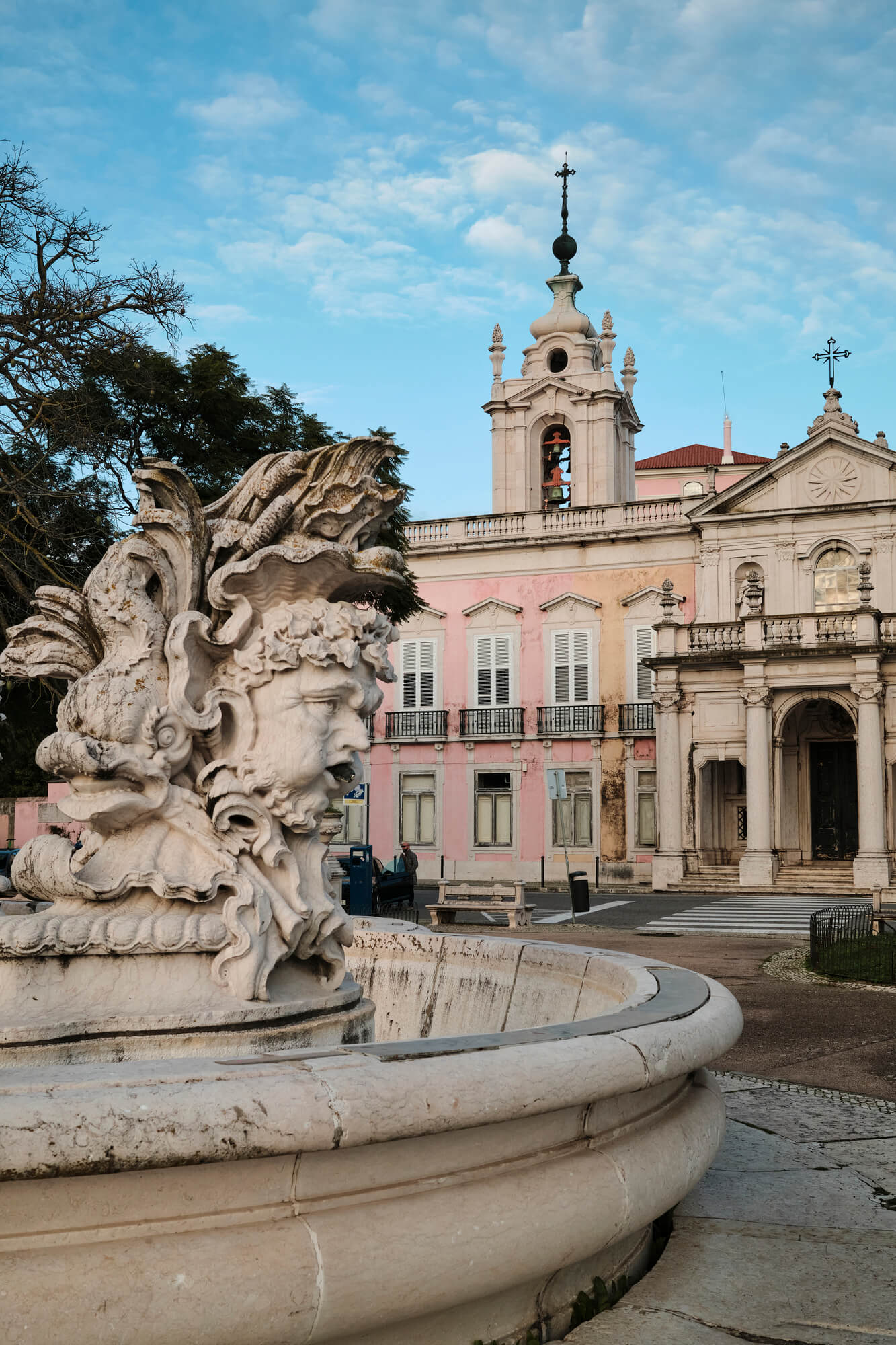
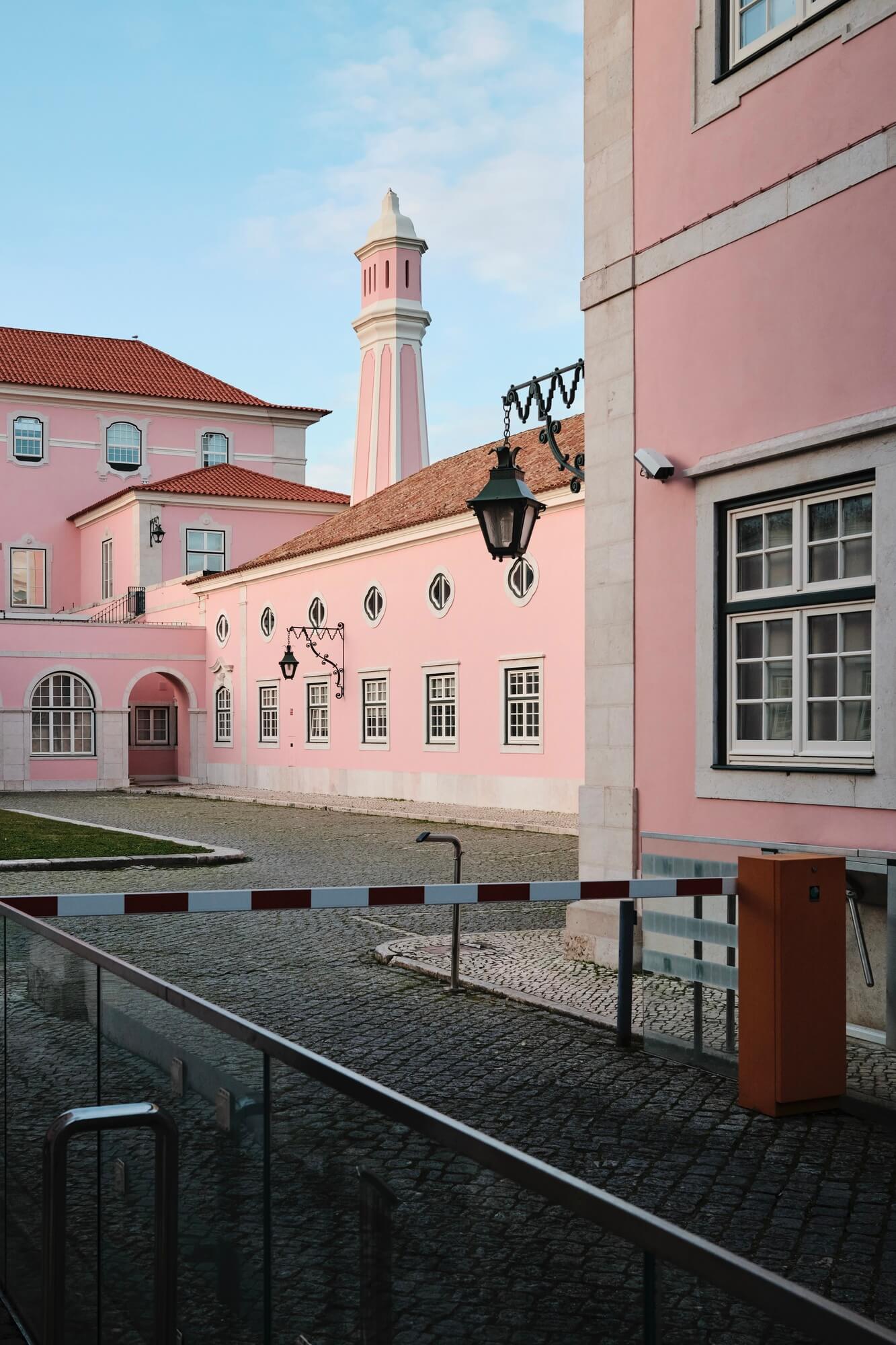
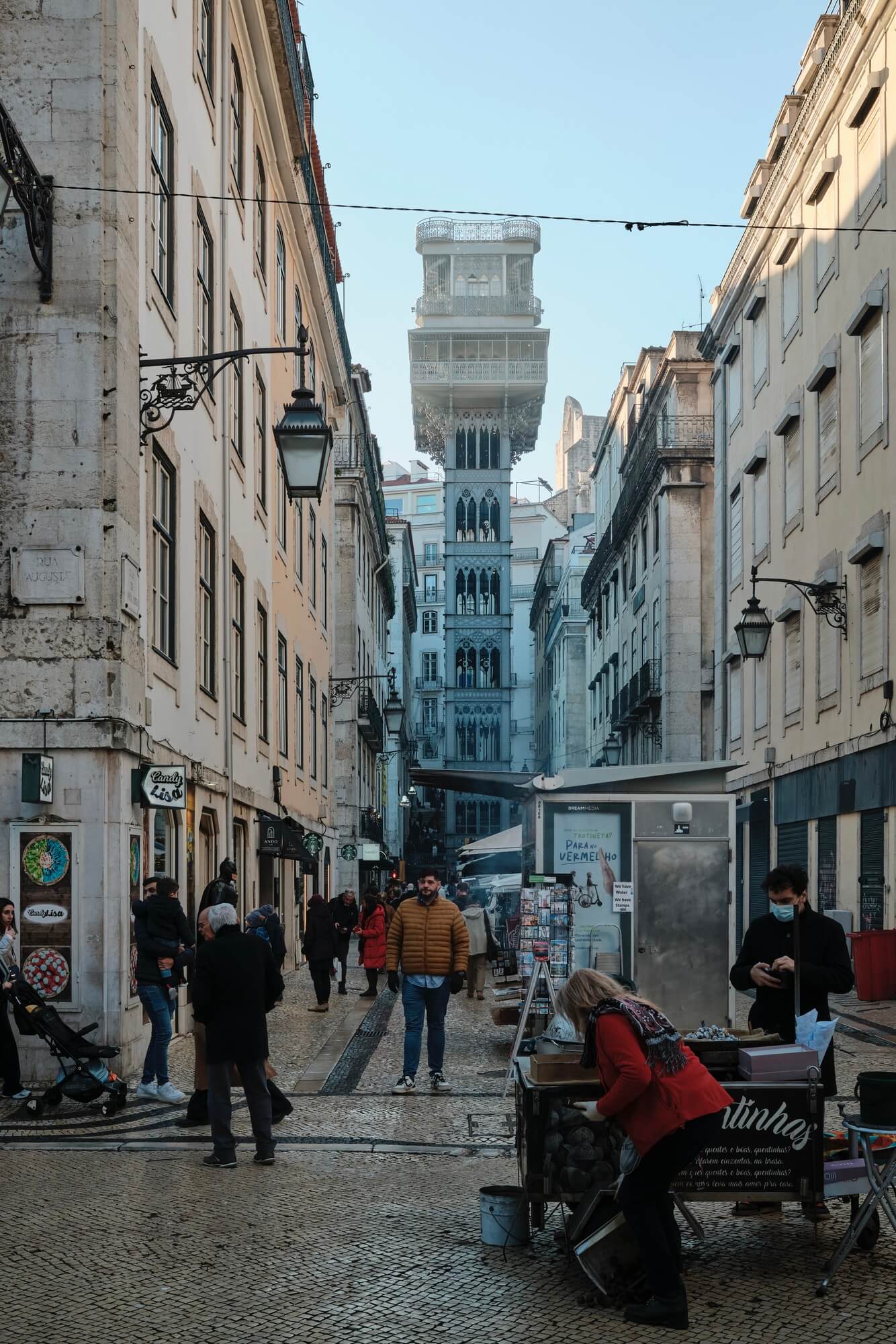
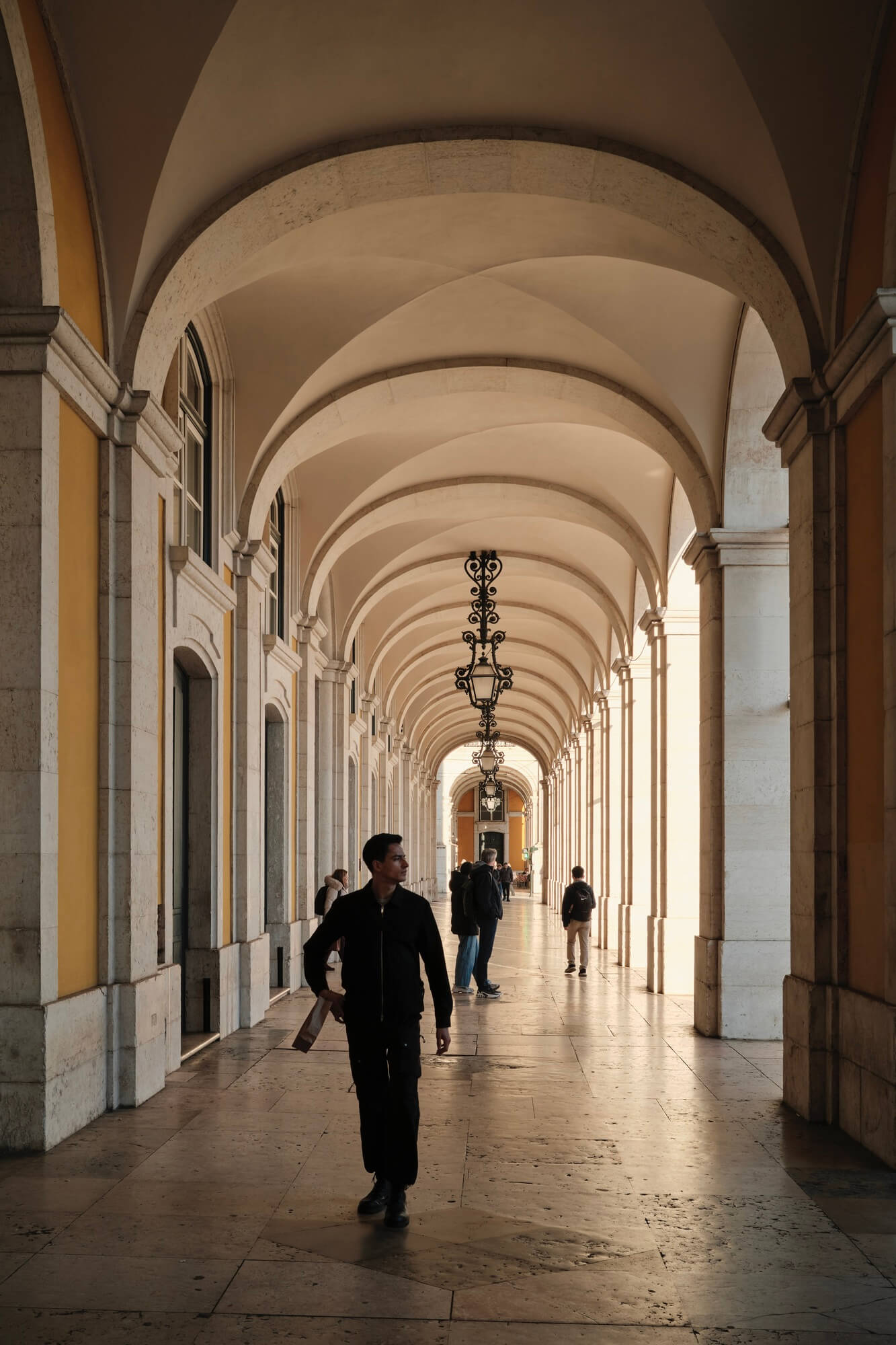
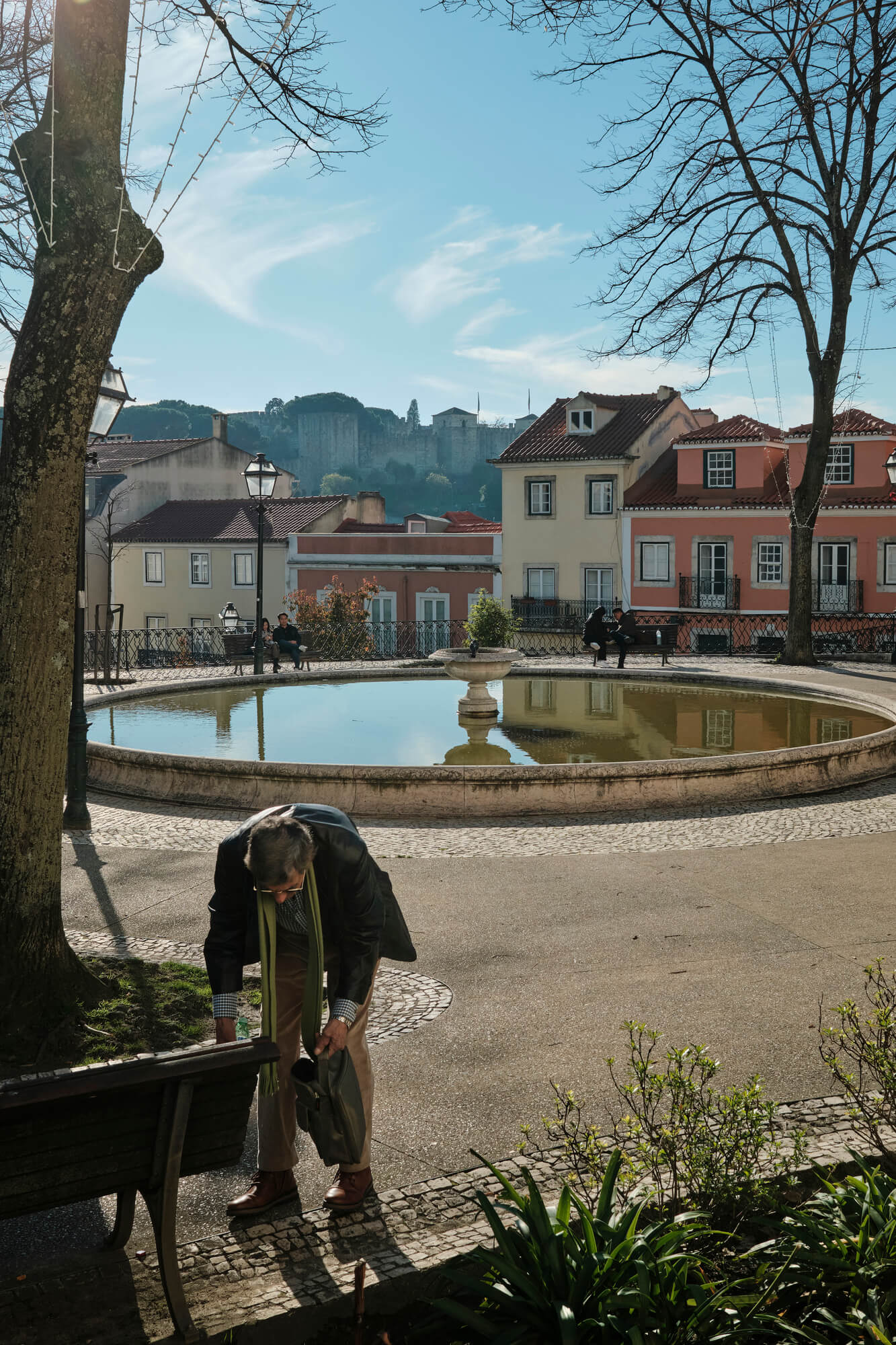
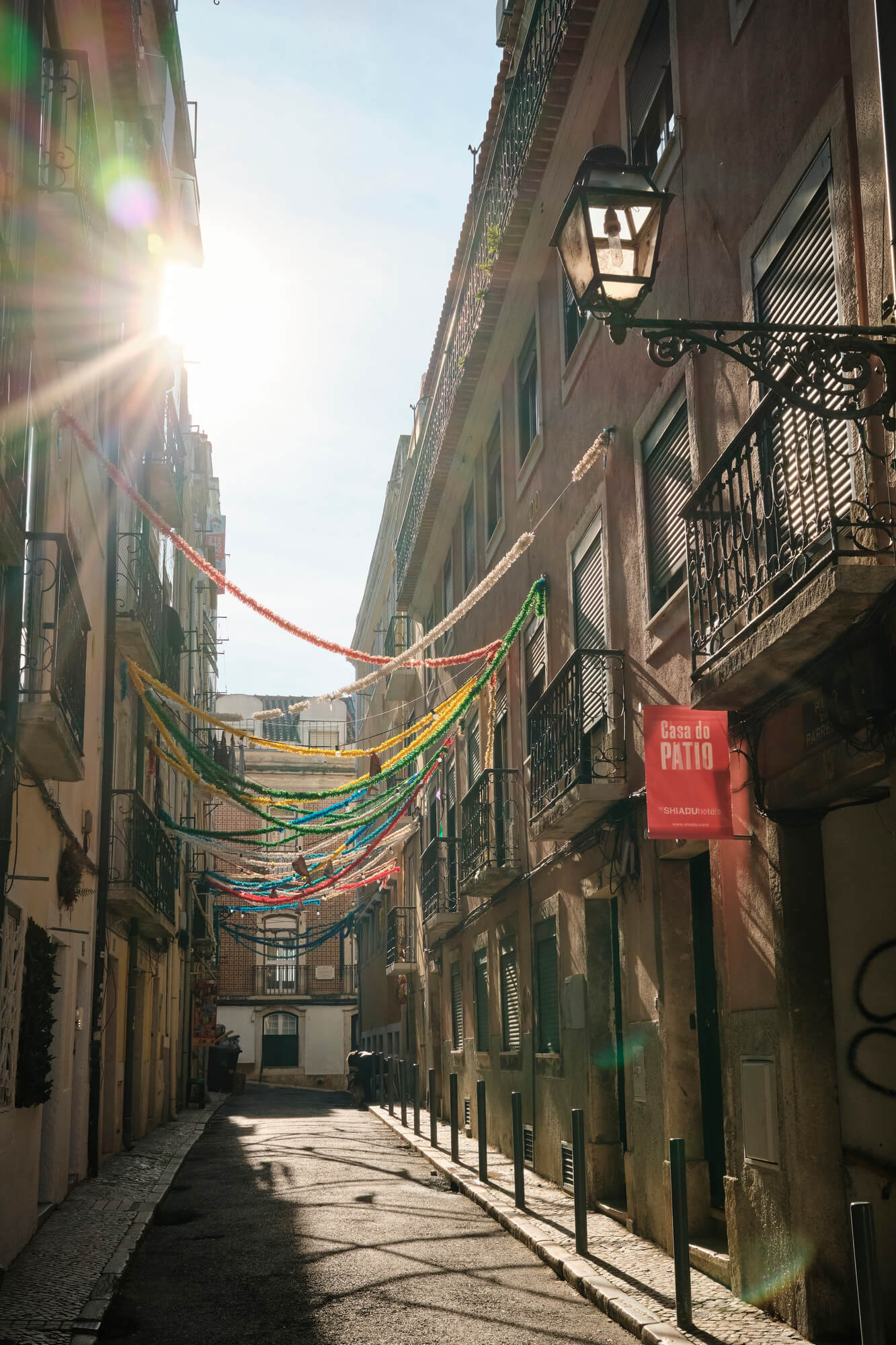
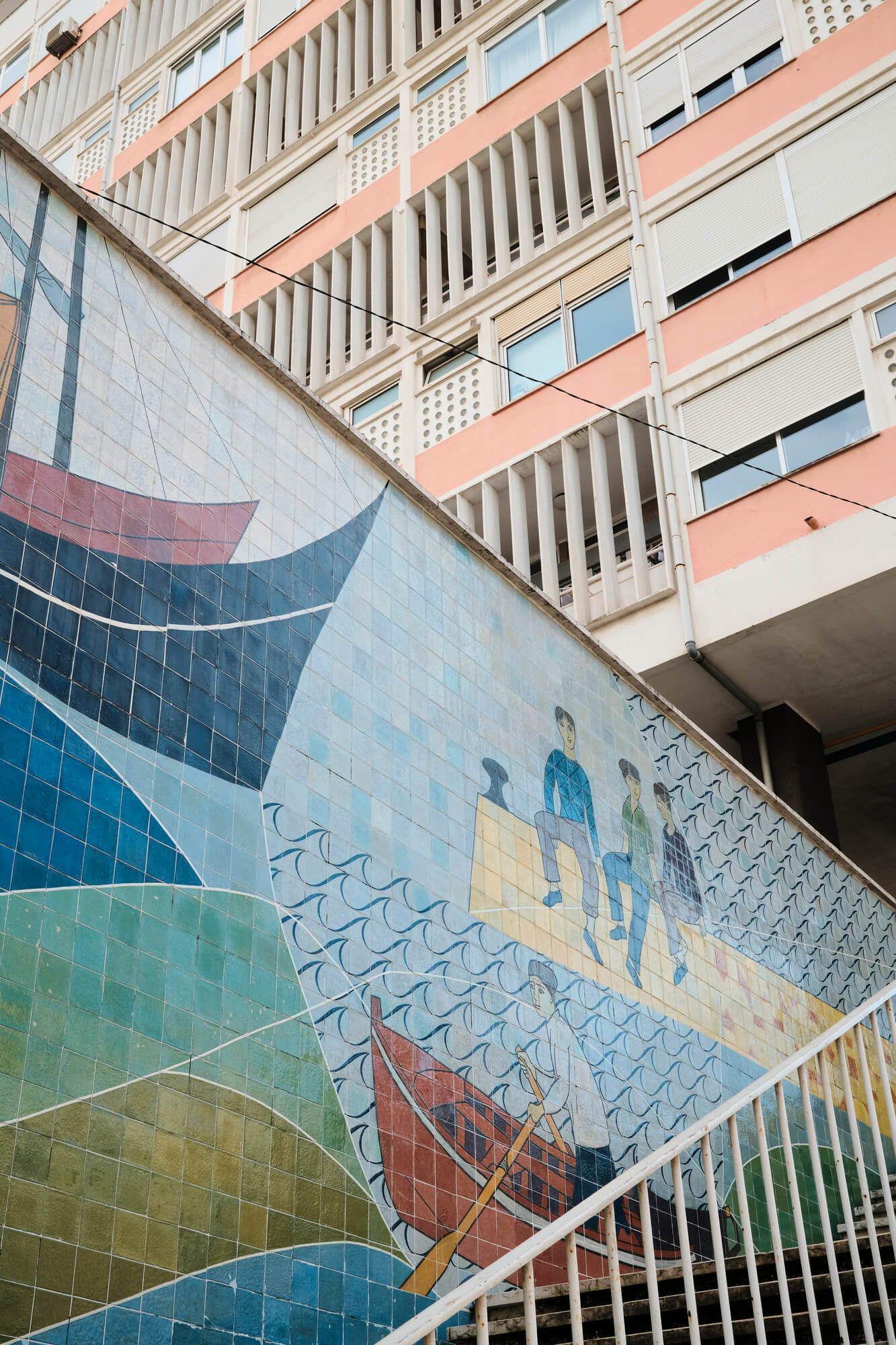
Some of the things that you’re getting less of are: safety and comfort, traditional azulejo-tiled facades, and any historical layers beyond 1755 AD, when the infamous earthquake destroyed the city, which was later gradually built from scratch.
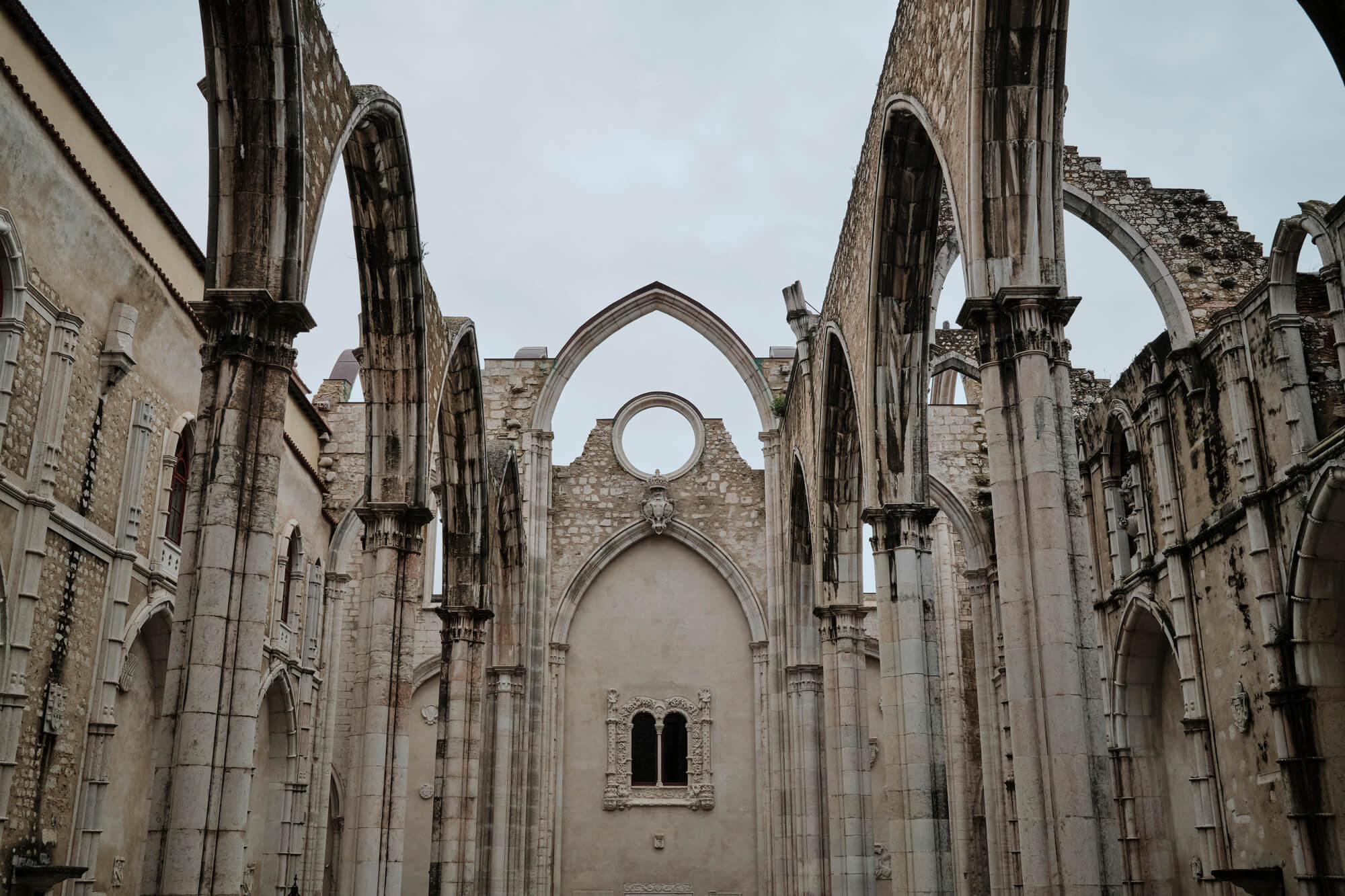
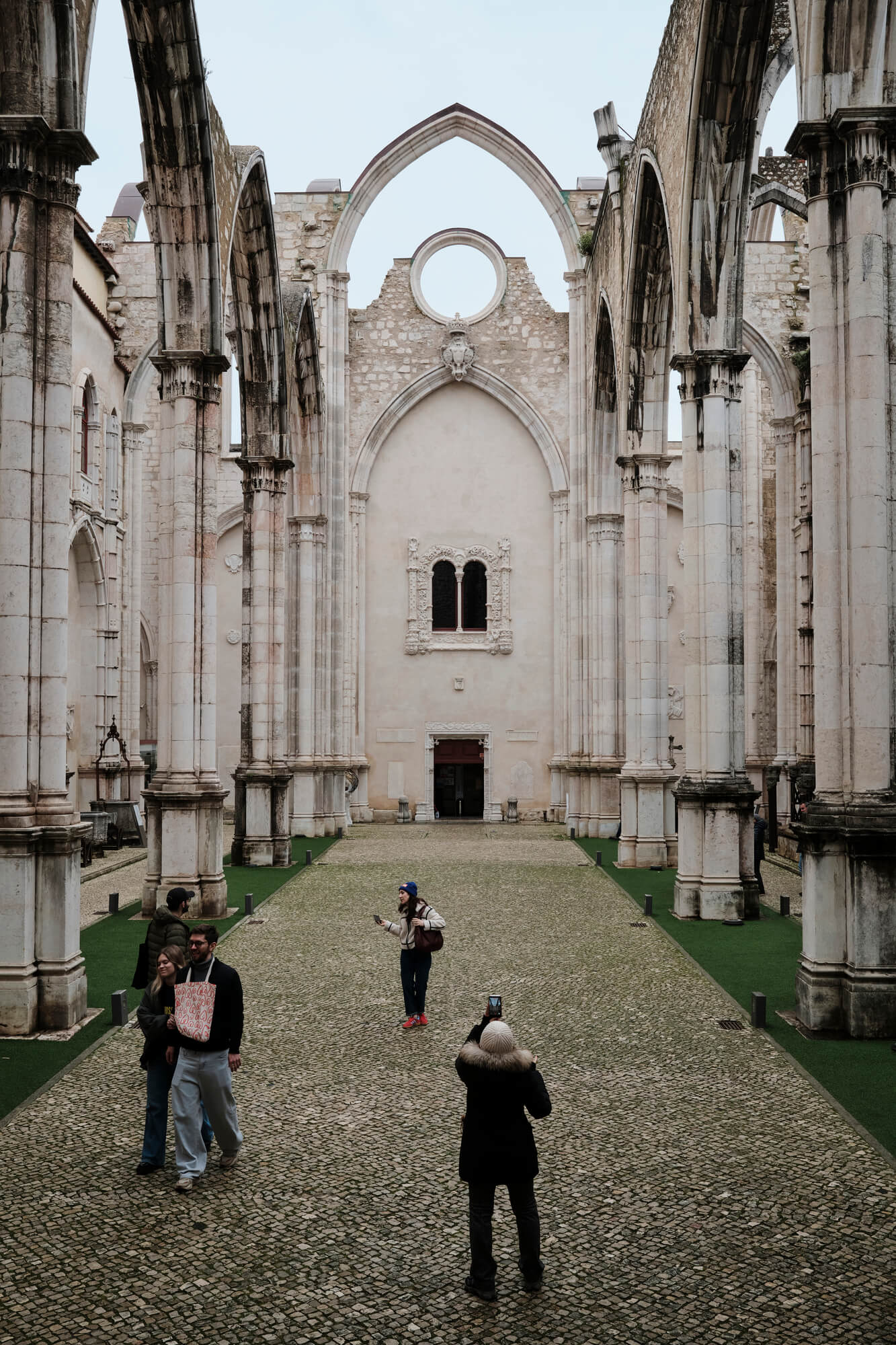
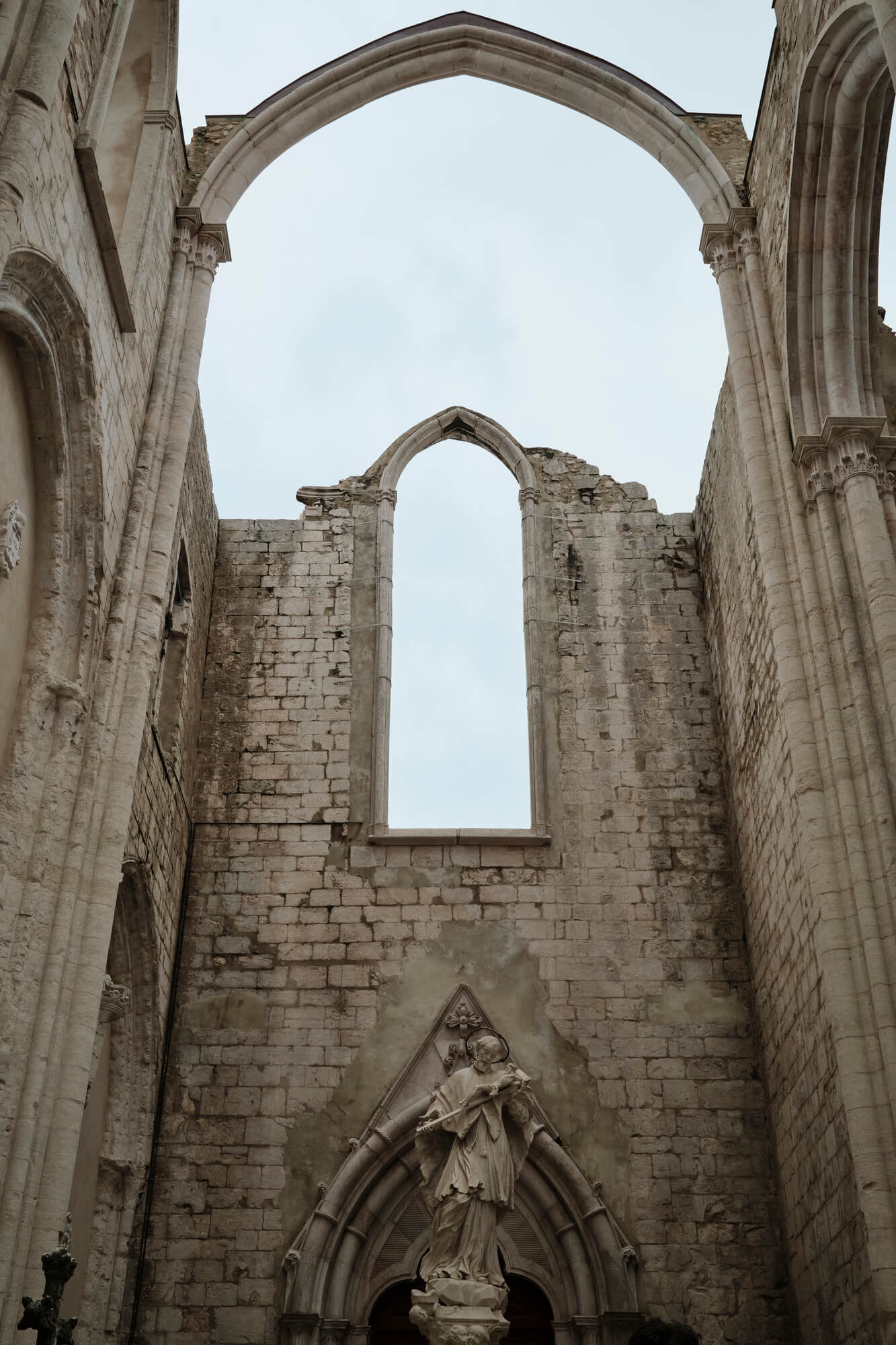
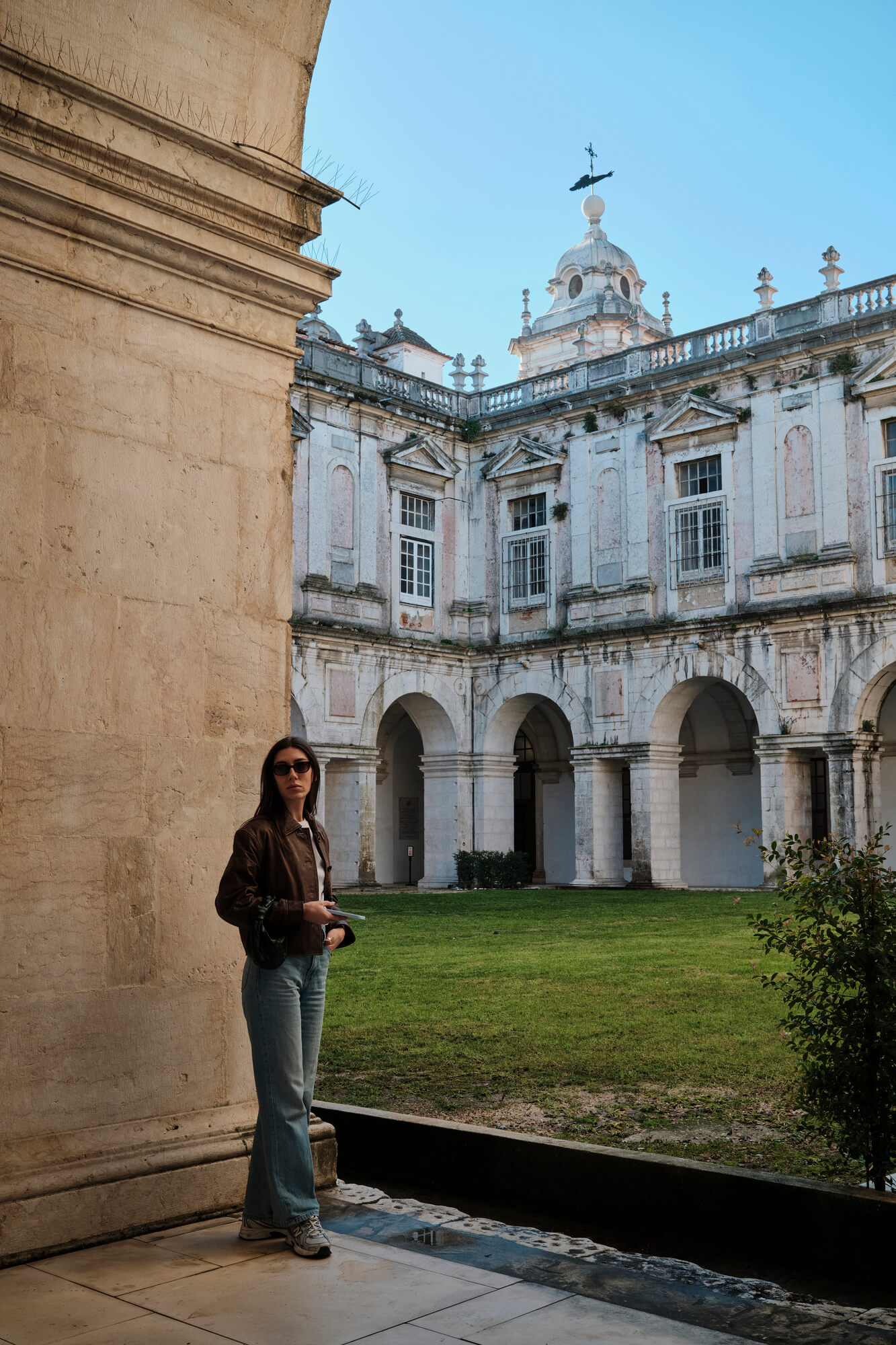
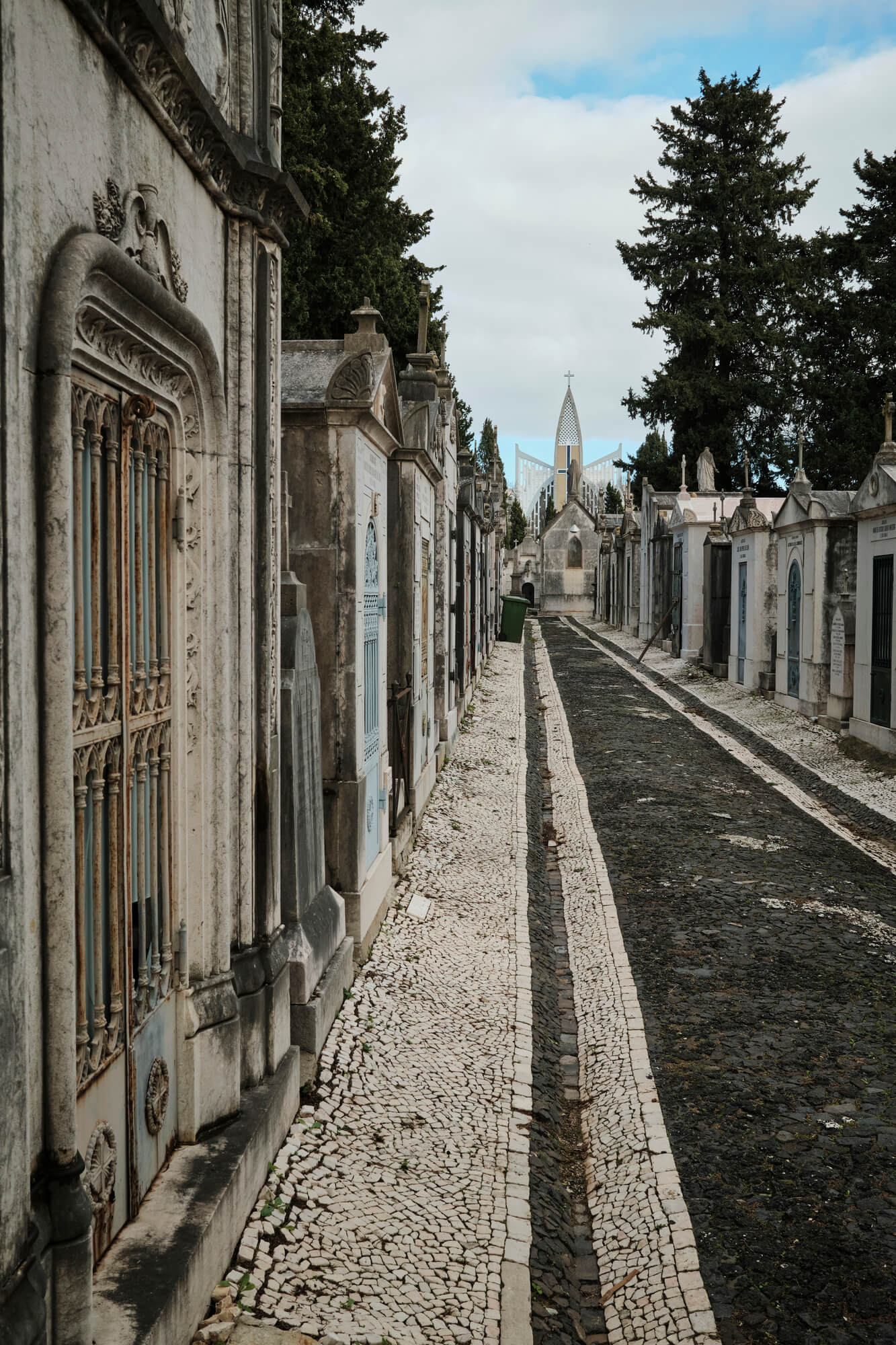
To me, the entire city center felt like a huge overcrowded (even though it was low season) and overpriced tourist trap without any actual attractions. At the same time, the outskirts looked somewhat like Brazilian favelas that you’d rather avoid.
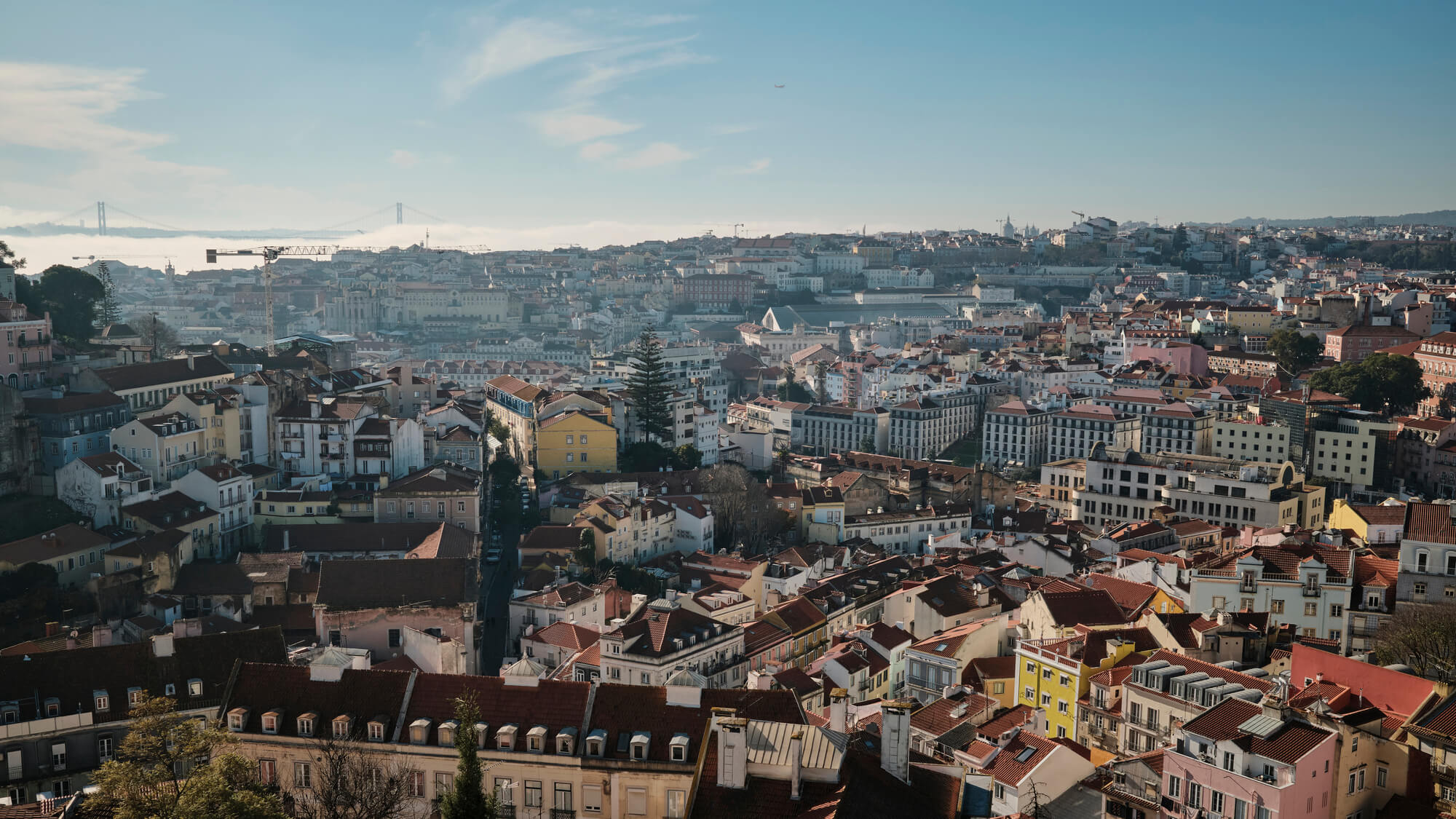
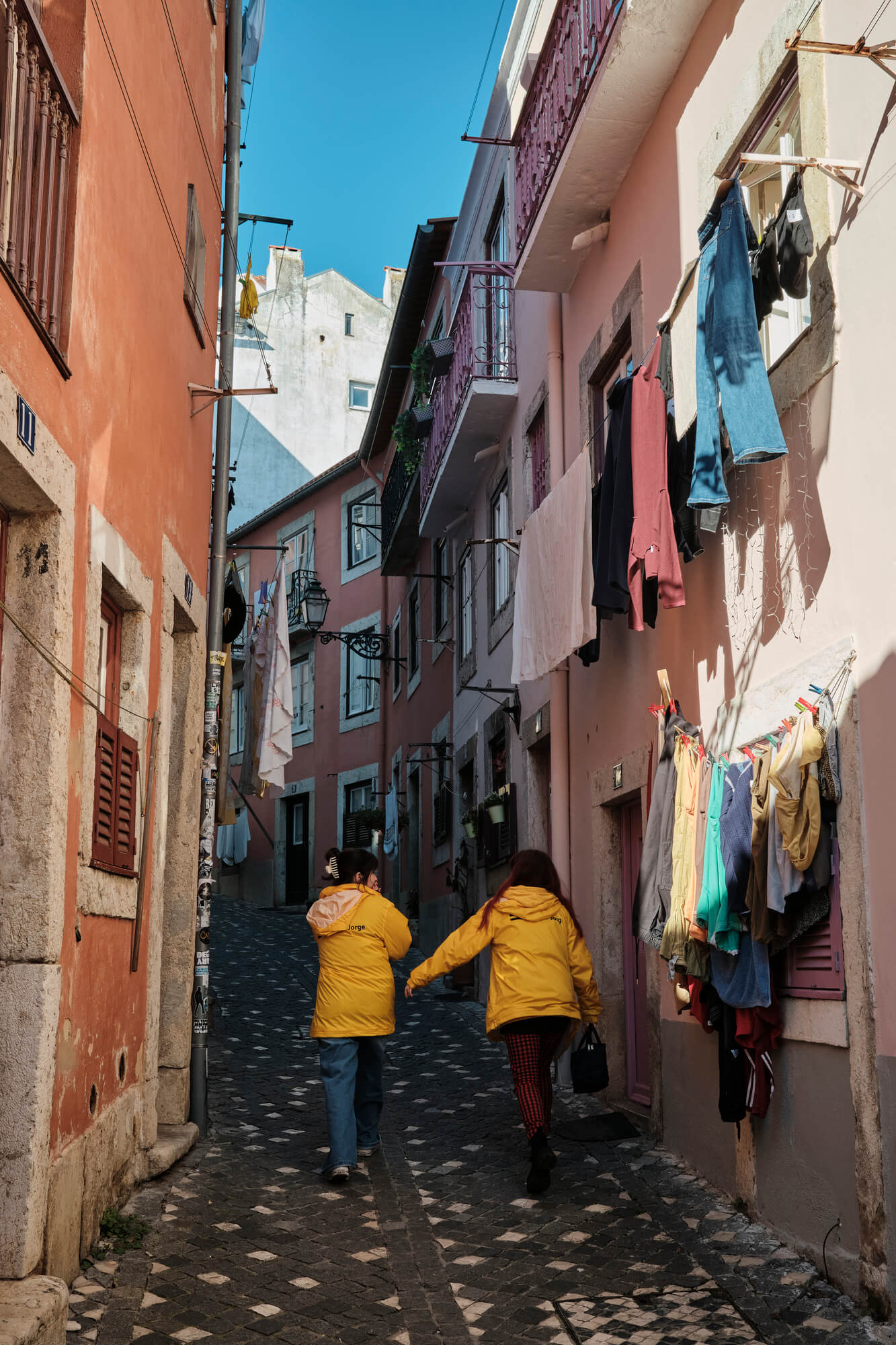
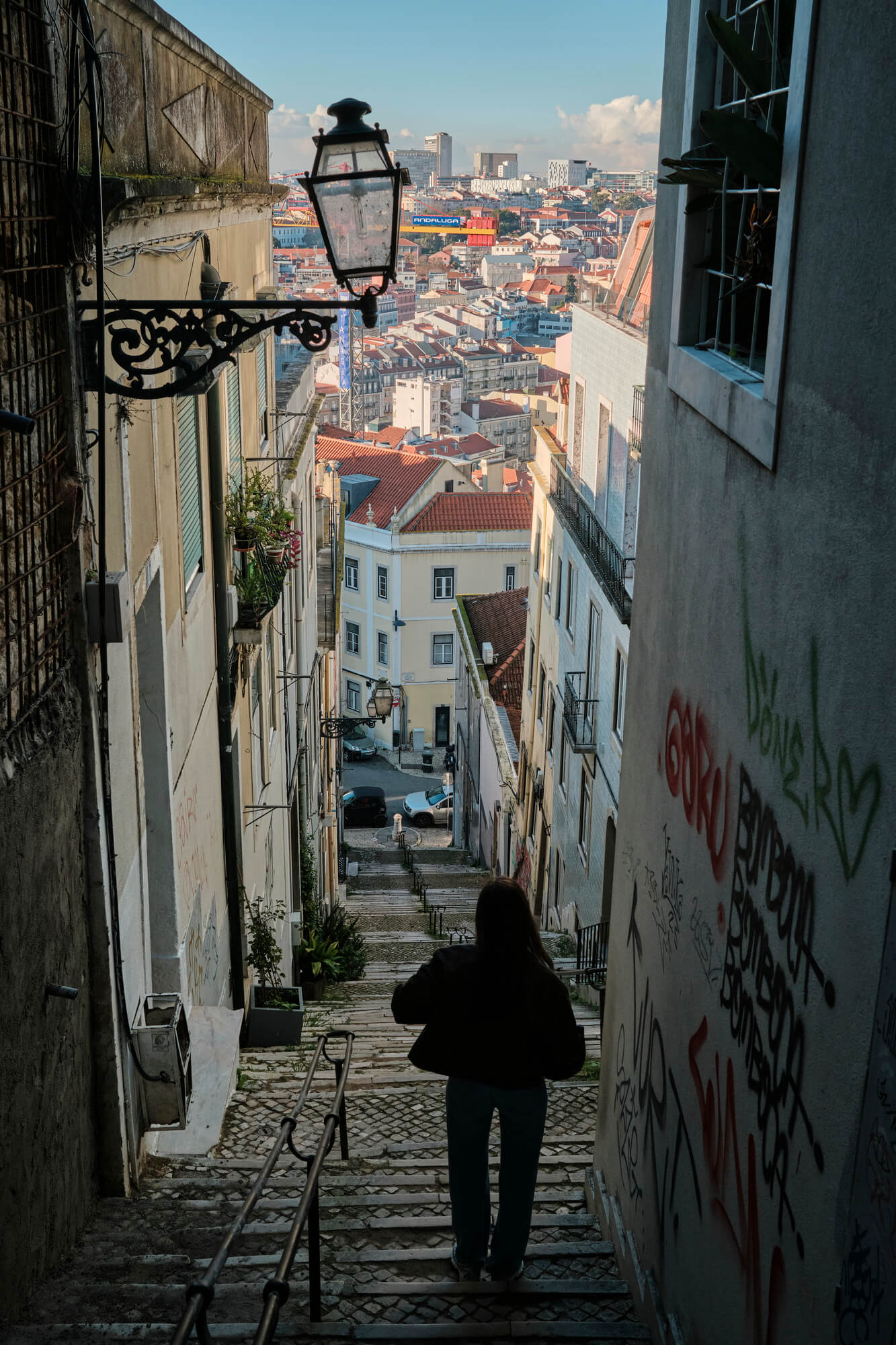
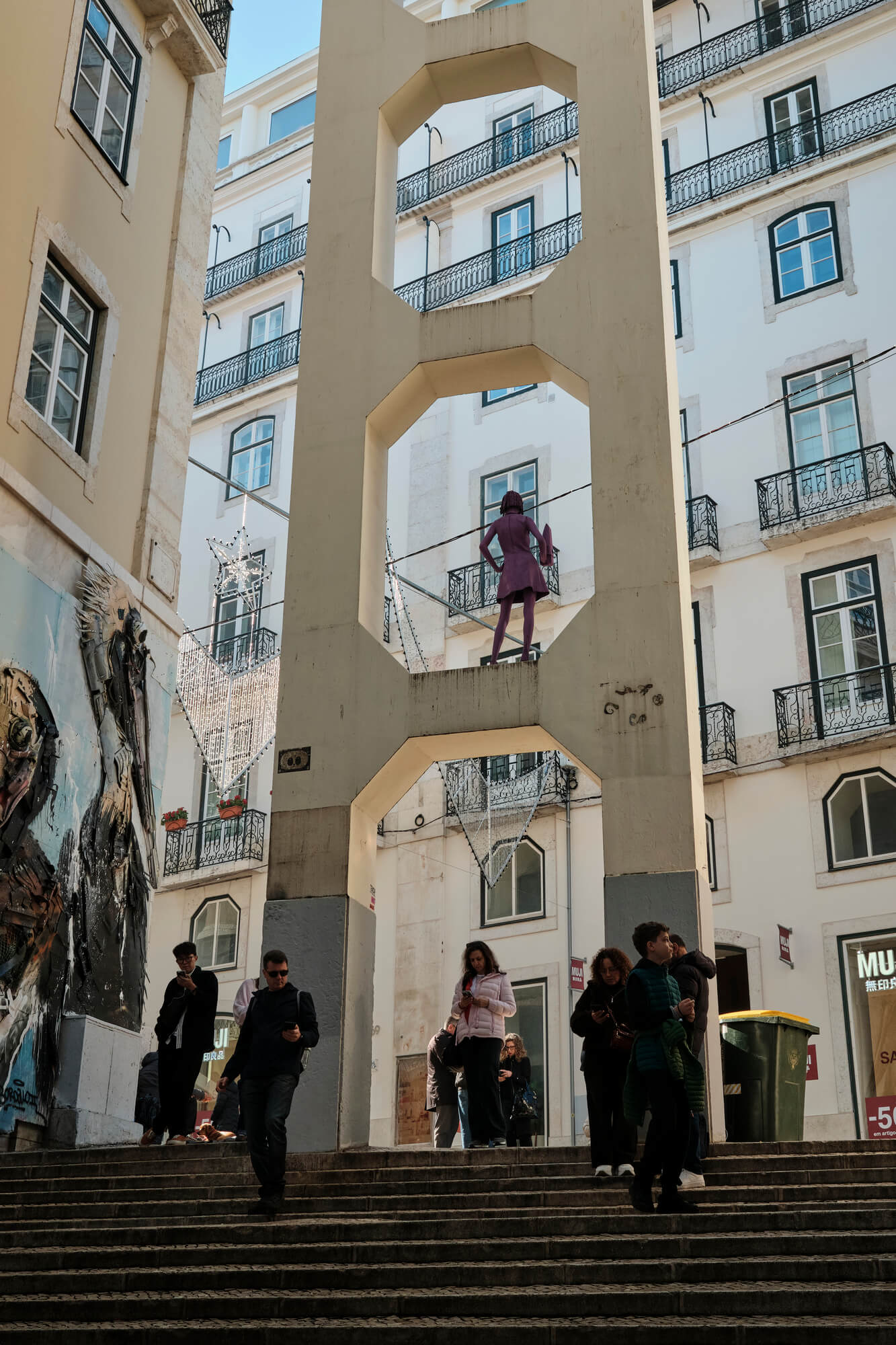
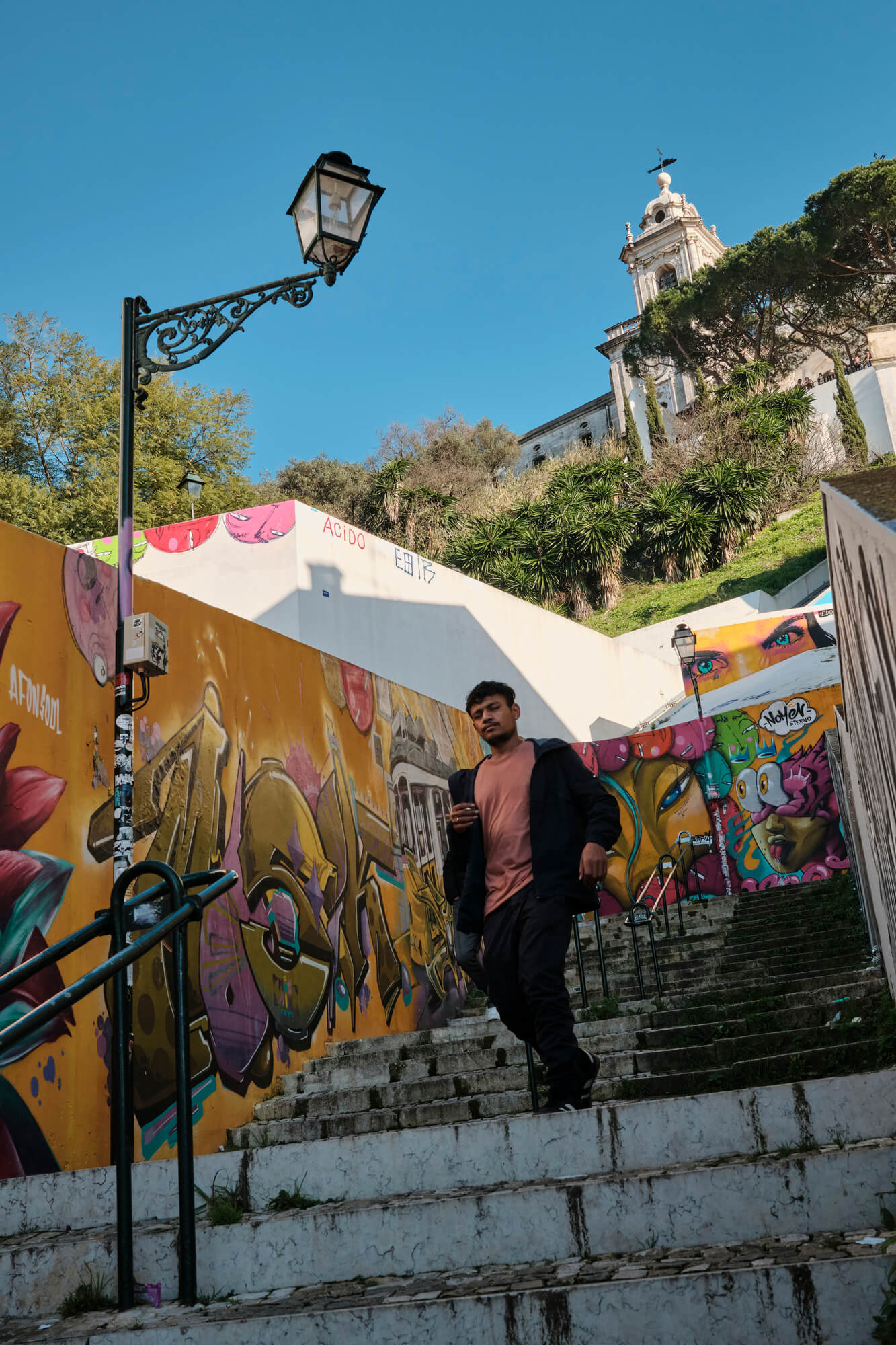
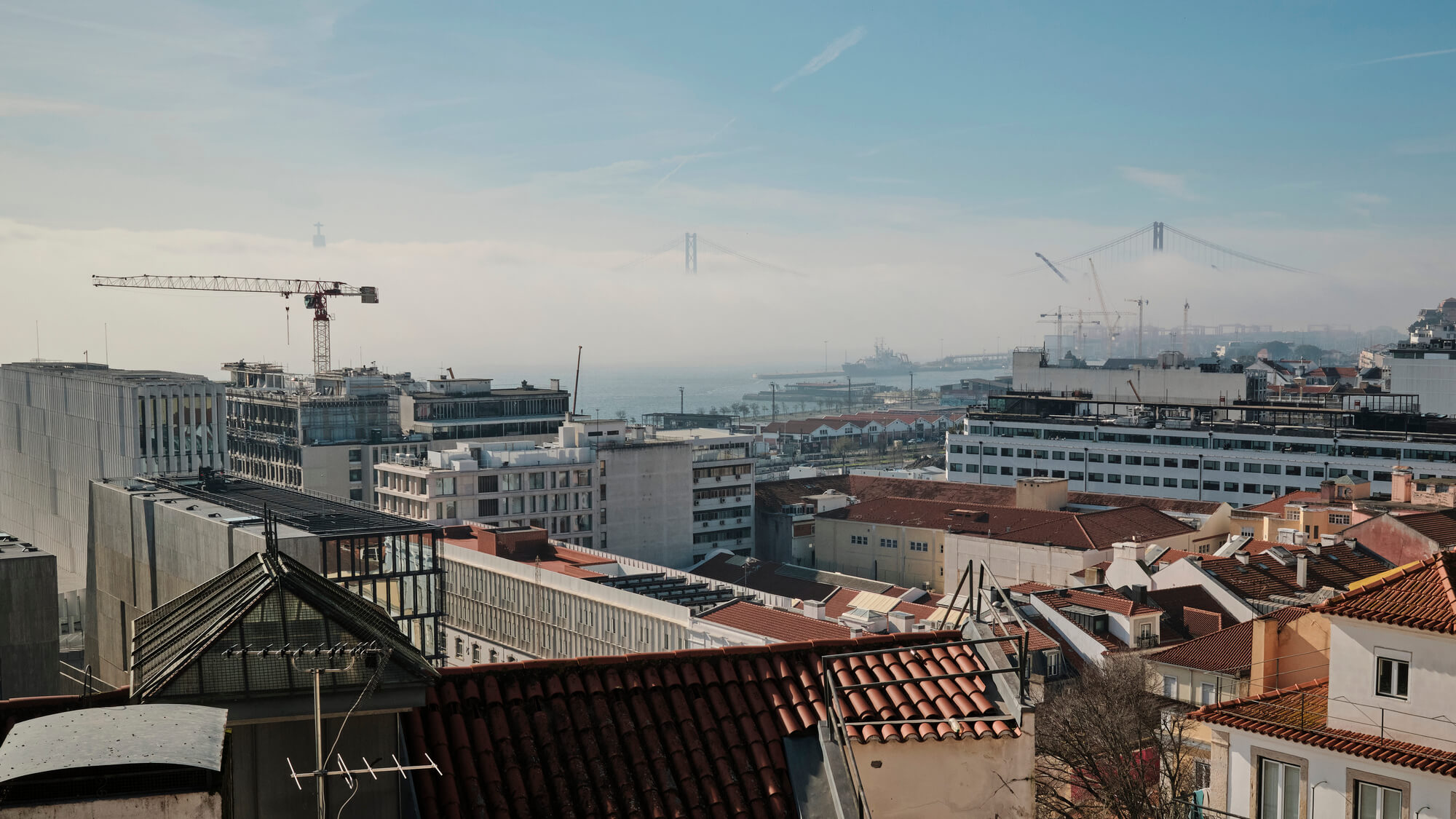
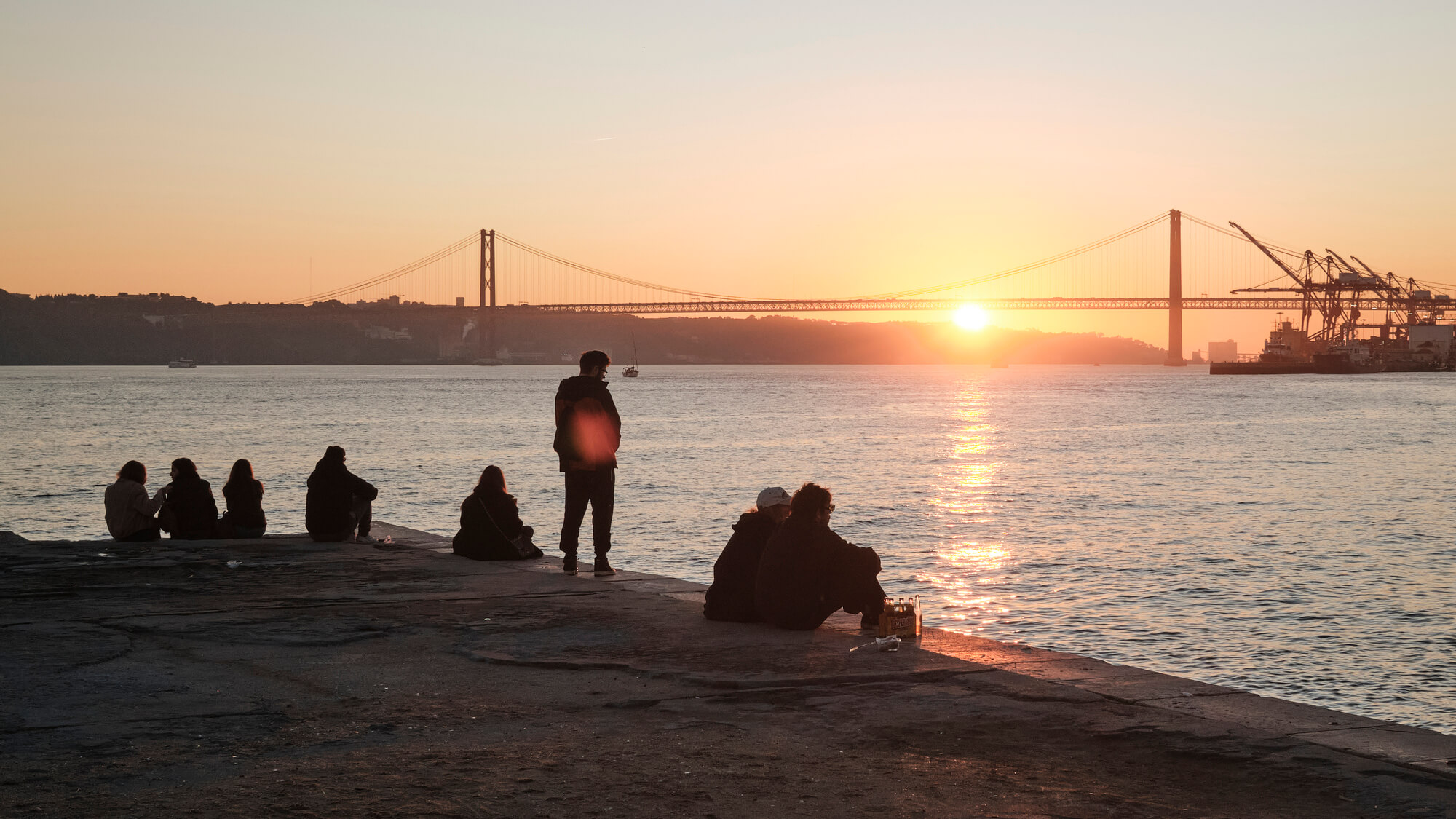
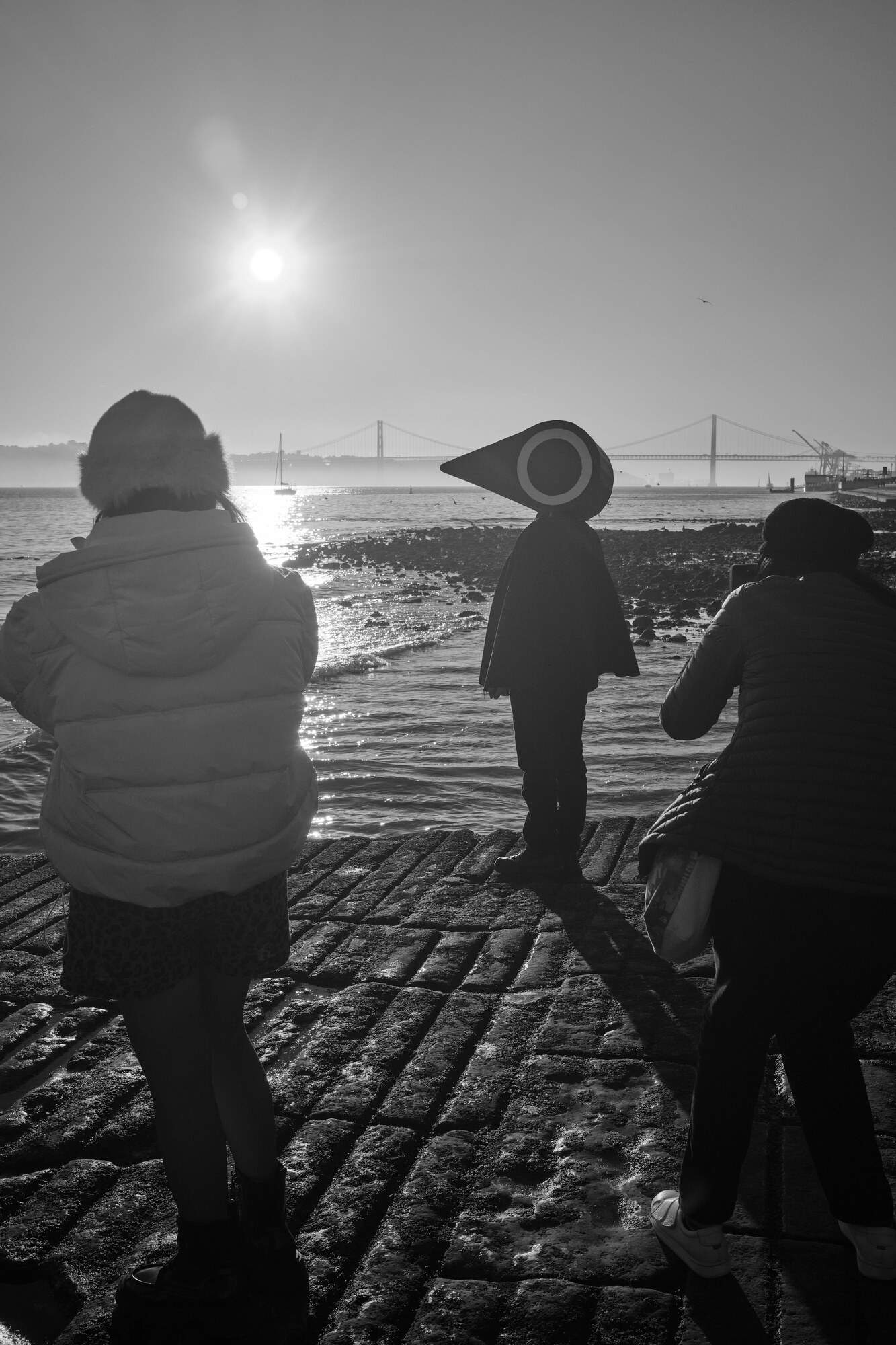
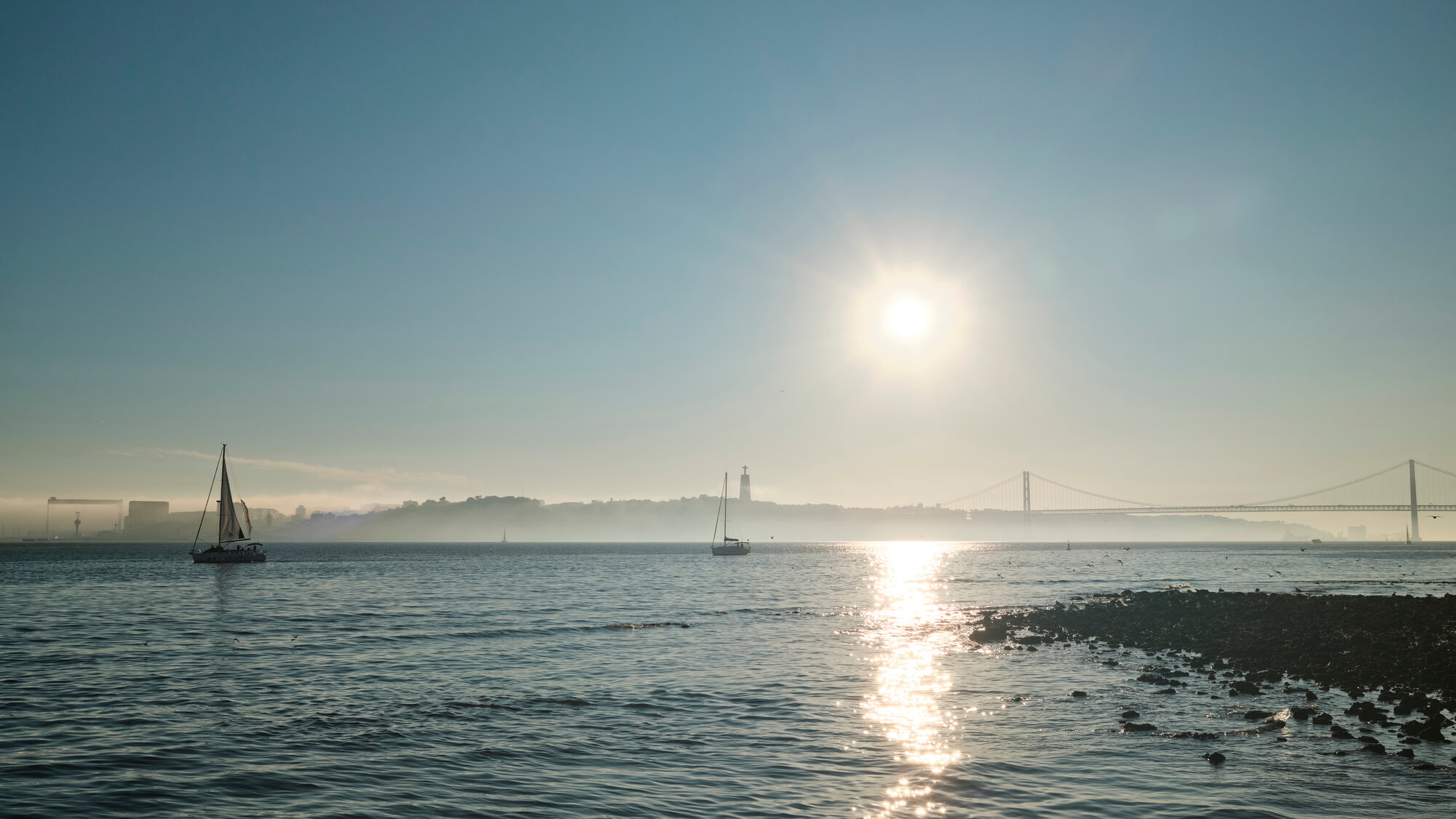
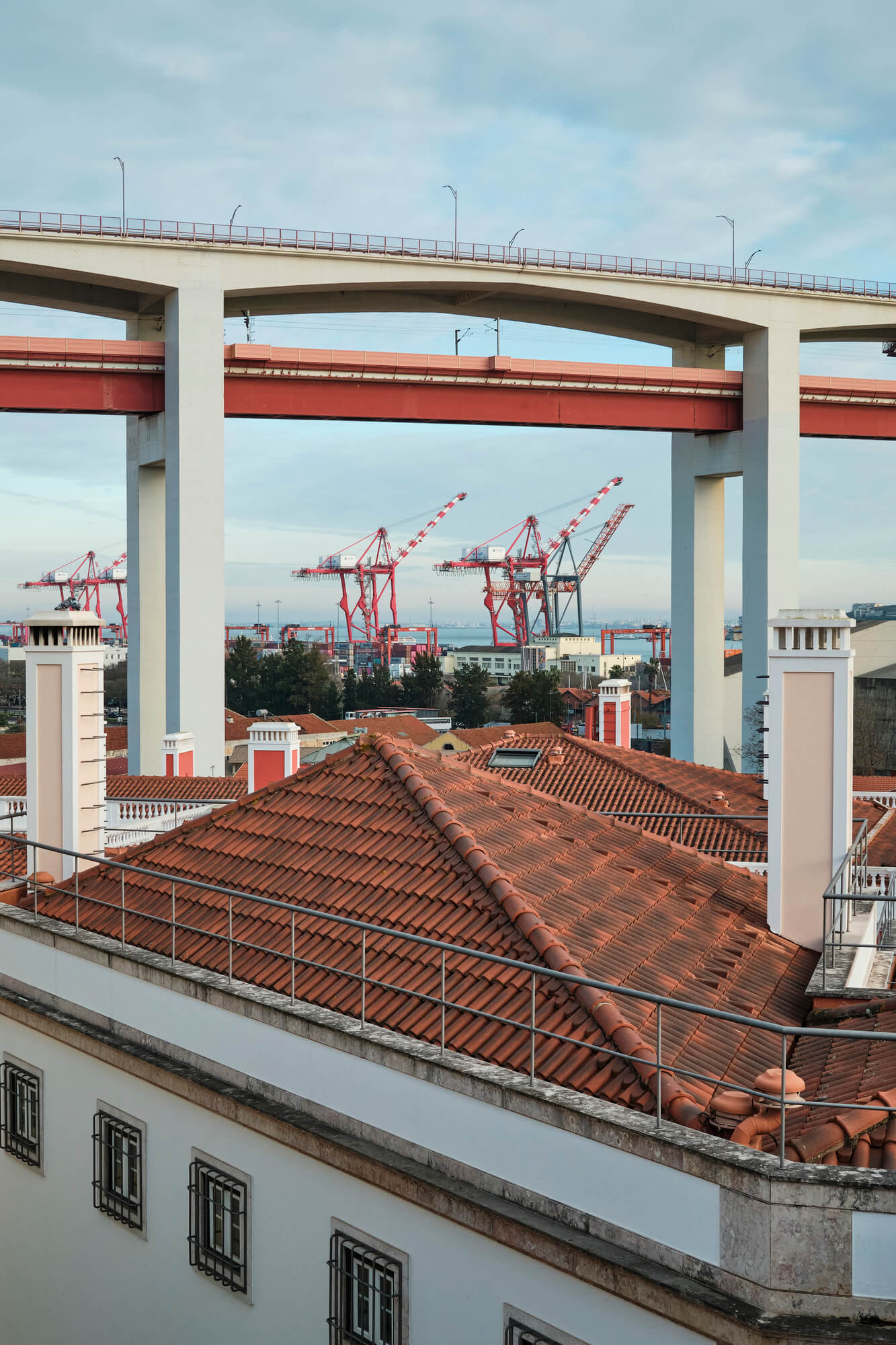
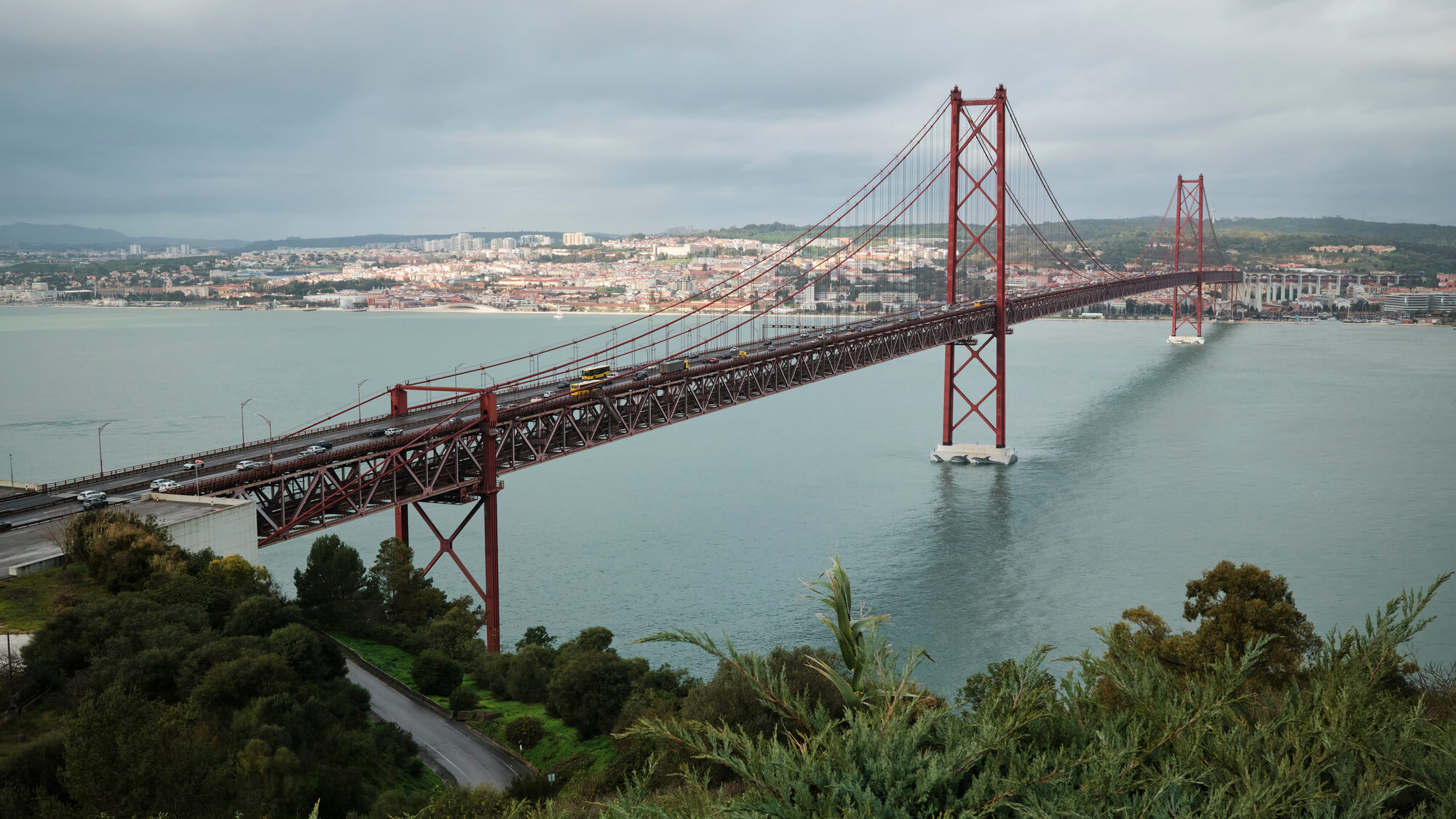
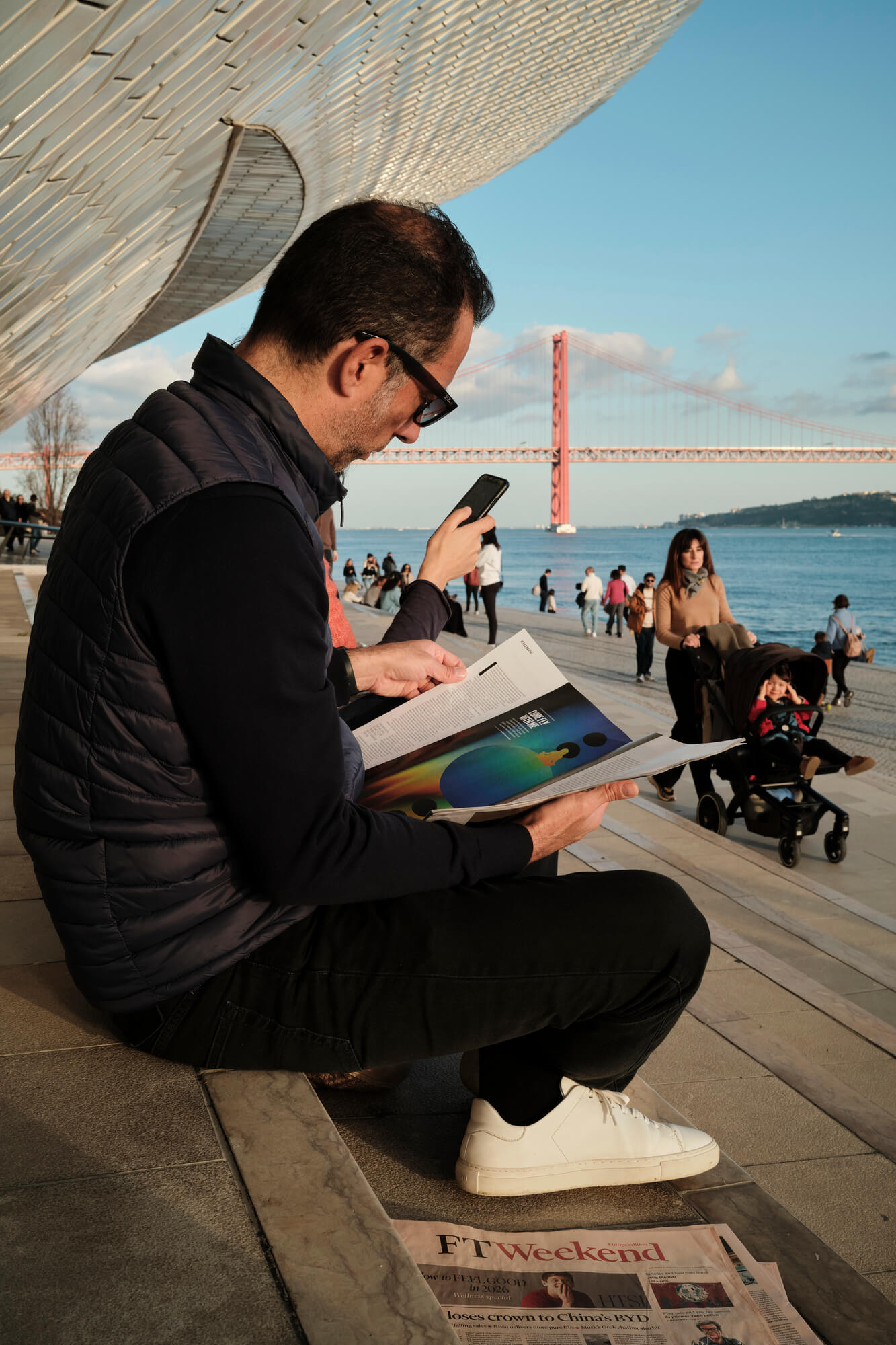
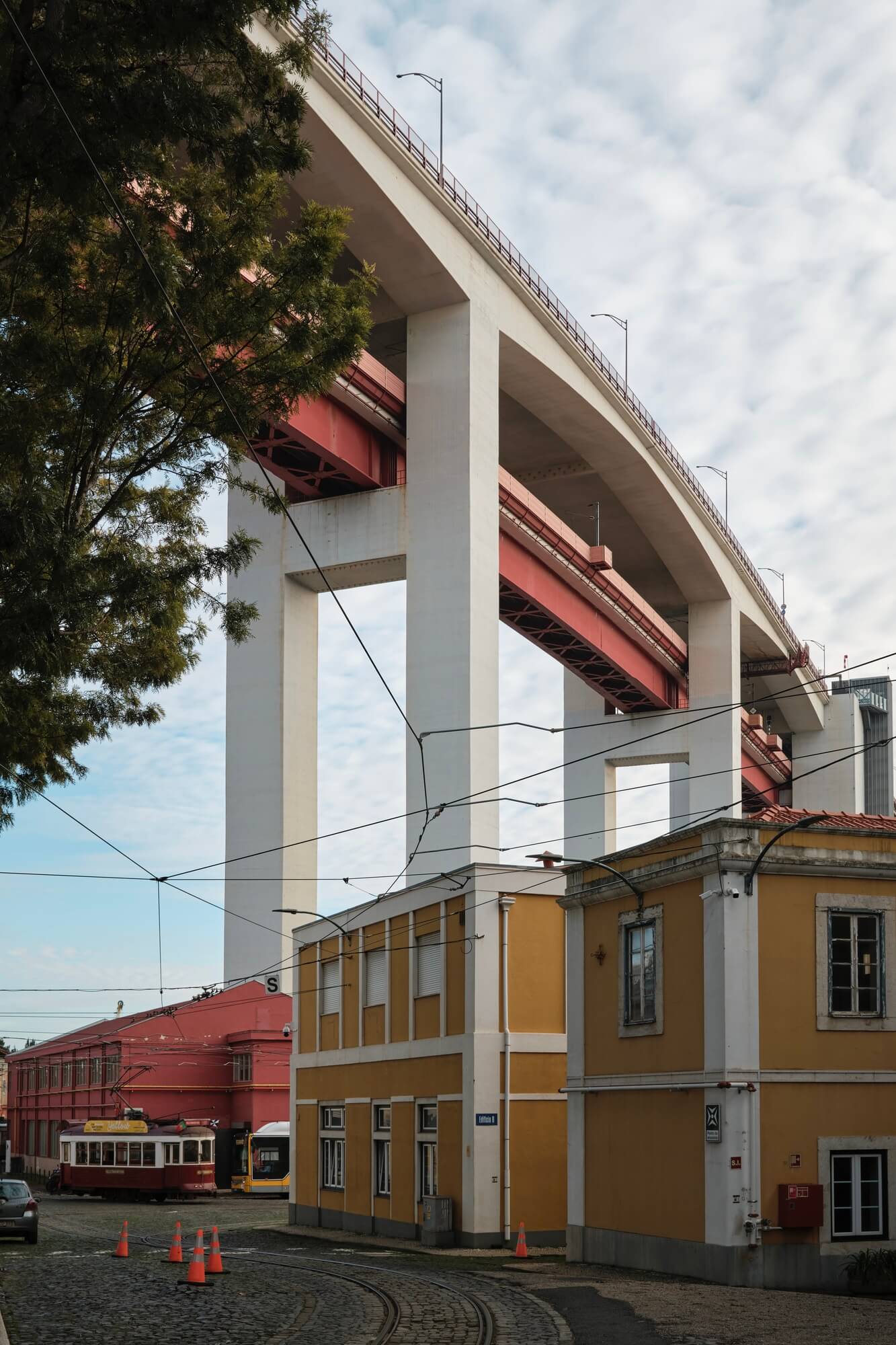
But although it may sound like I hated the city, I actually quite enjoyed parts of it. Judging by the proportion of photos alone, most of that enjoyment may be attributed to the marvelous Golden Gate-style bridge across Tagus — Ponte 25 de Abril.
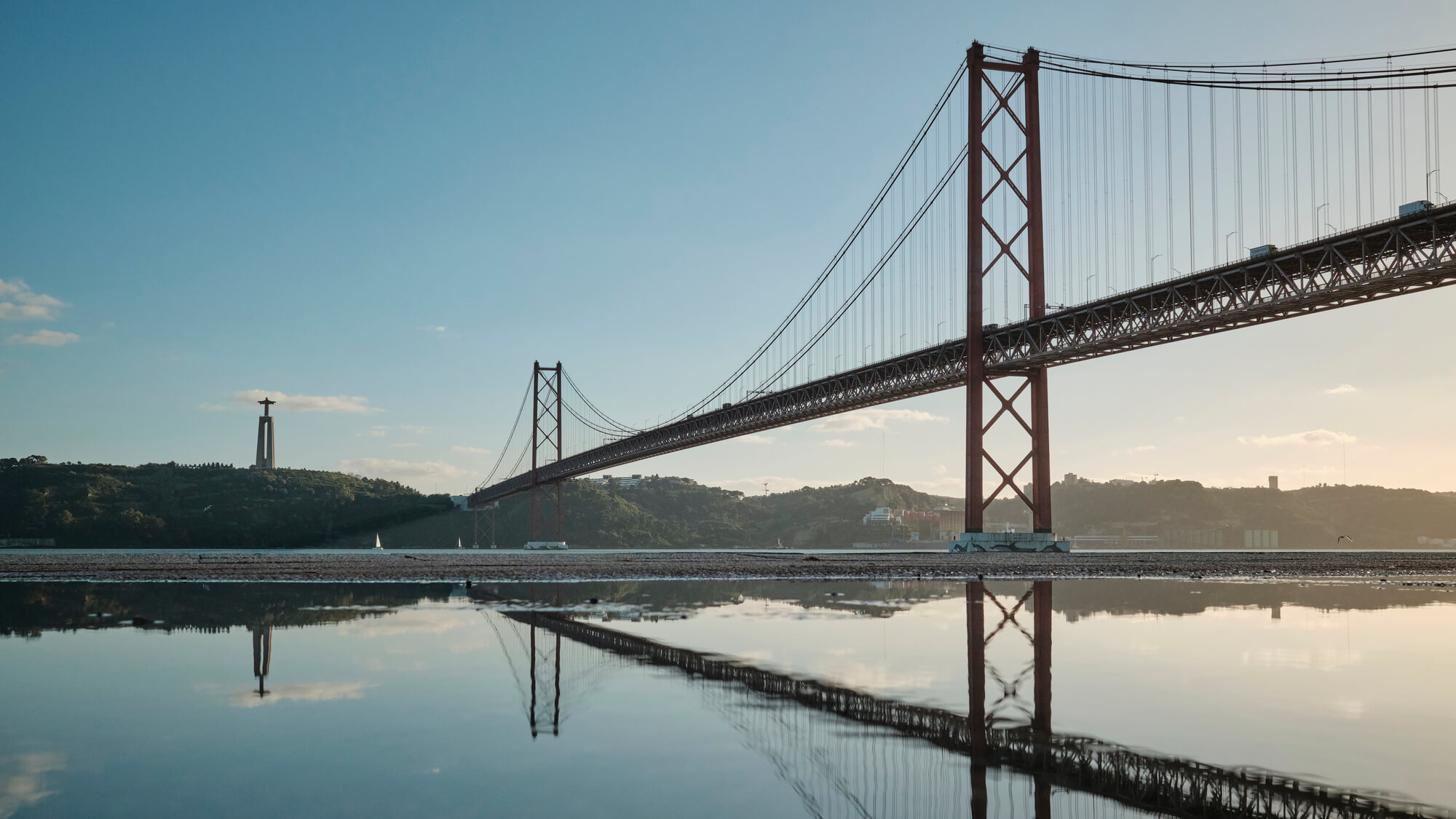
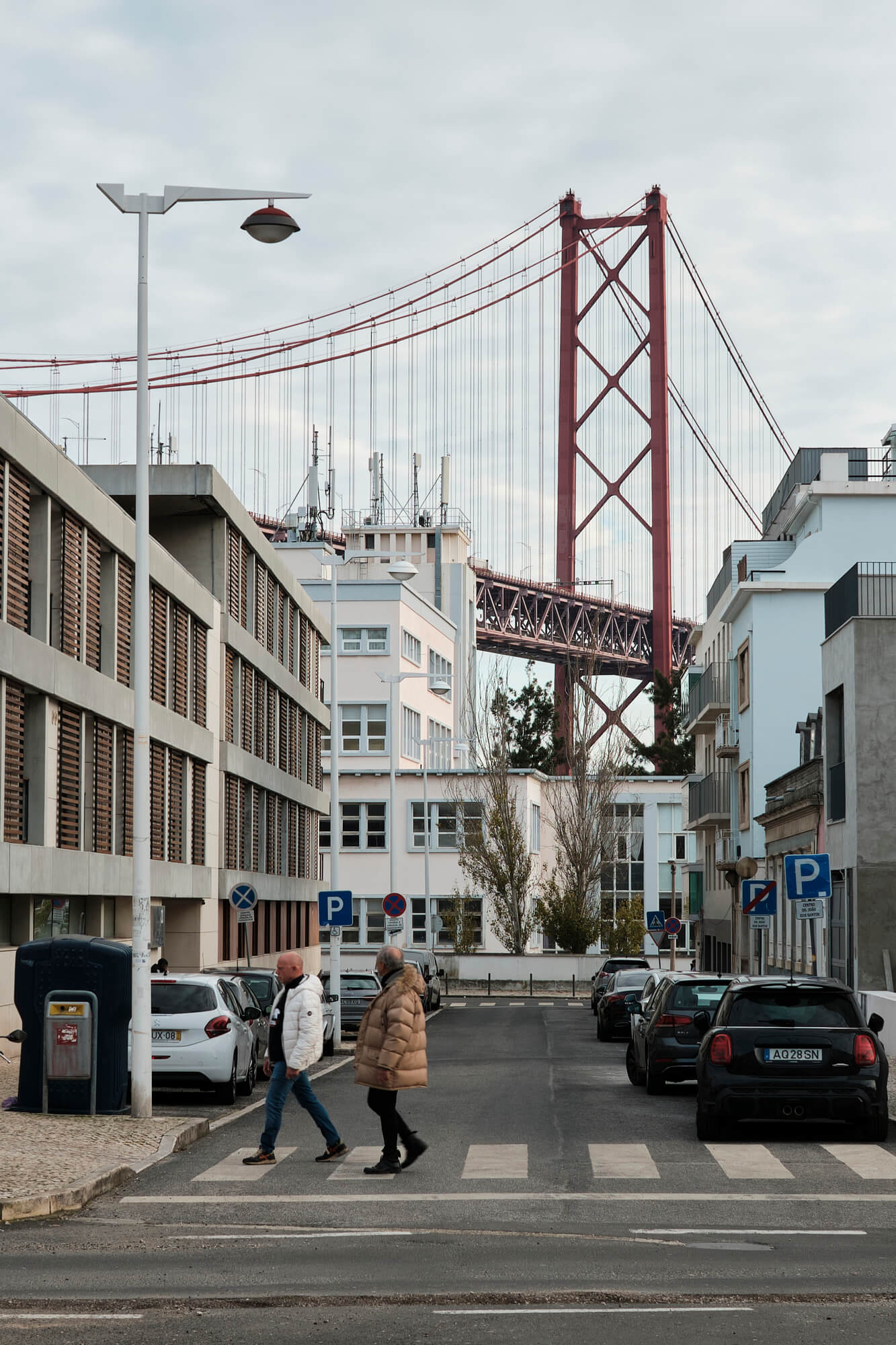
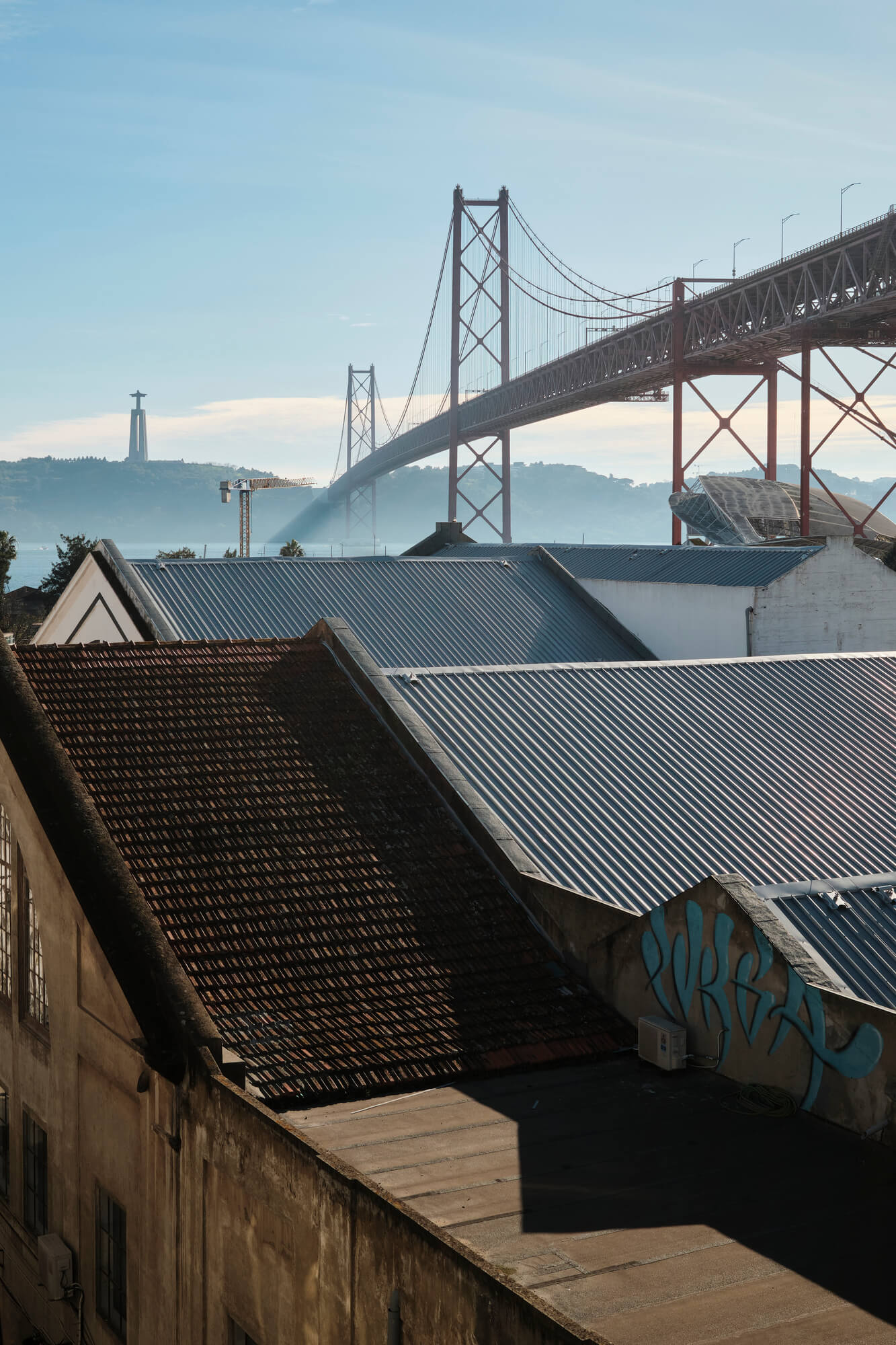
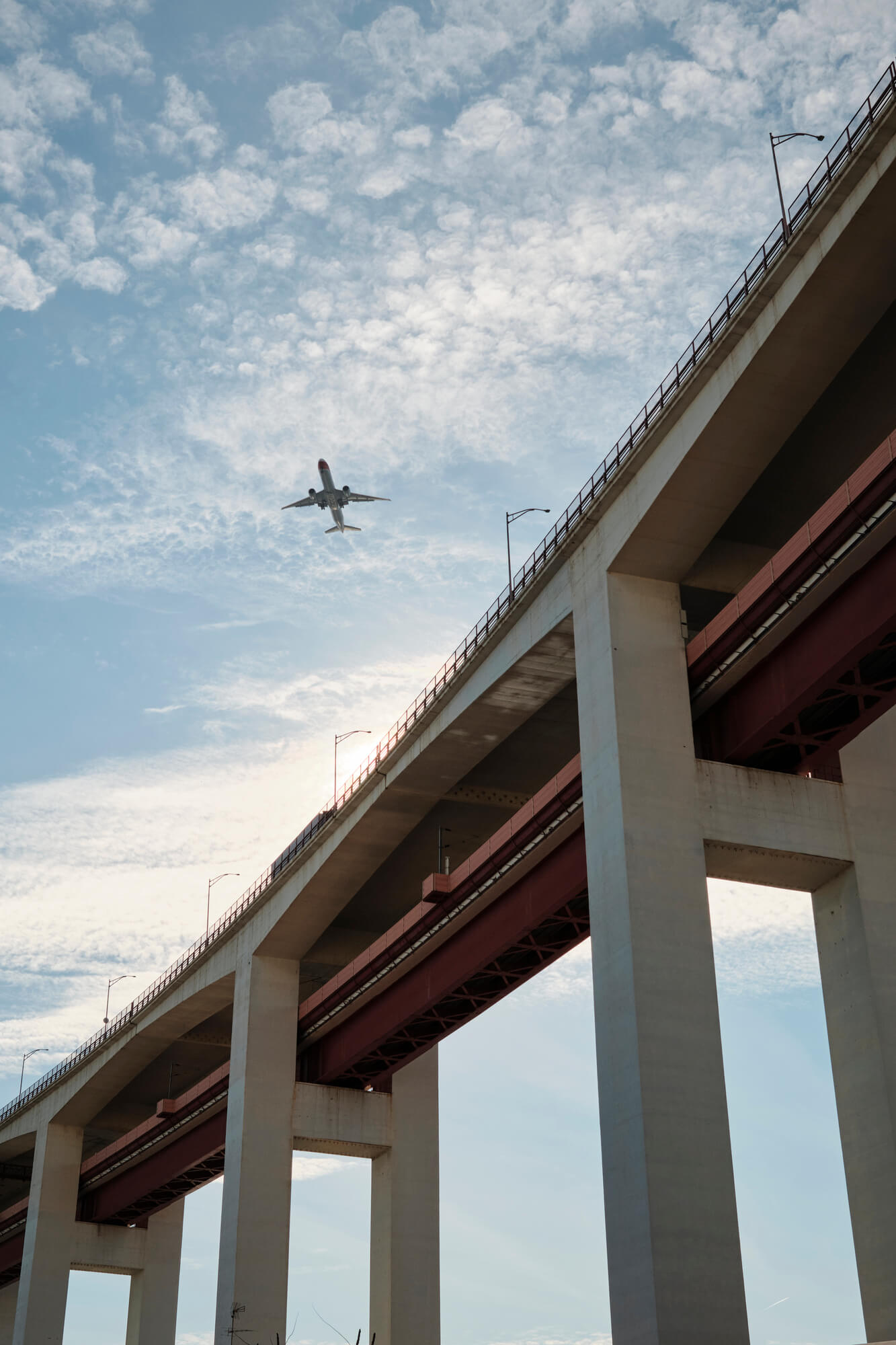
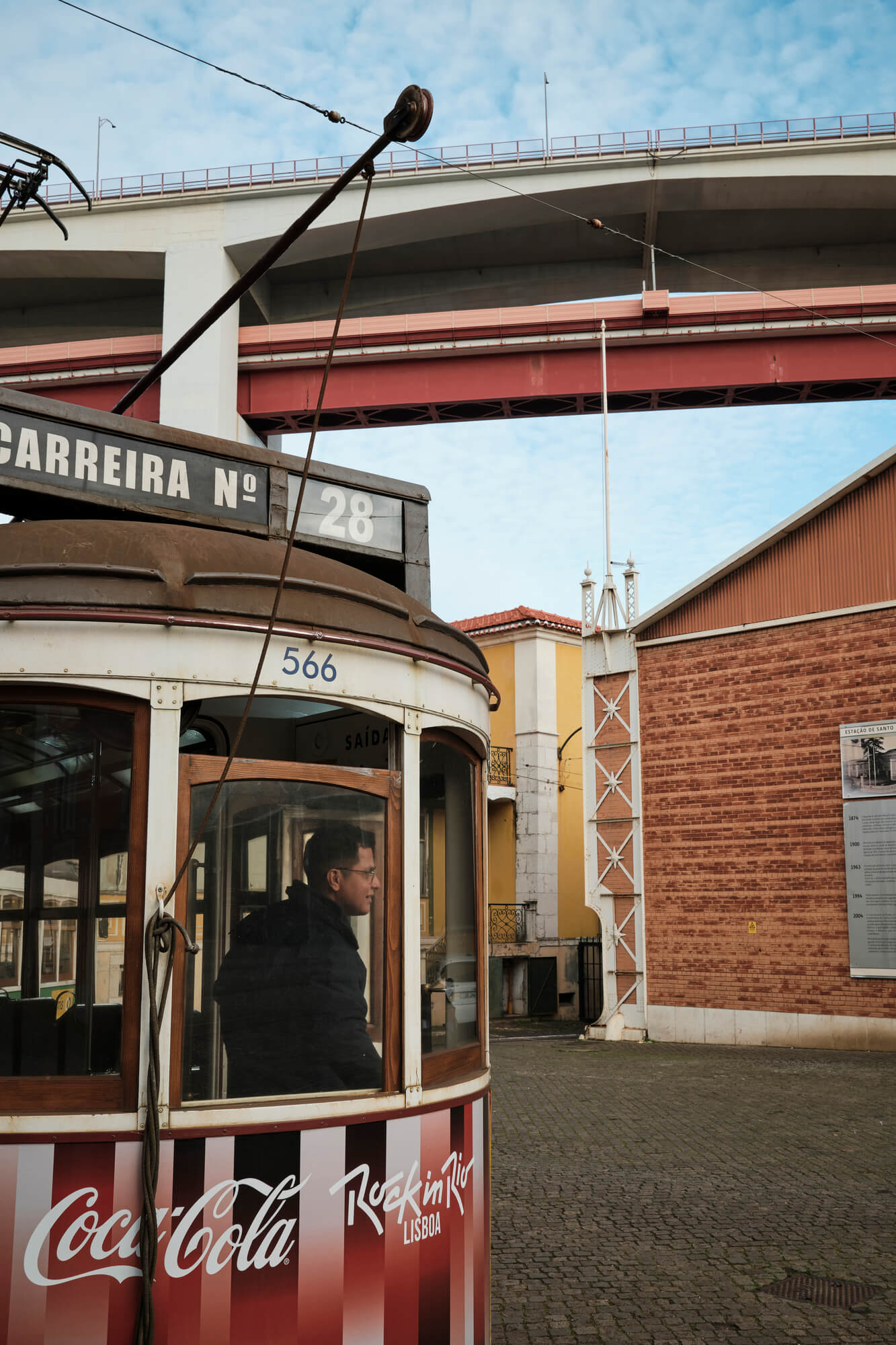
This bridge is a slightly shorter and younger brother of the San Francisco one, built by the same company. It’s closed to pedestrians, so you can either admire it from below, or climb the observation deck (where you can’t really observe anything).
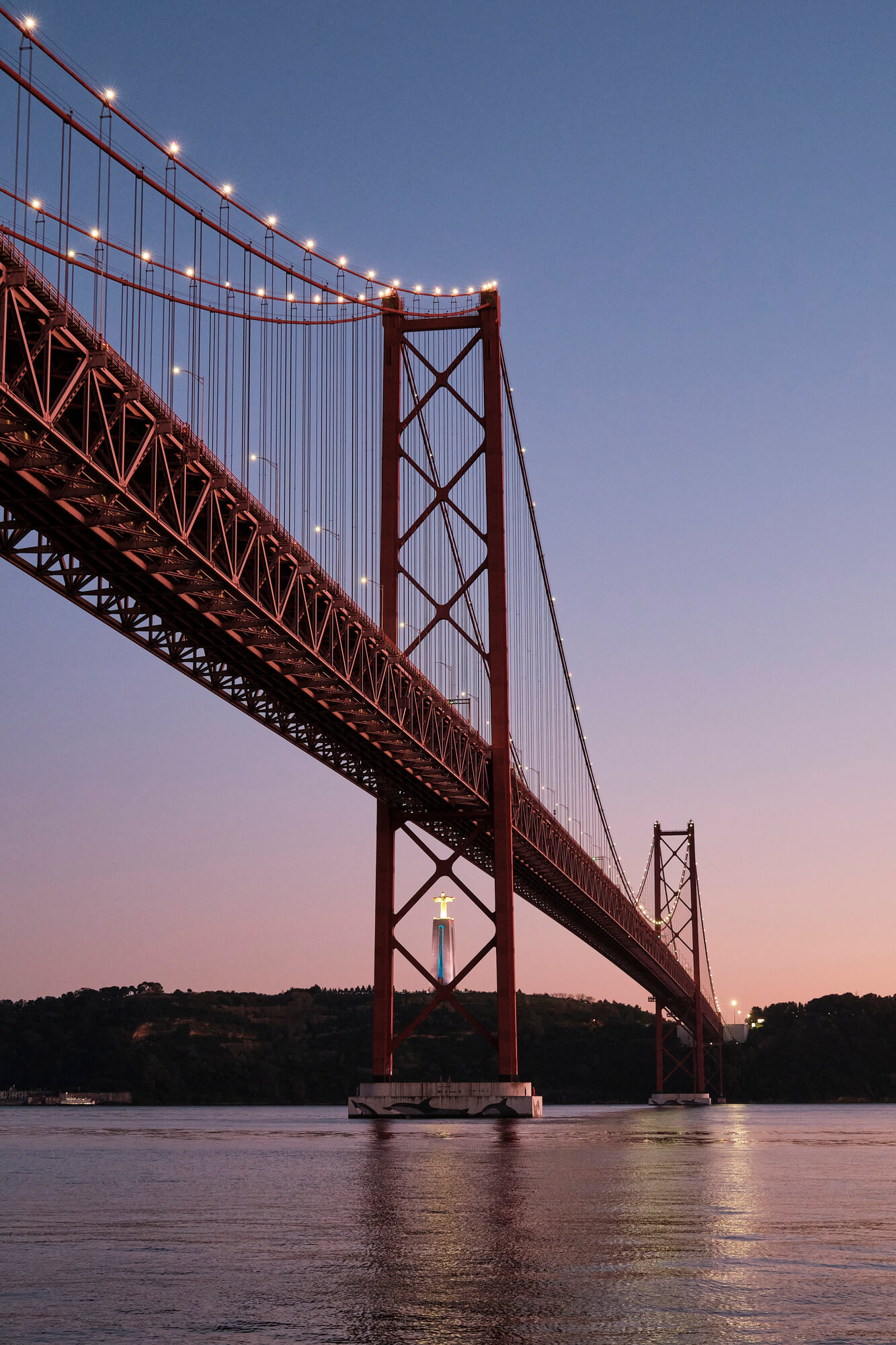
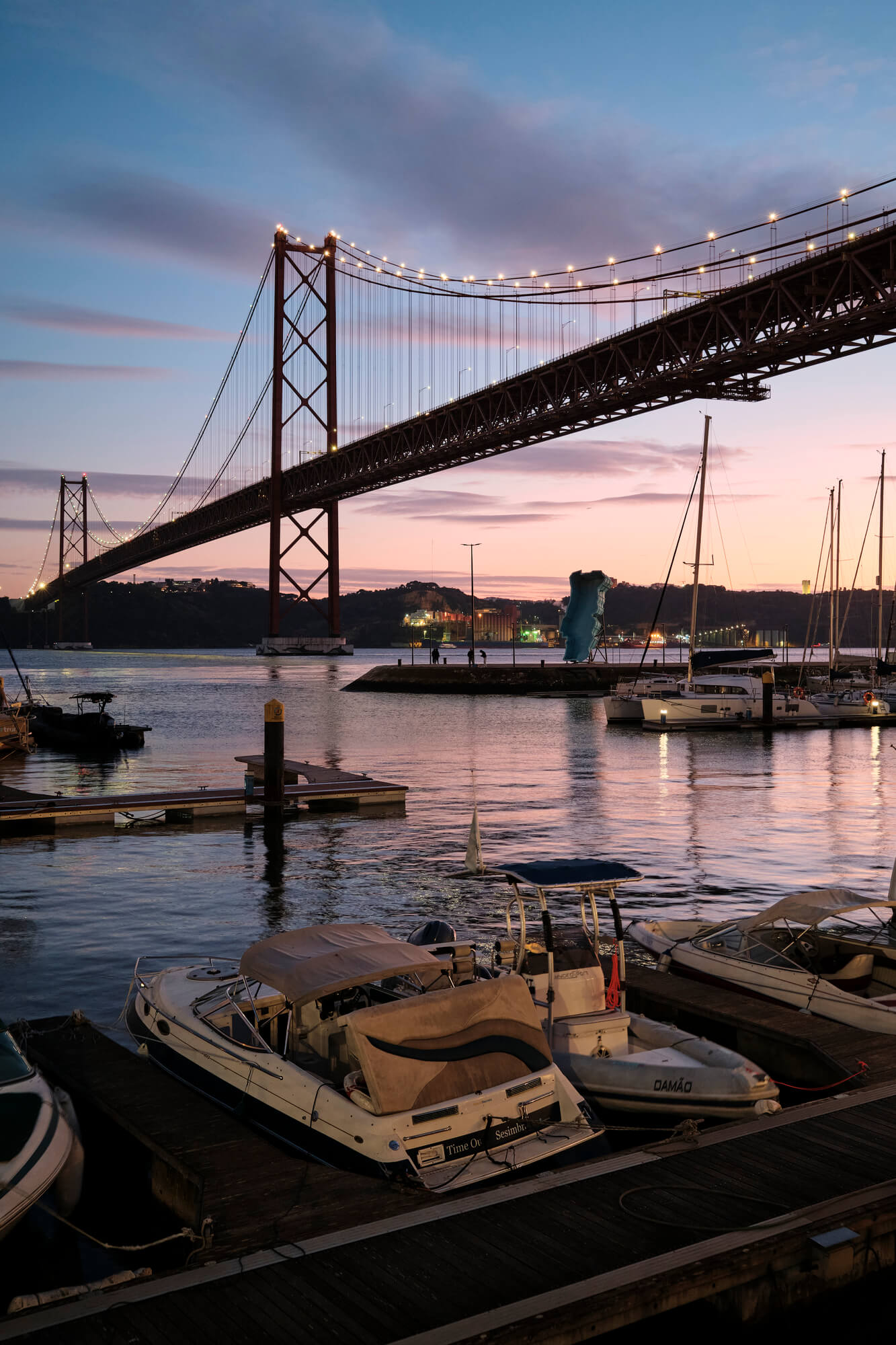
Should I even mention that although Porto also has impressive bridge structures, this one is times cooler? Believe you me: this thing is so infinitely photogenic that one can’t simply pass by without taking a thousand pictures from every angle.
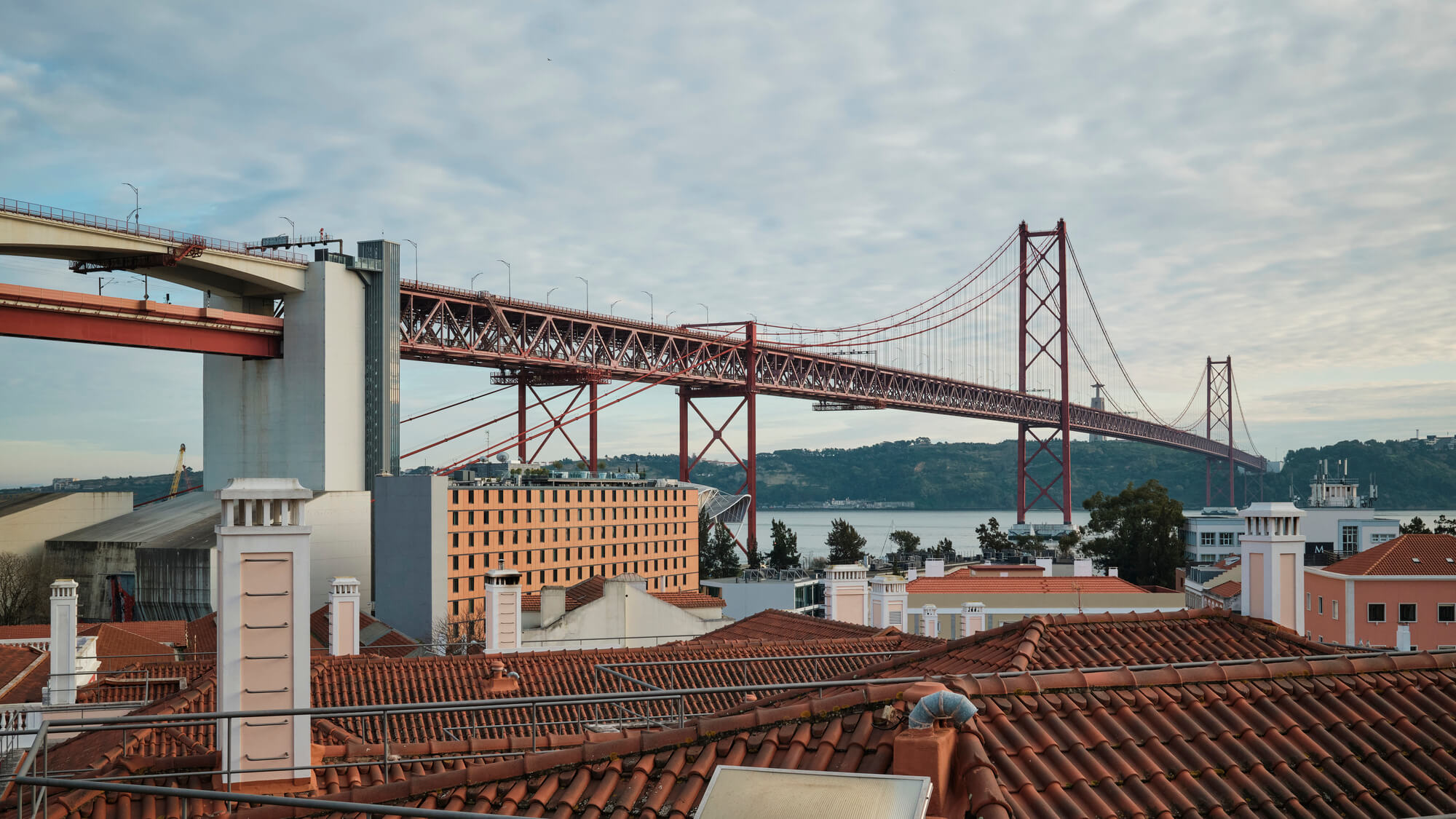
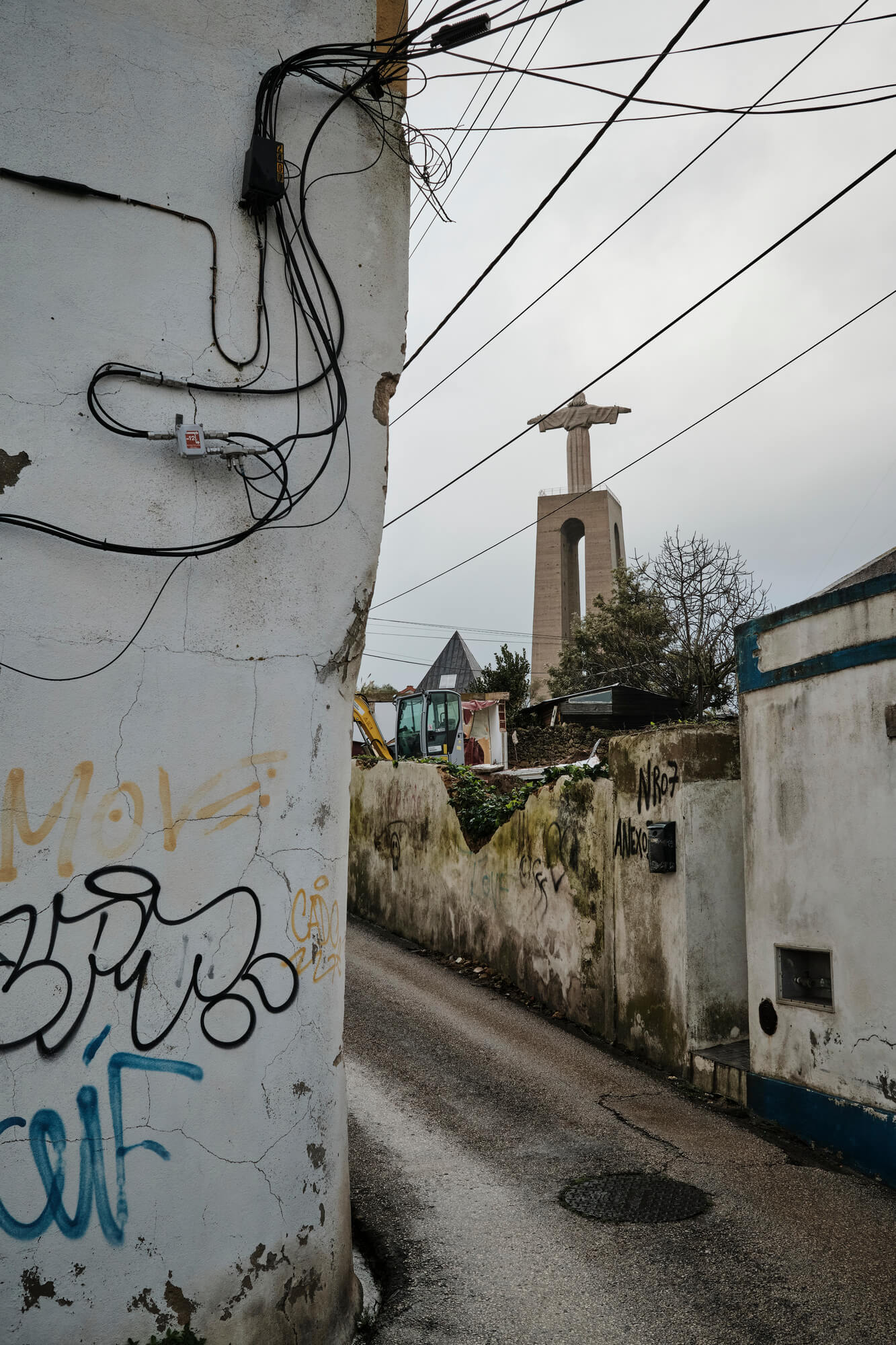
On the opposite bank, right next to the bridge, you can see a huge Jesus — almost identical to the iconic monument in Rio de Janeiro. But you don’t really have to go there — the surrounding Almada municipality looks like one of those favelas.

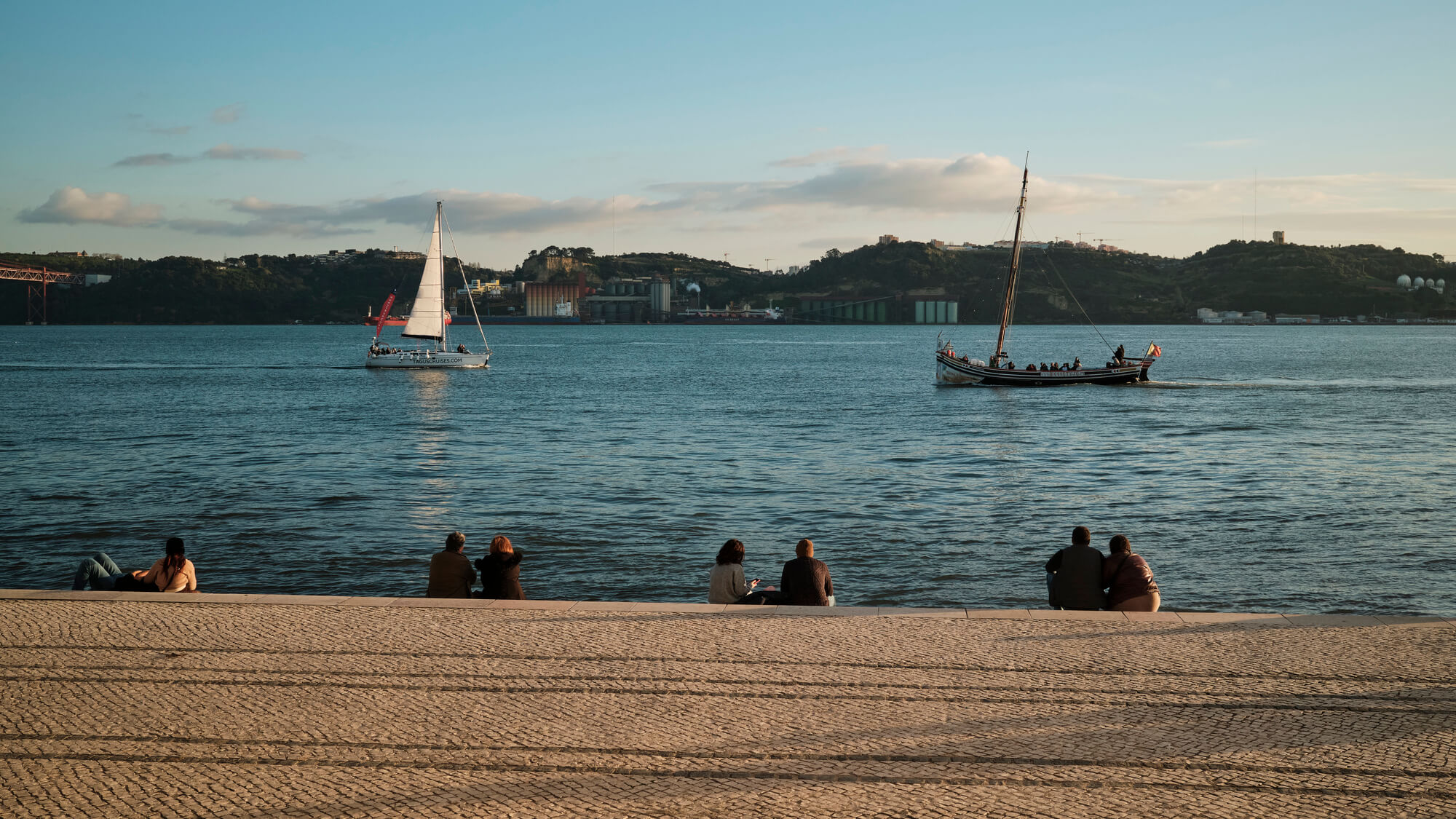
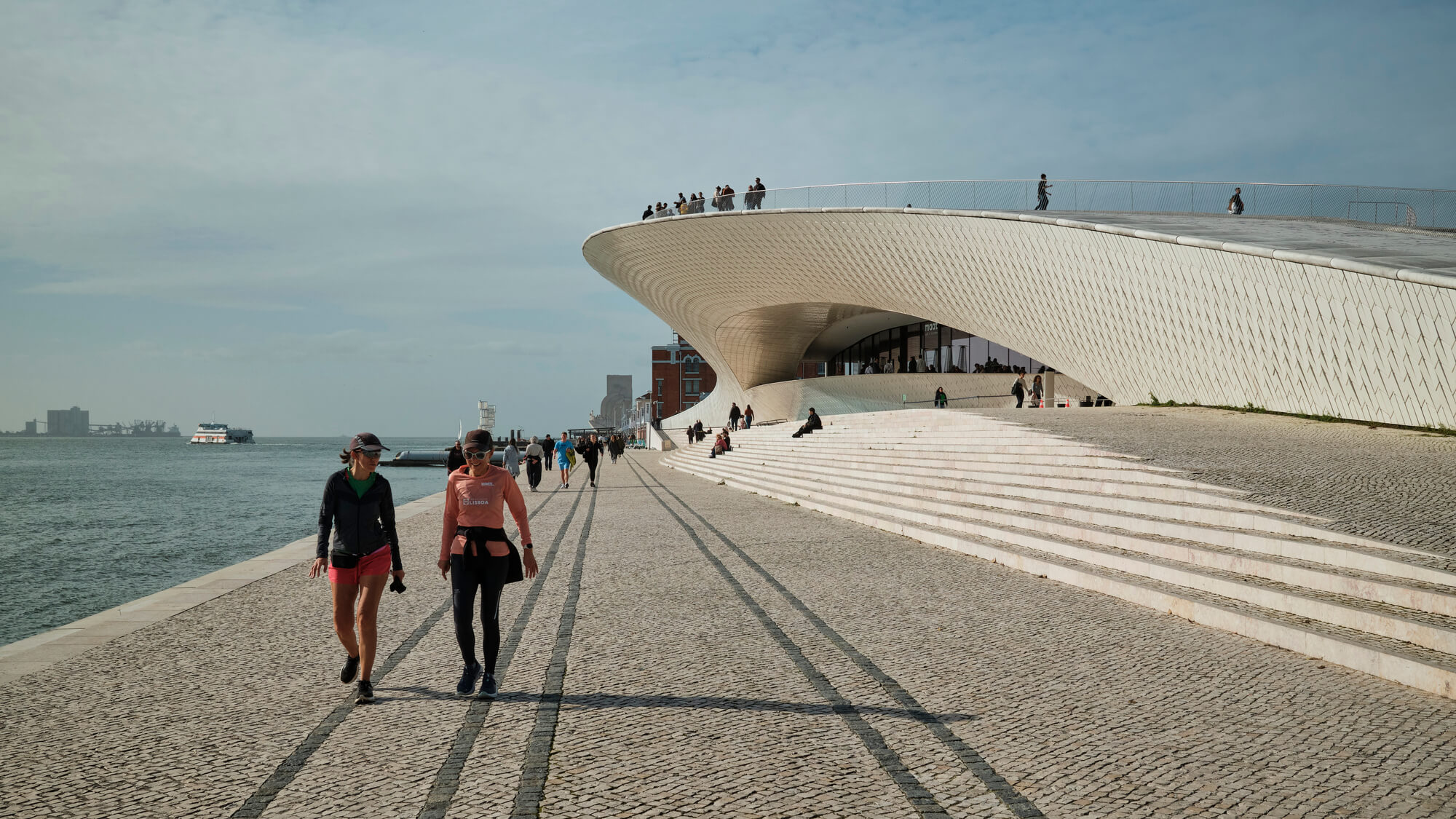
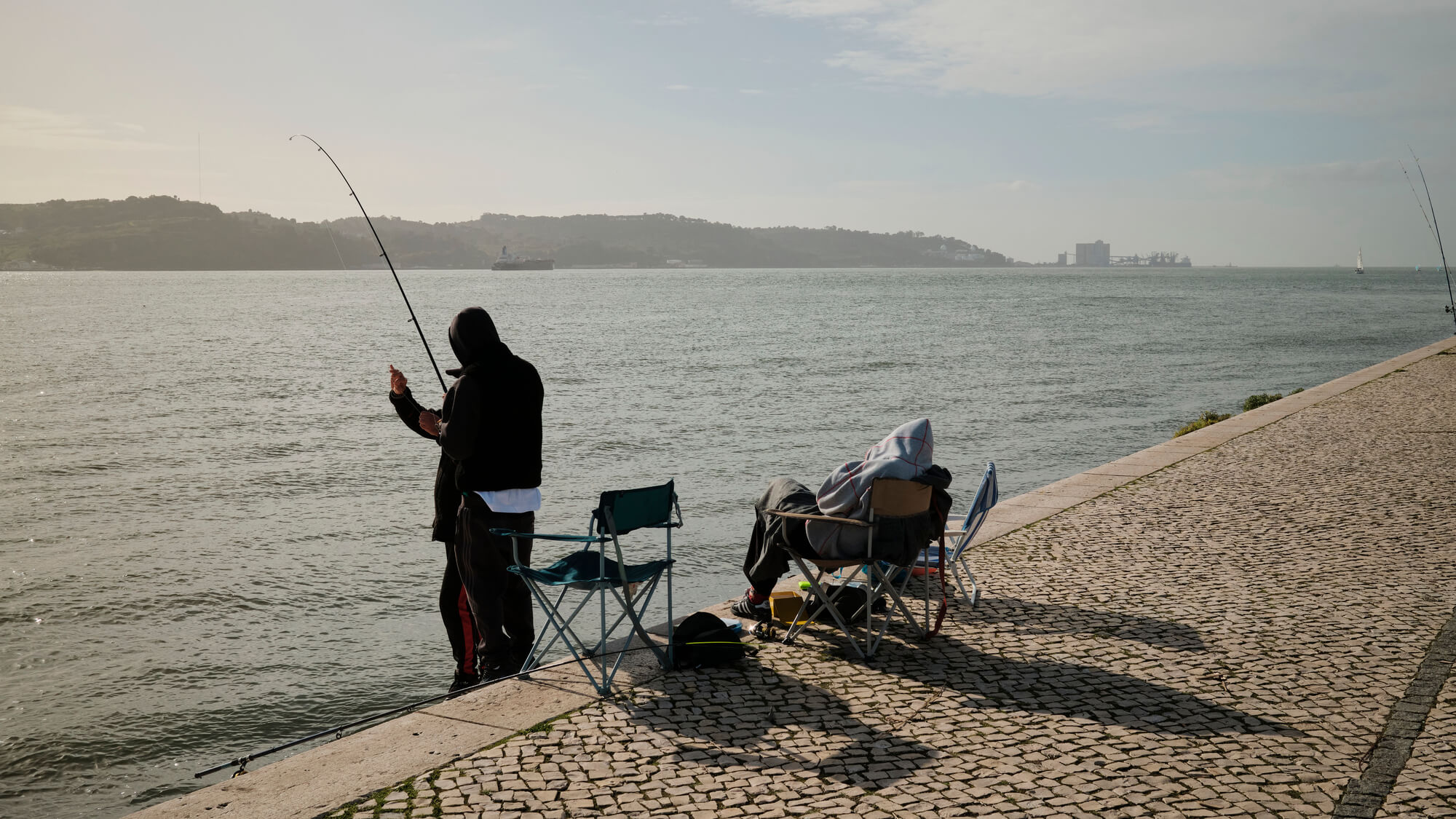
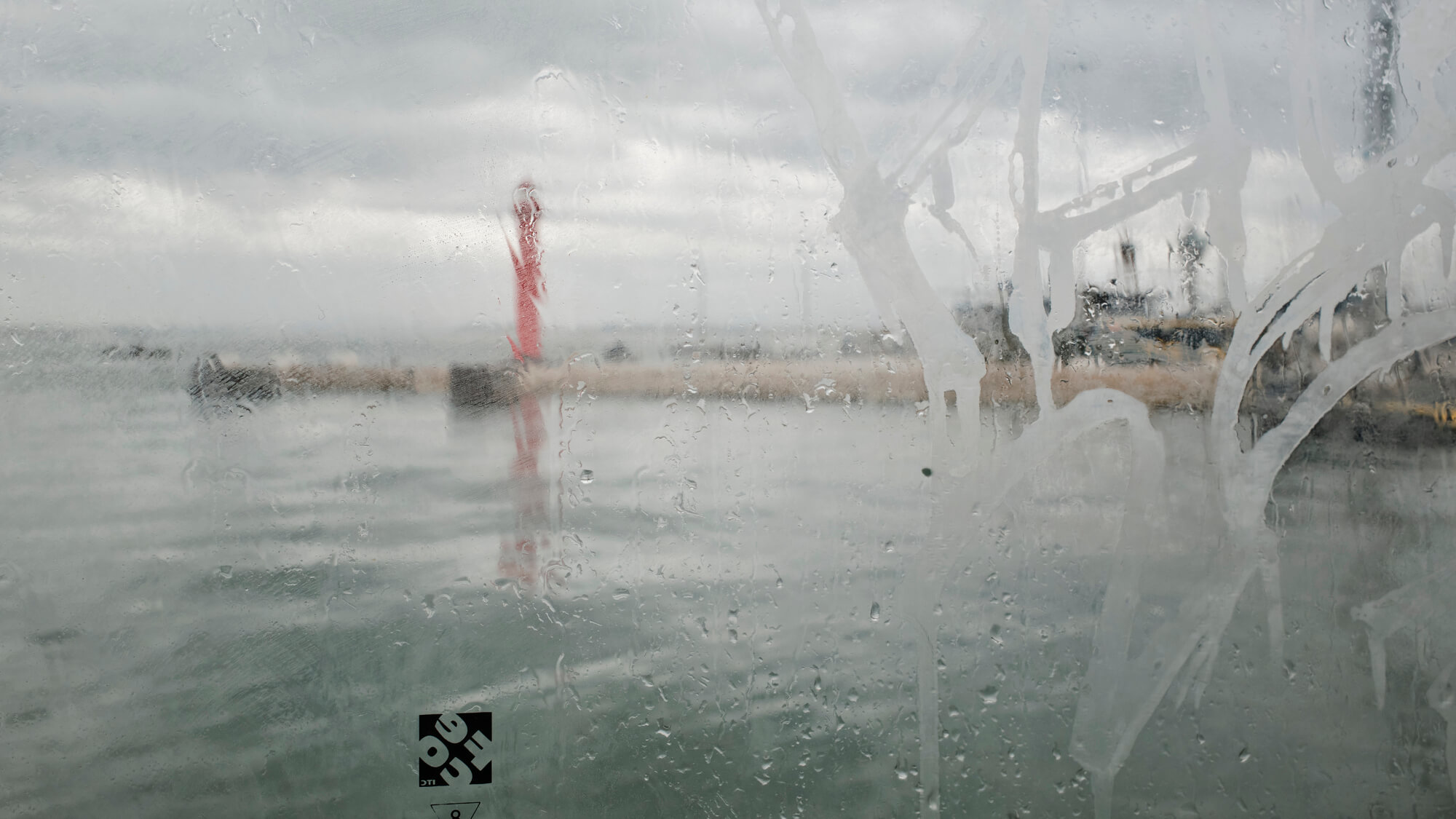
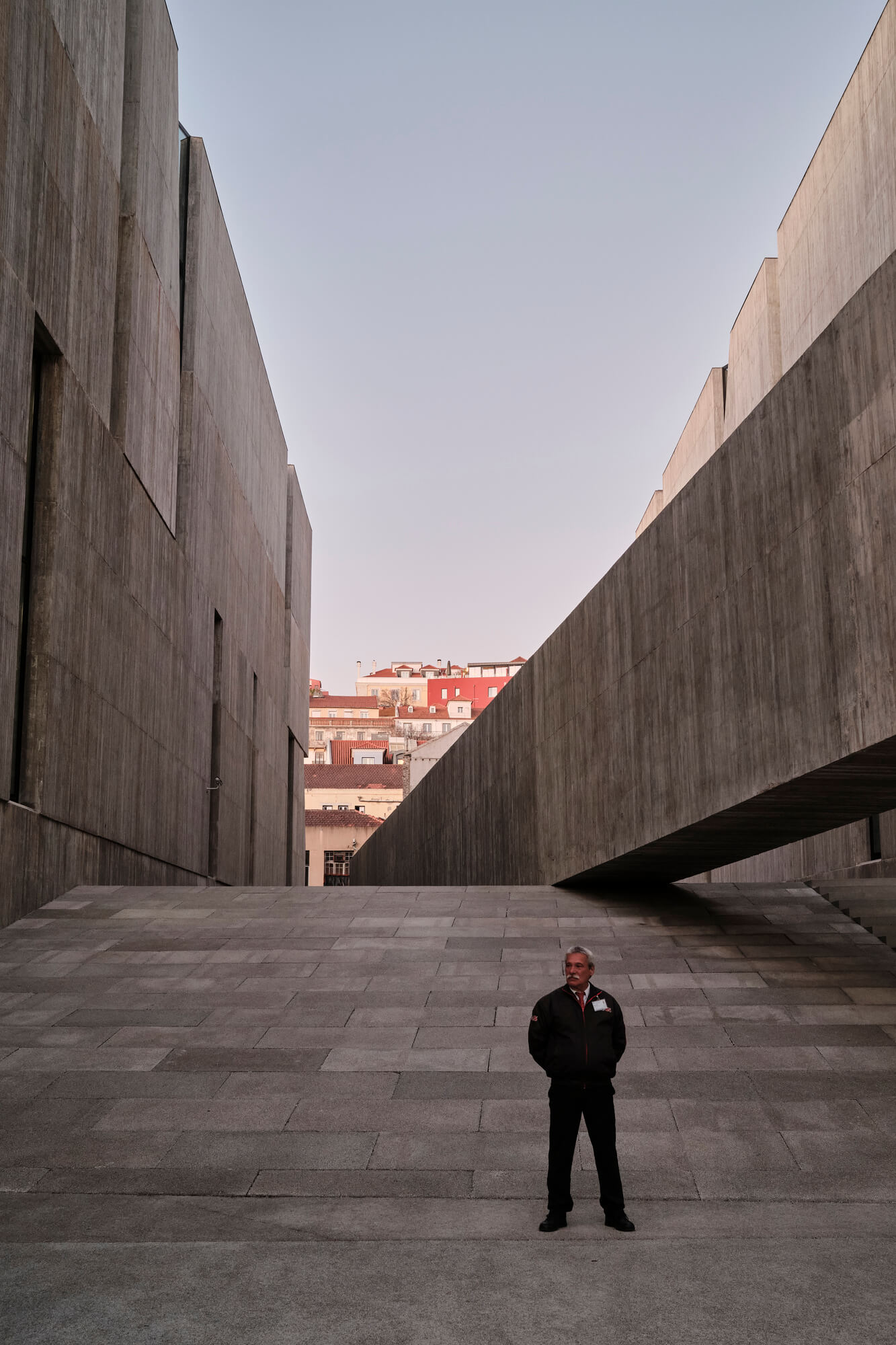
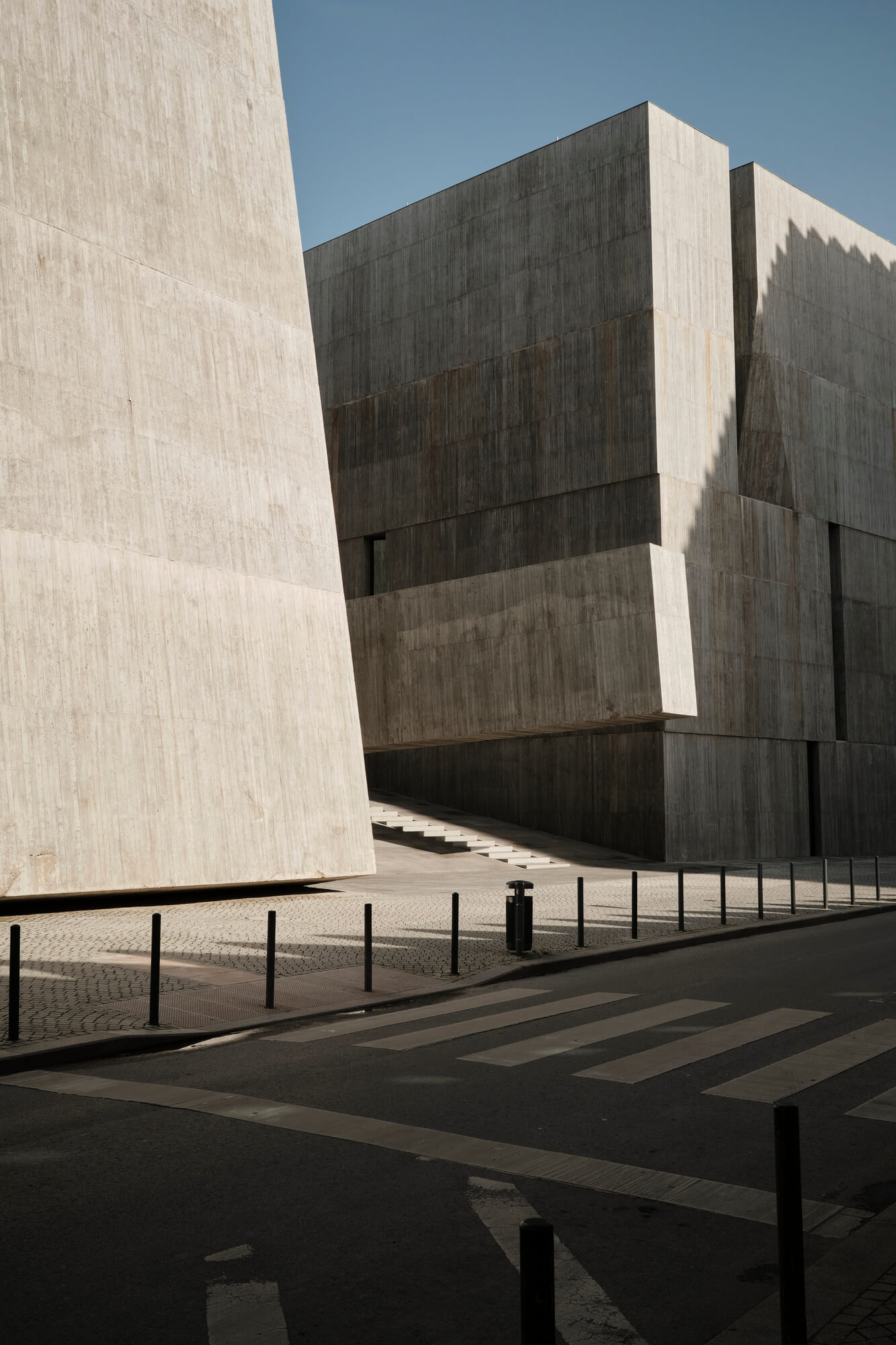
Instead of that, you can take a long stroll along the river toward the Belém Tower, passing by an impressive MAAT museum building, Jerónimos Monastery, numerous cozy cafes, marinas, and flocks of people jogging, cycling, fishing or idly chilling.
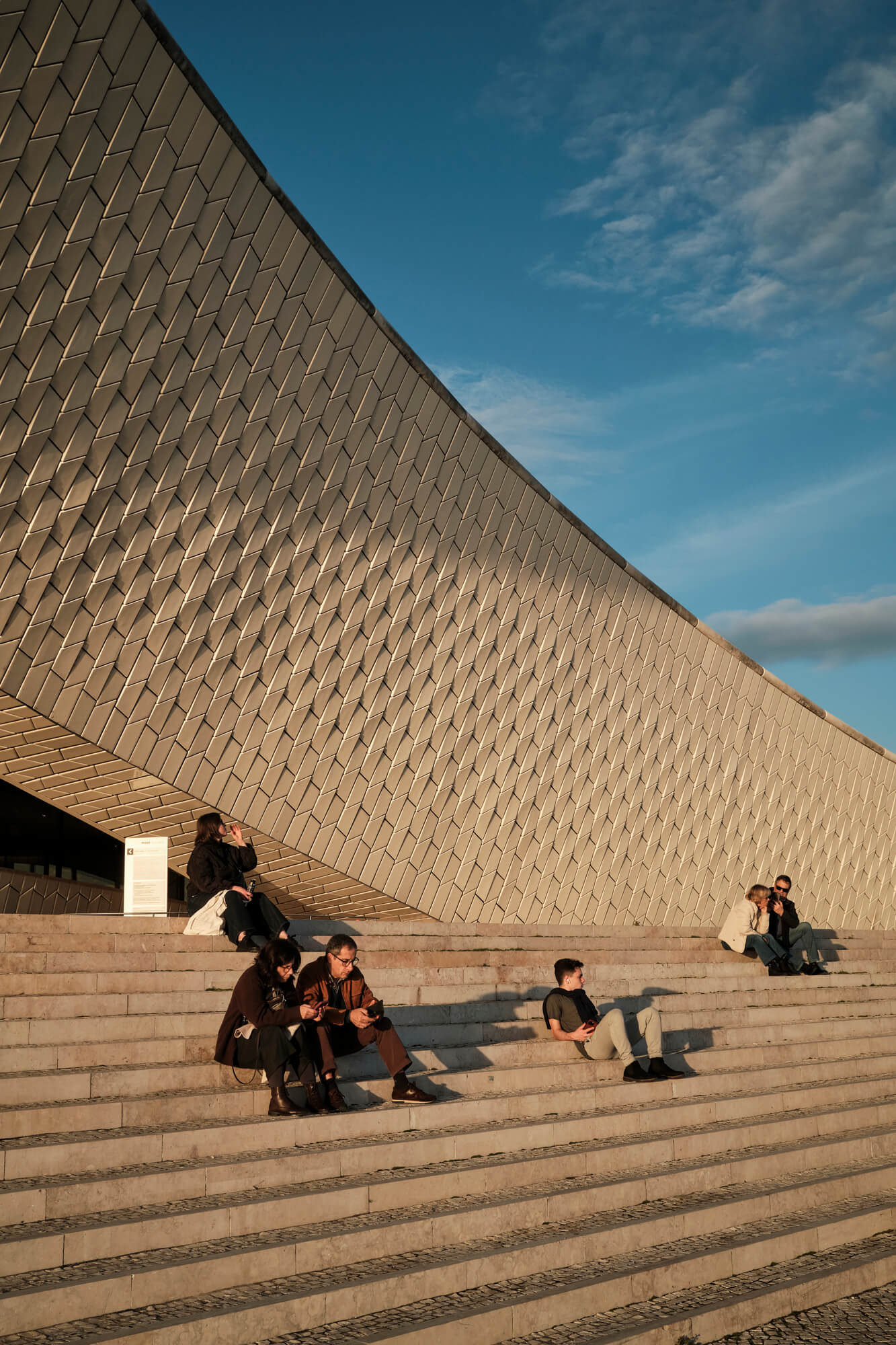
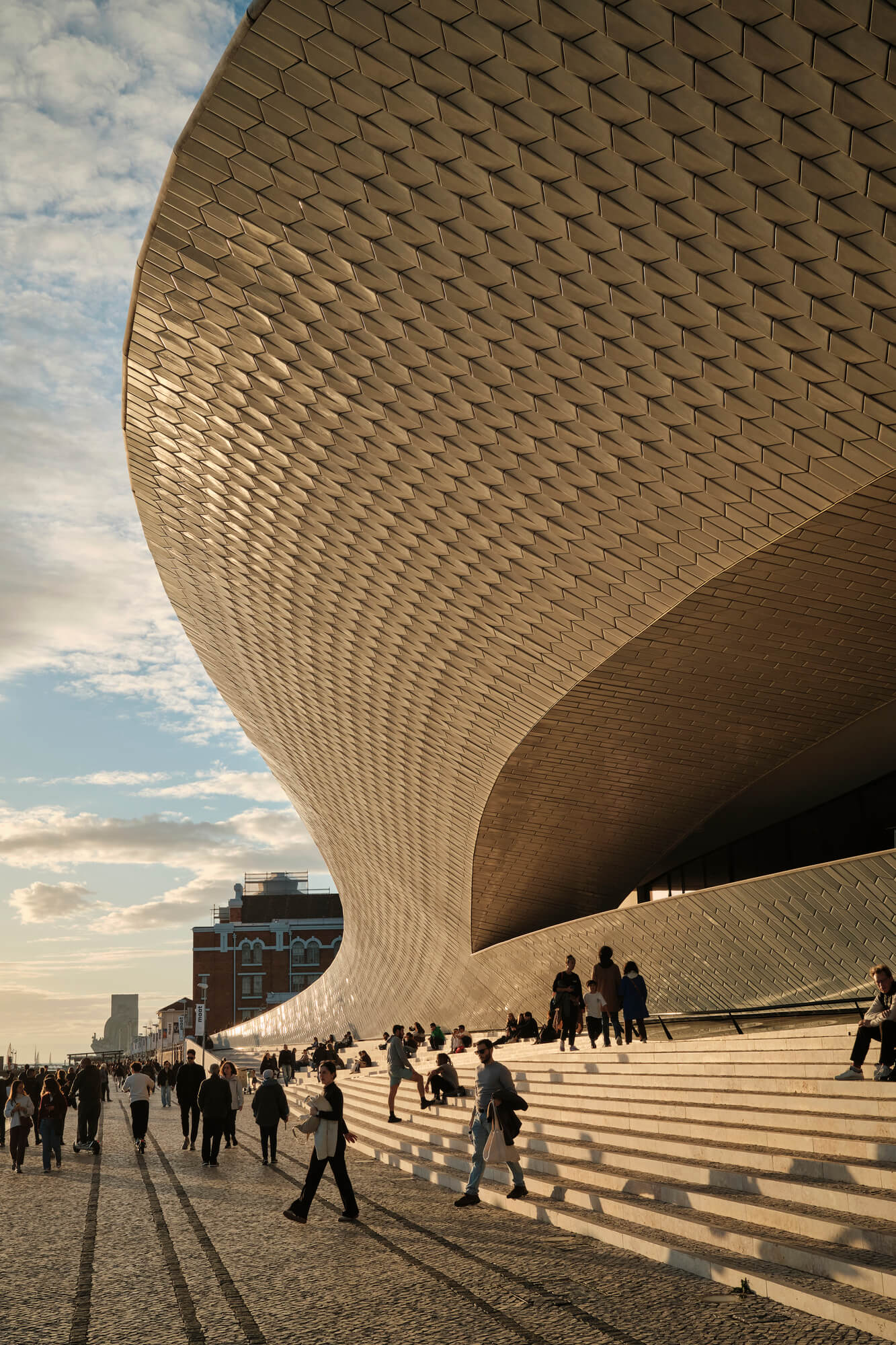
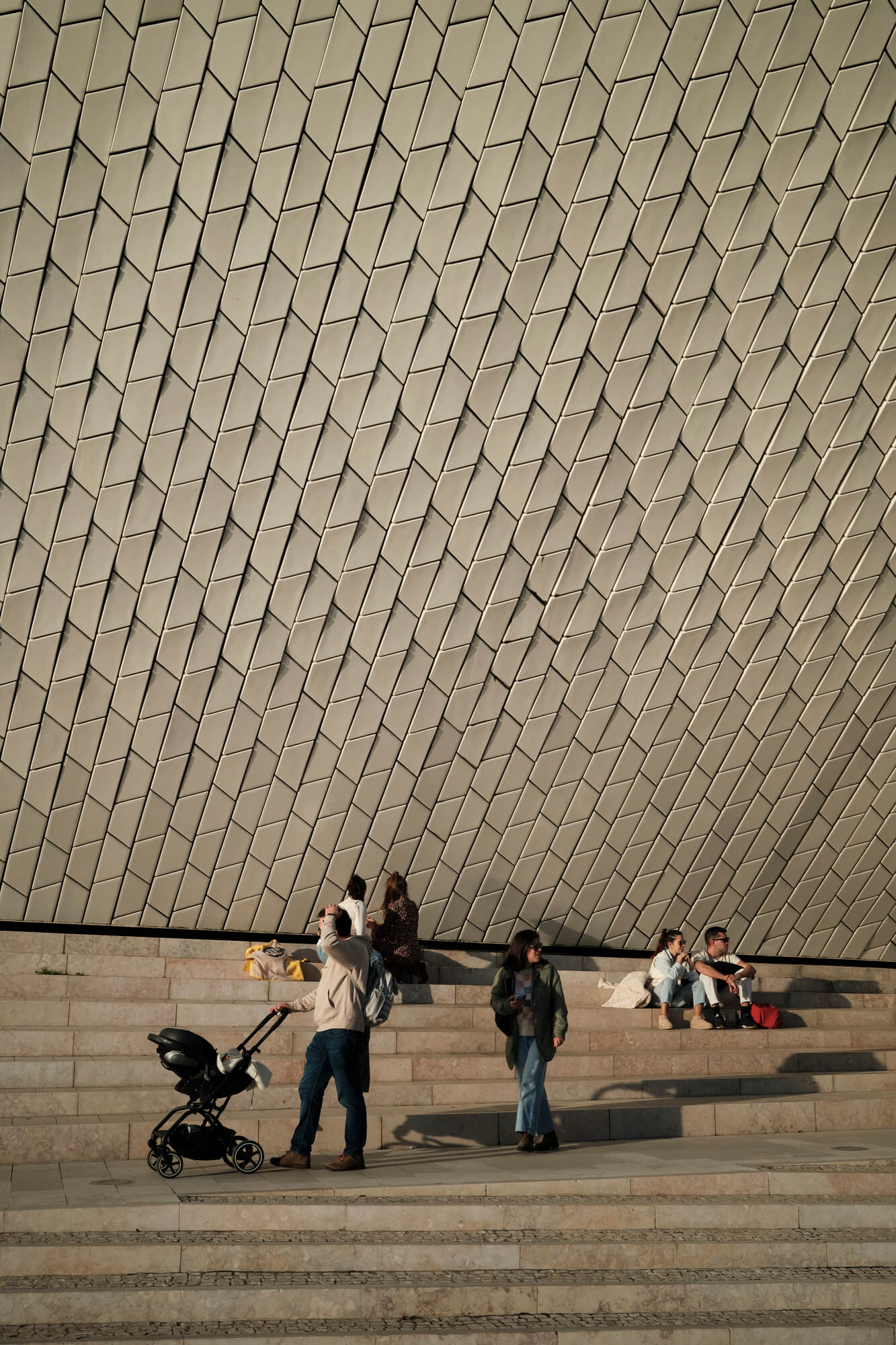
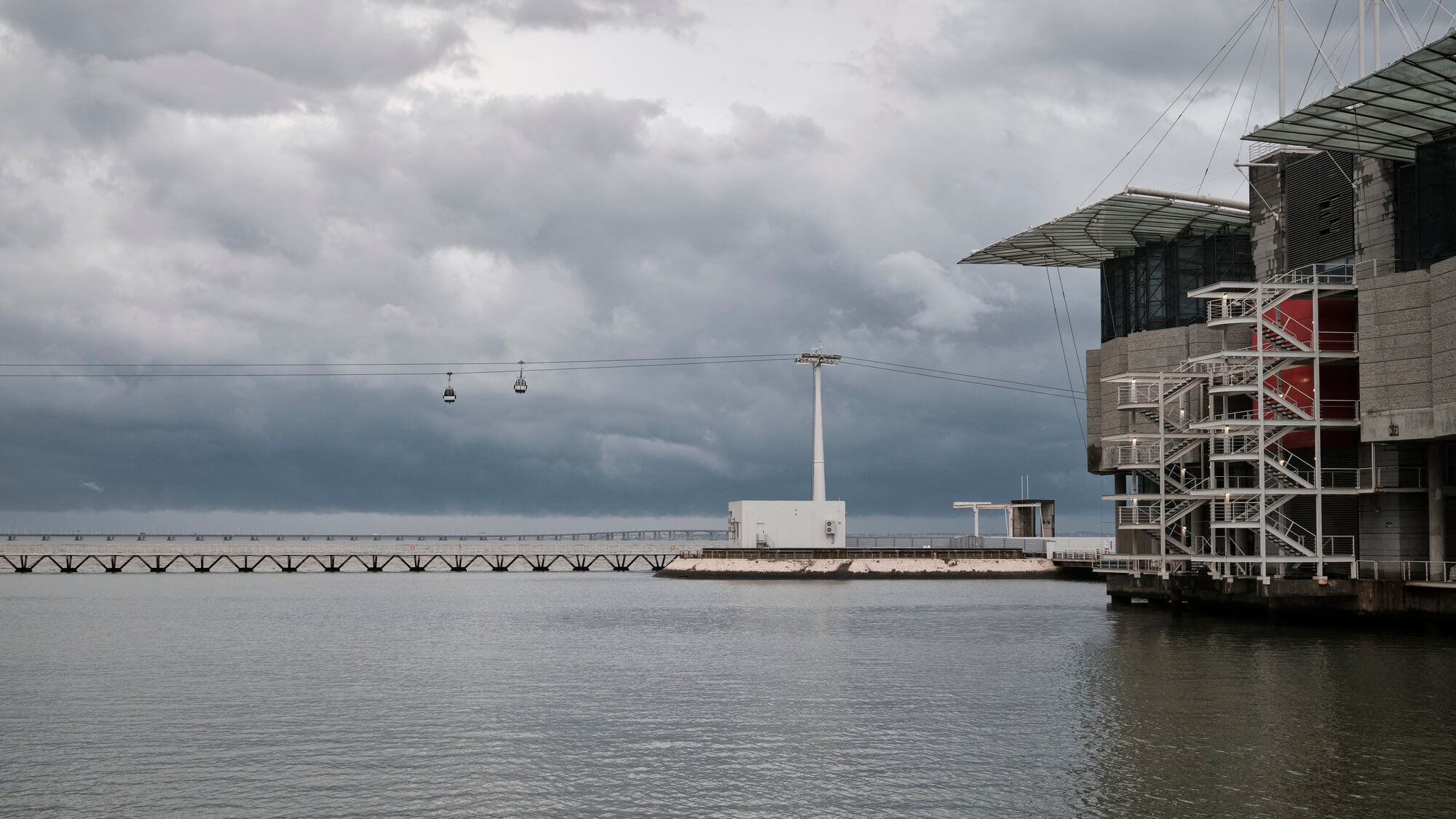
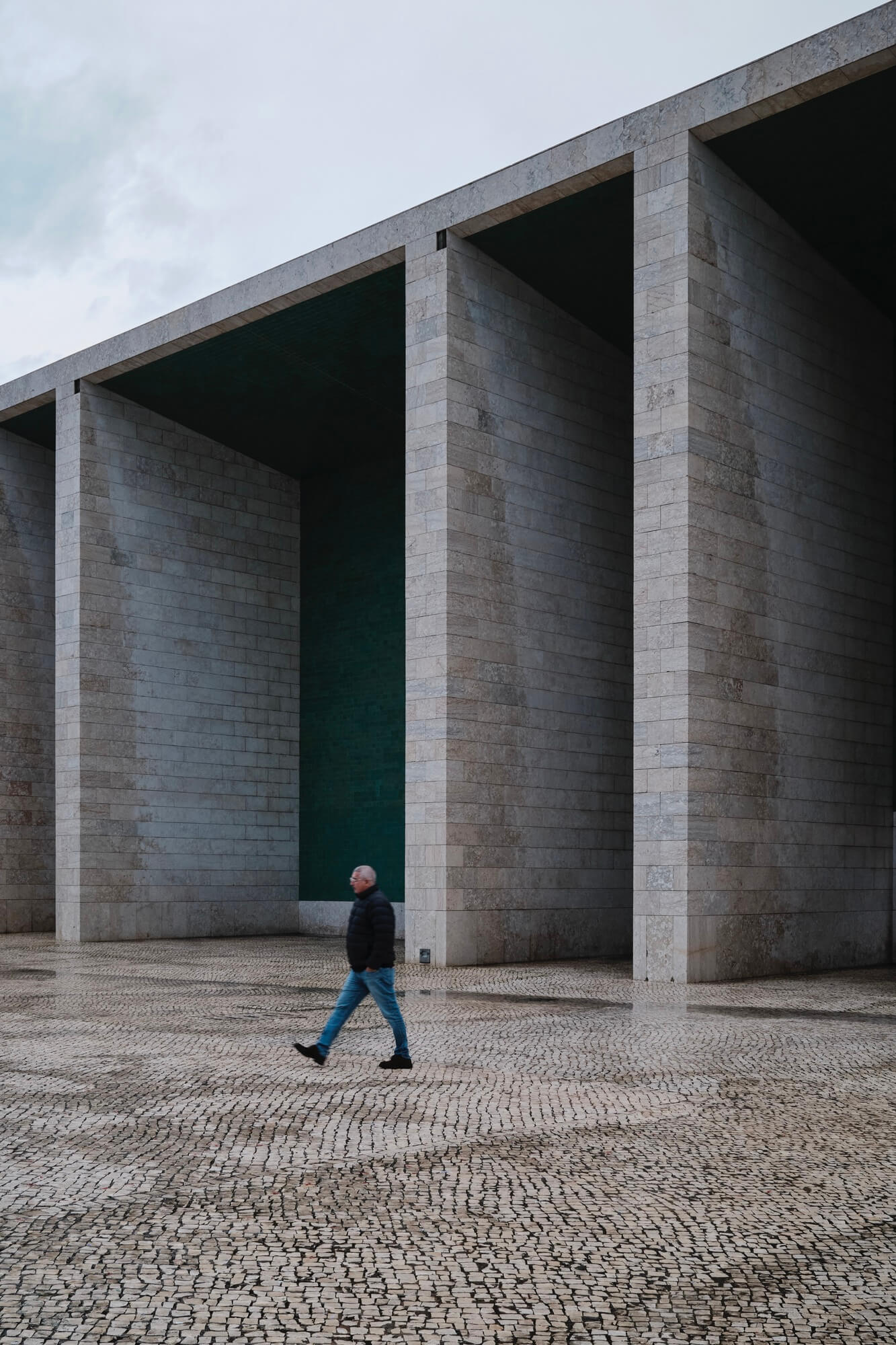
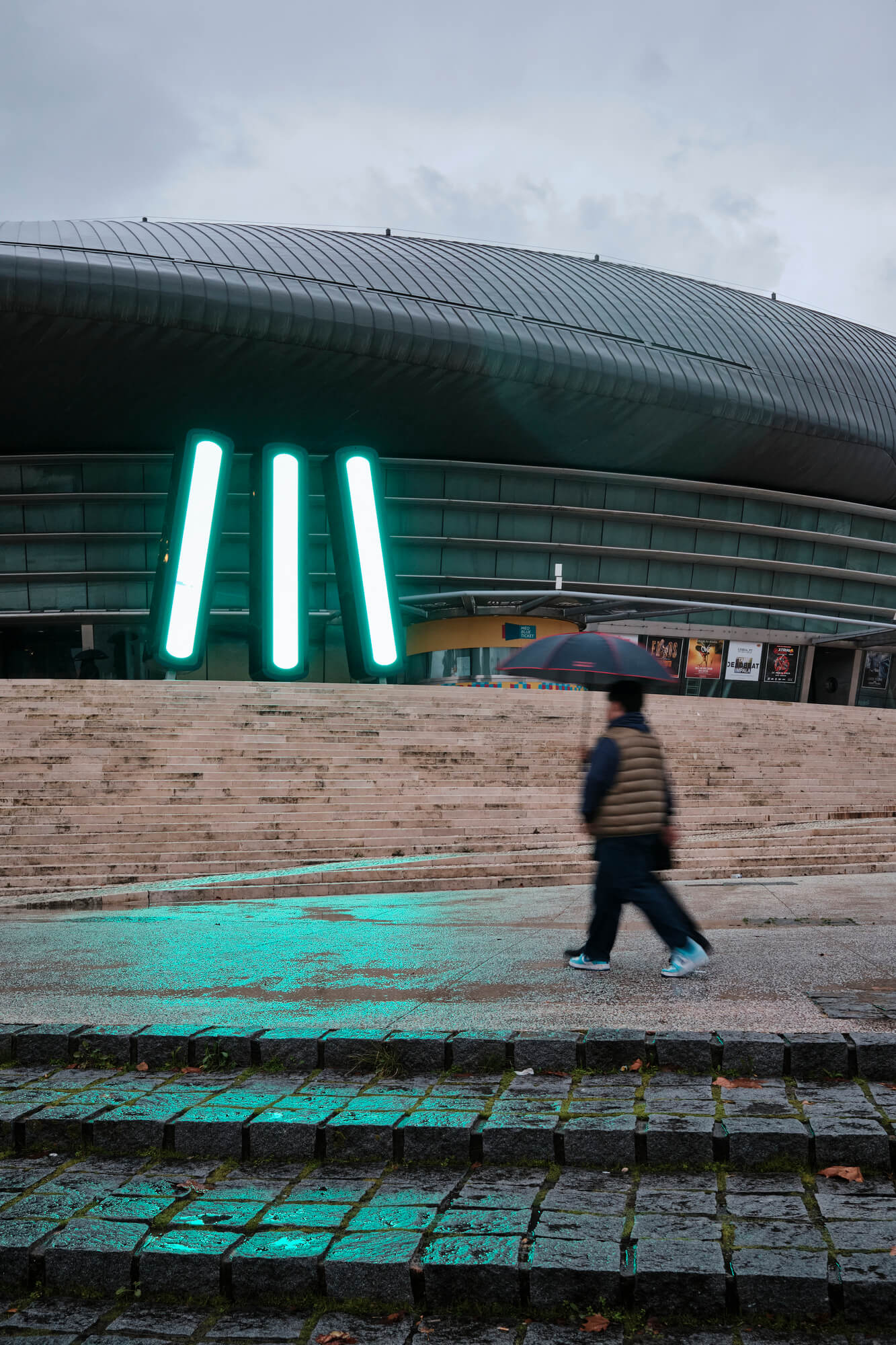
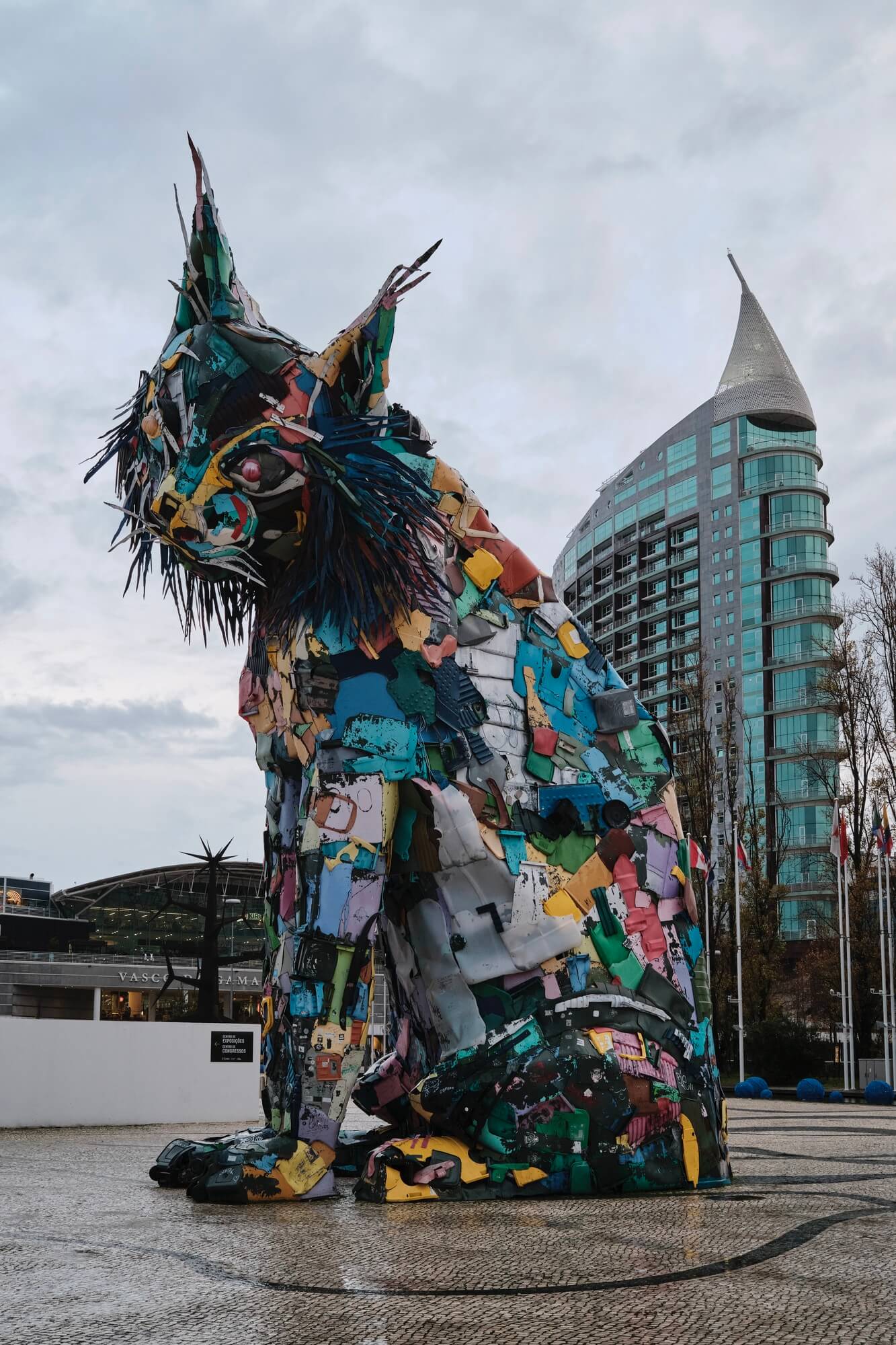
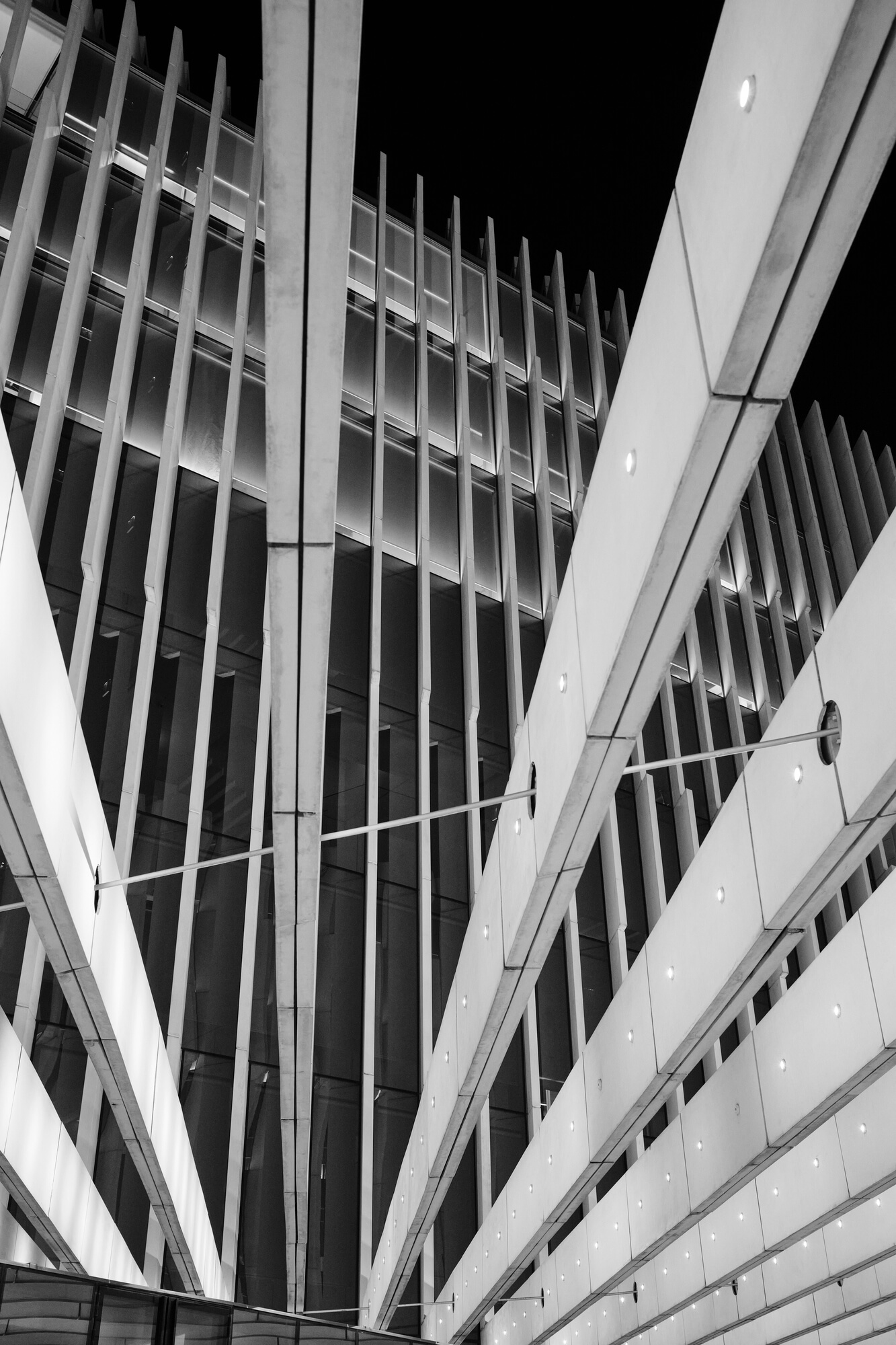
Another cool (and busy) area to explore outside the city center is Parque das Nações — home to Lisbon Oceanarium, Oriente train station, shopping malls, modern office buildings, residential blocks, and other impressive glass-and-concrete structures.
Considering the city size and terrain, you’ll probably want to use public transport to get around. Lisbon has it all: subway, buses, ferries, funiculars (though they were grounded after the tragic crash in October 2025), and, of course, trams.
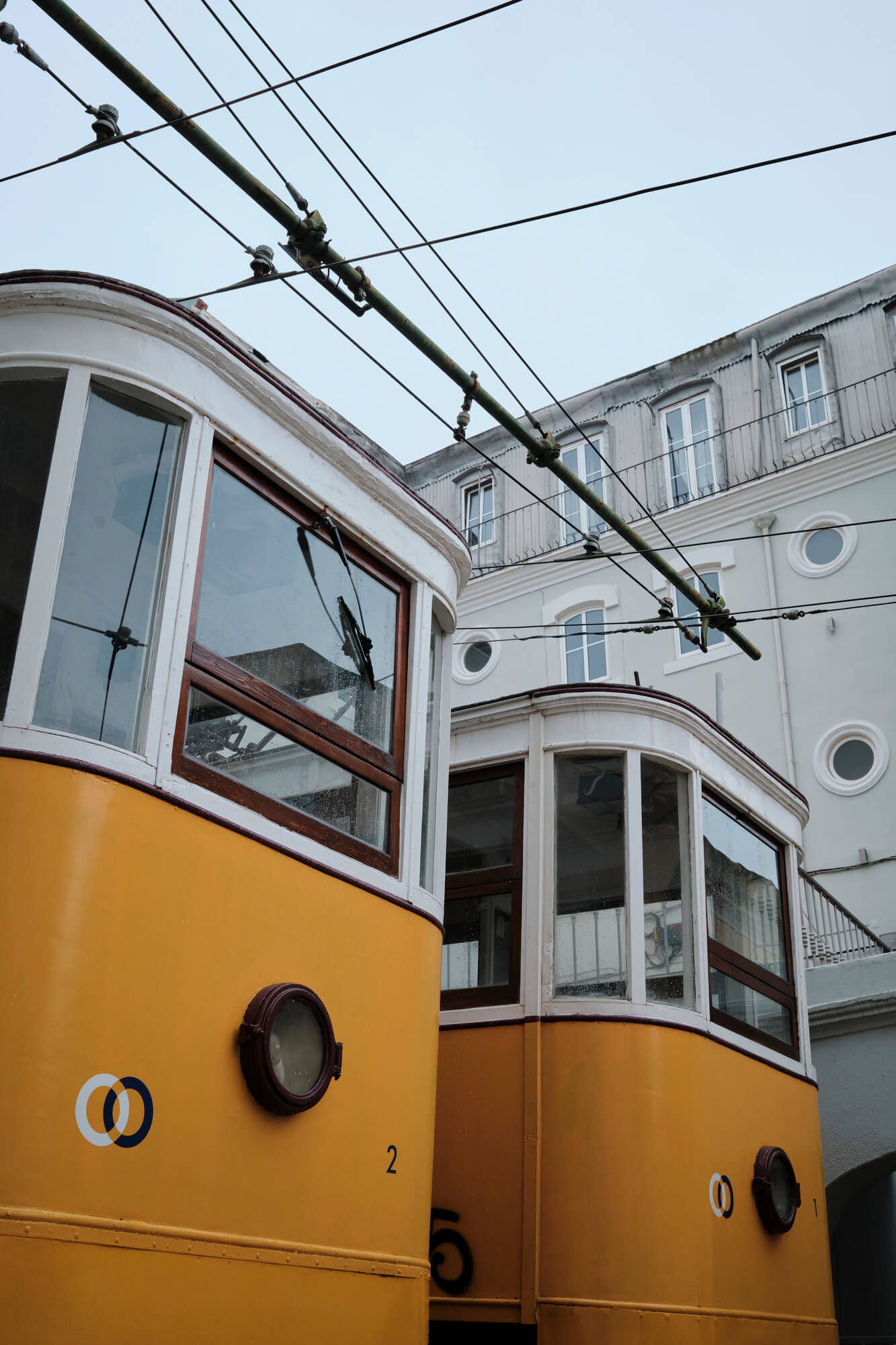
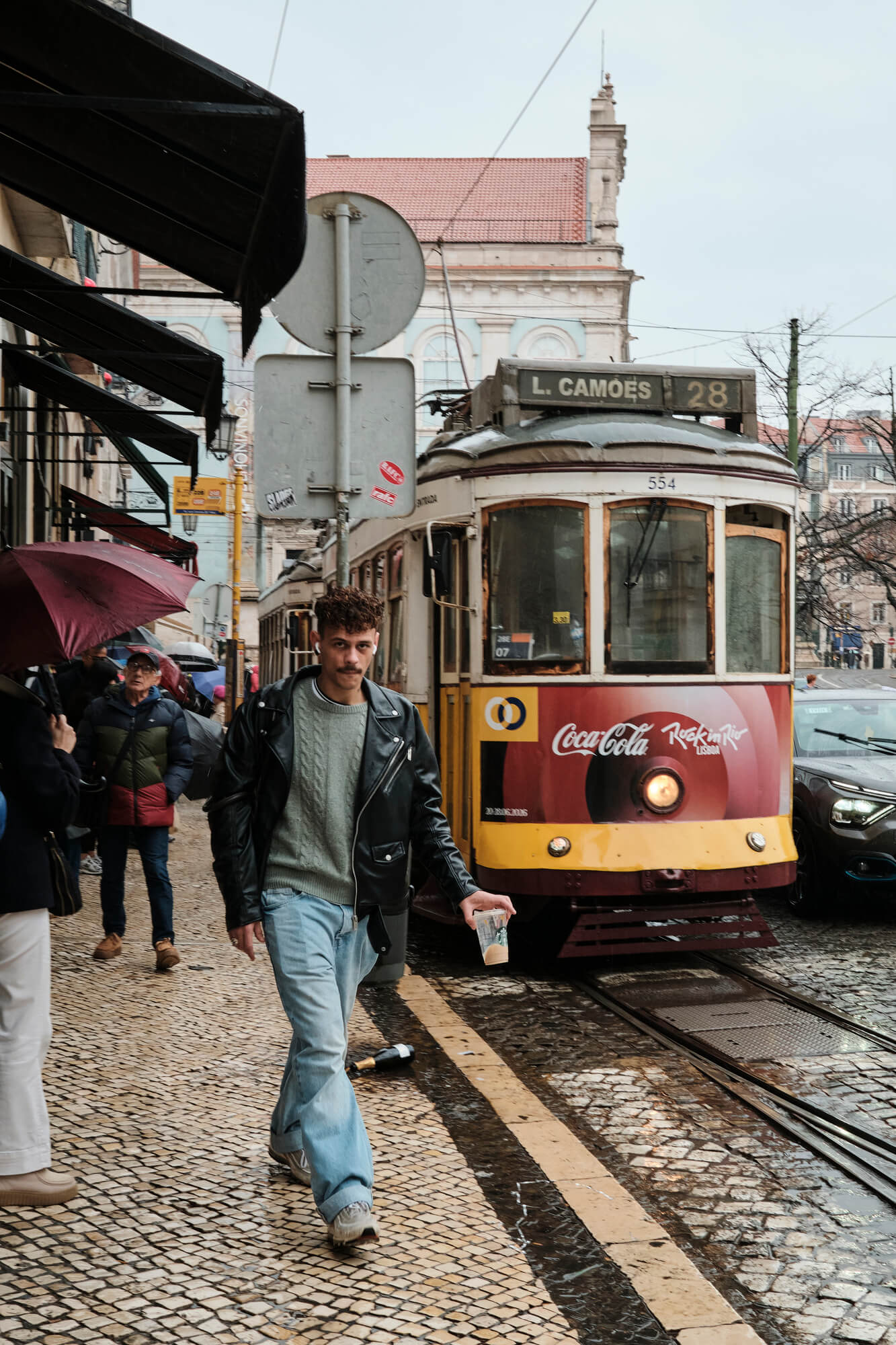
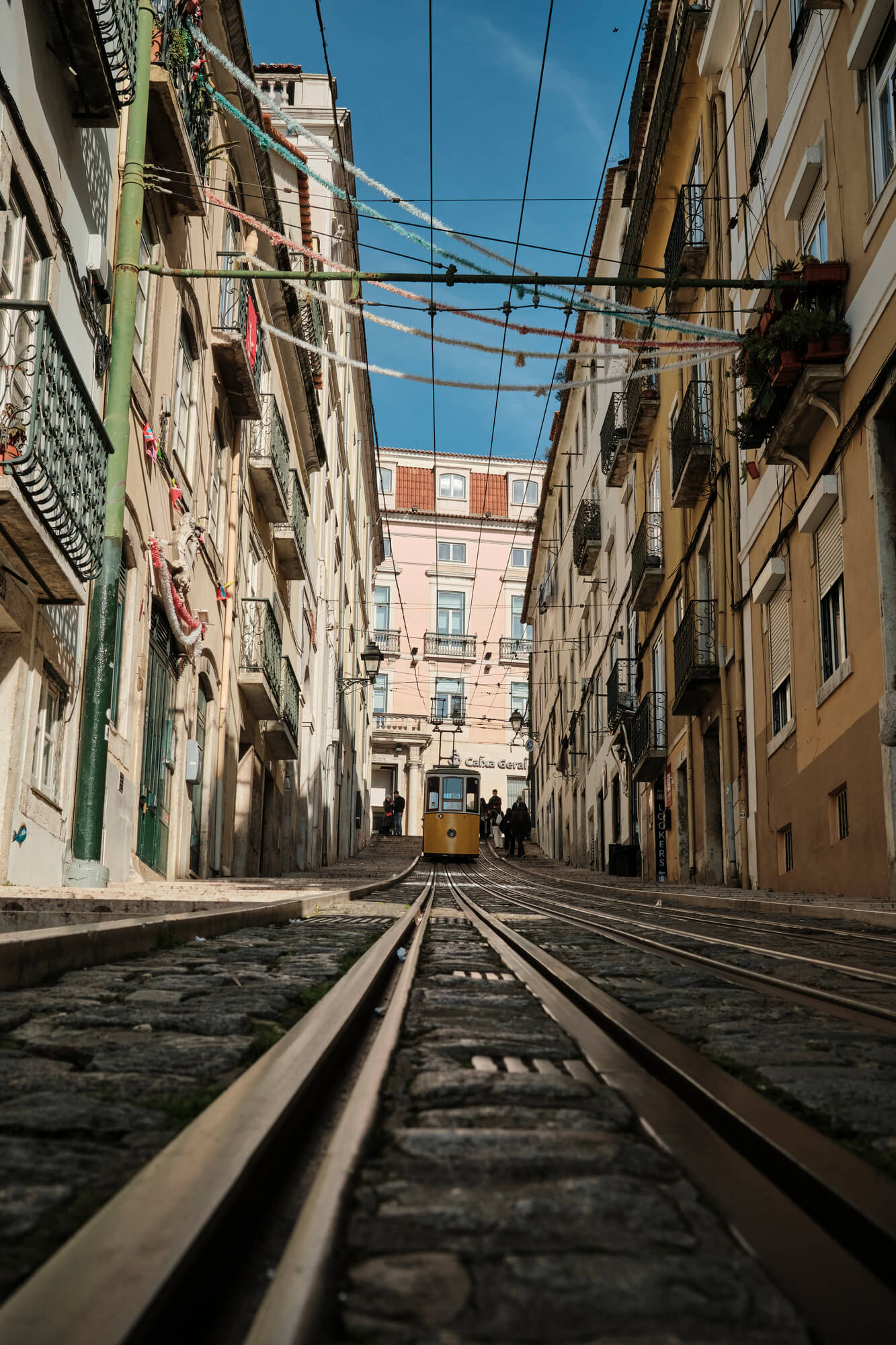
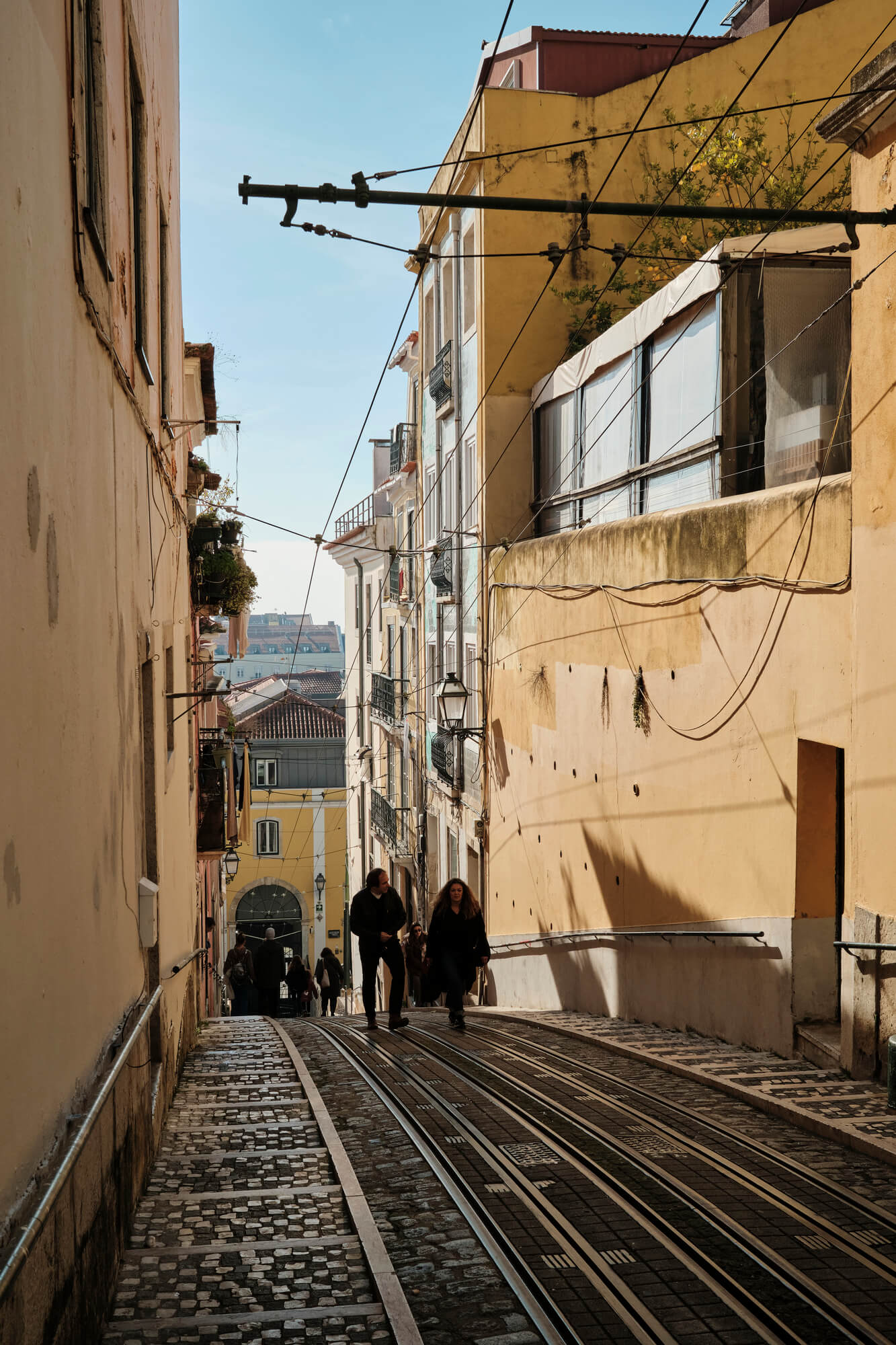
You can casually ride 100-year-old tram cars running around the city as part of public transport, and it’s another thing that makes Lisbon look like San Francisco’s European cousin. Porto also has them, but just two lines mostly meant for tourists.
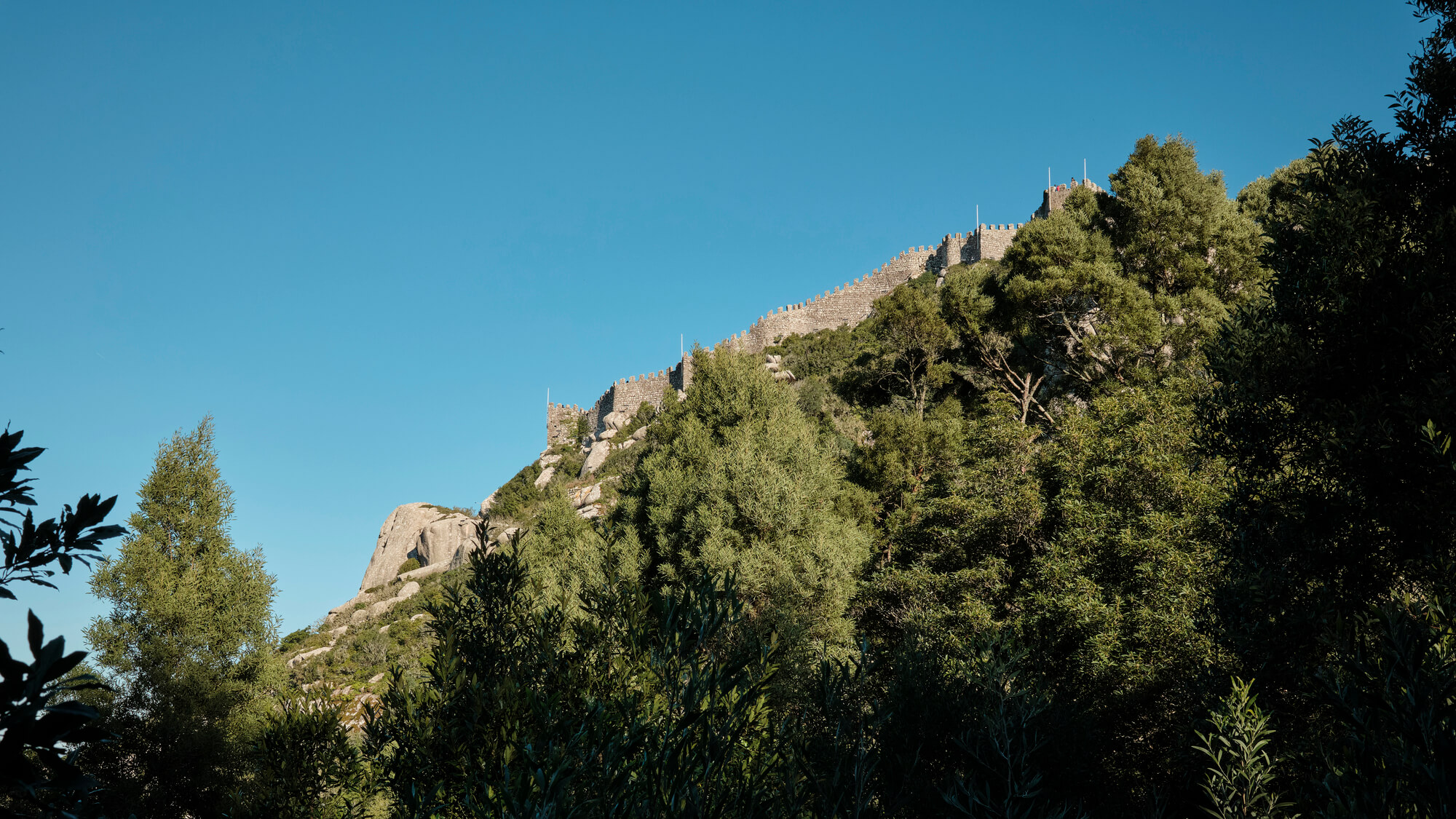
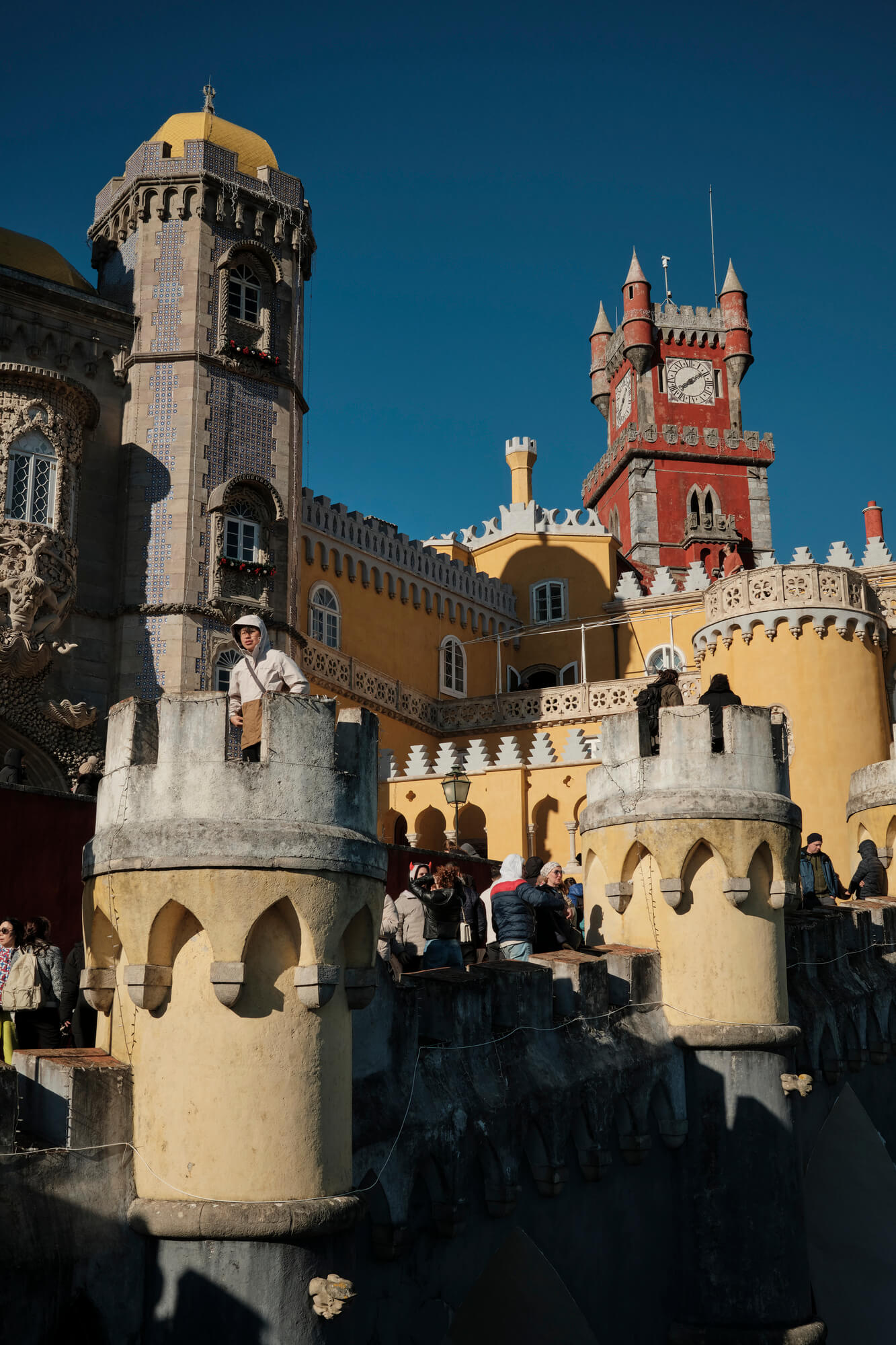
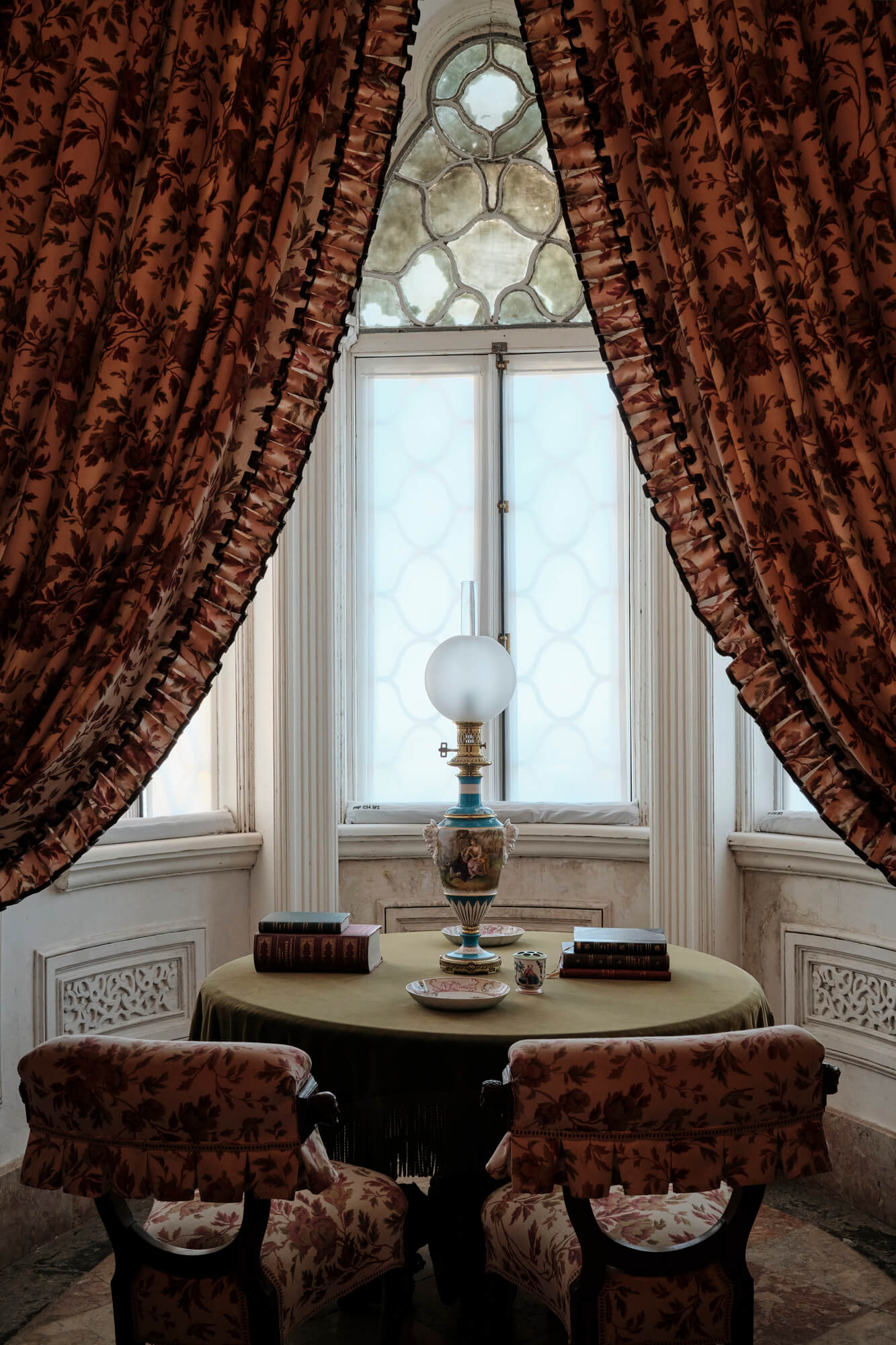
There are also a few destinations you could reach via suburban trains, like Sintra. Though in my opinion it’s just an overrated tourist trap for people who’ve only seen medieval Europe in Disney movies and wish to cement that picture in their head.
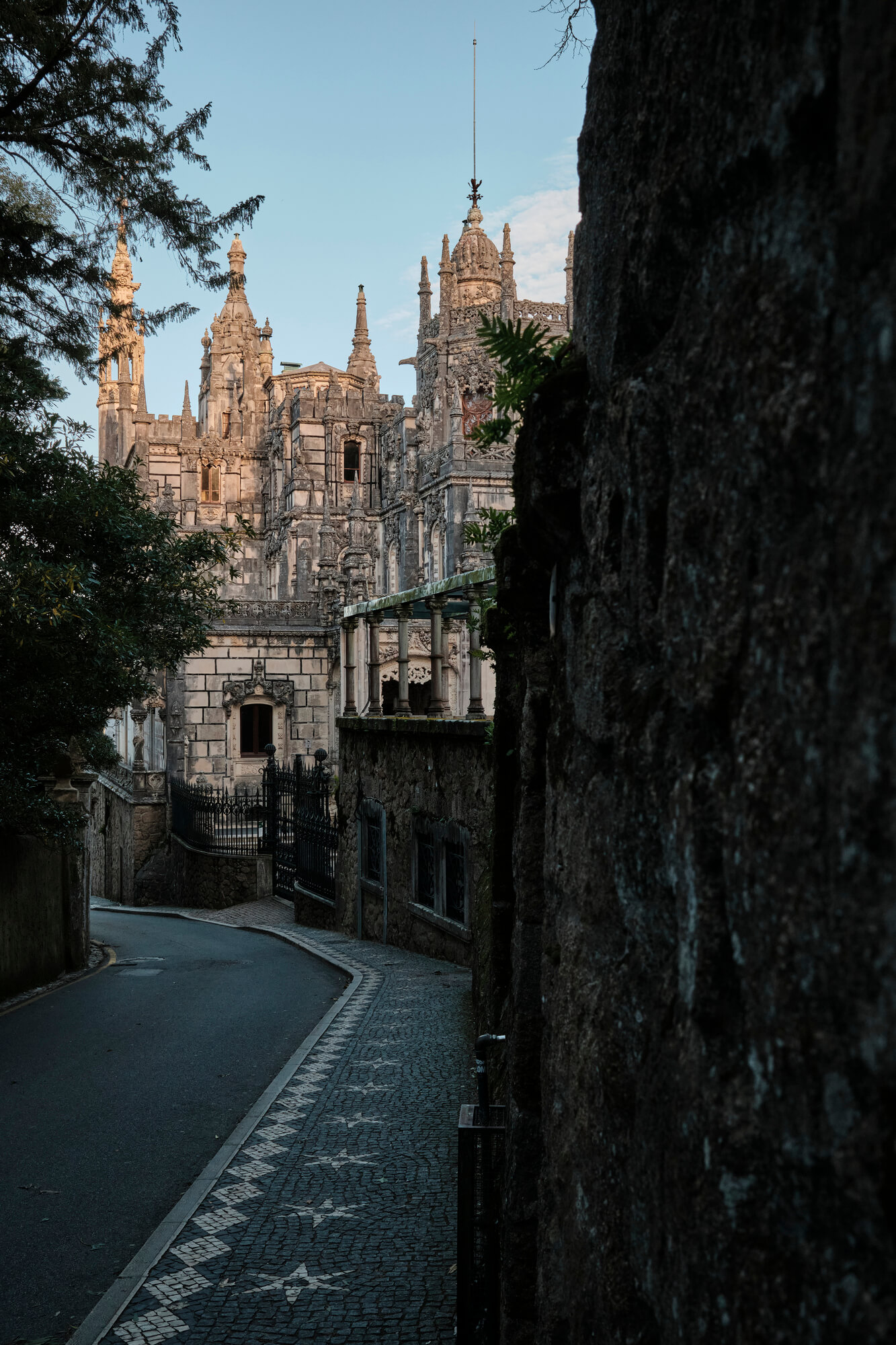
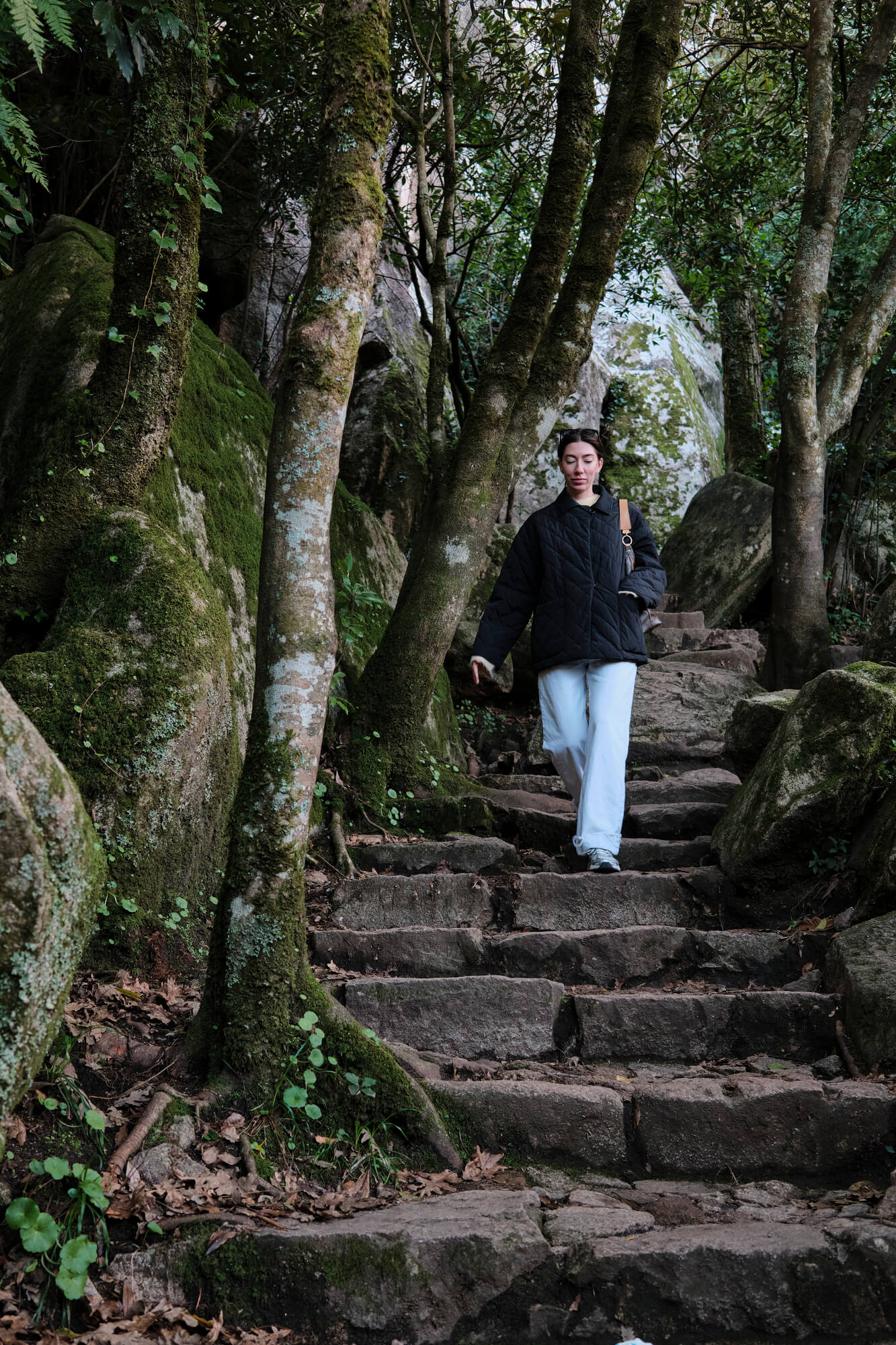
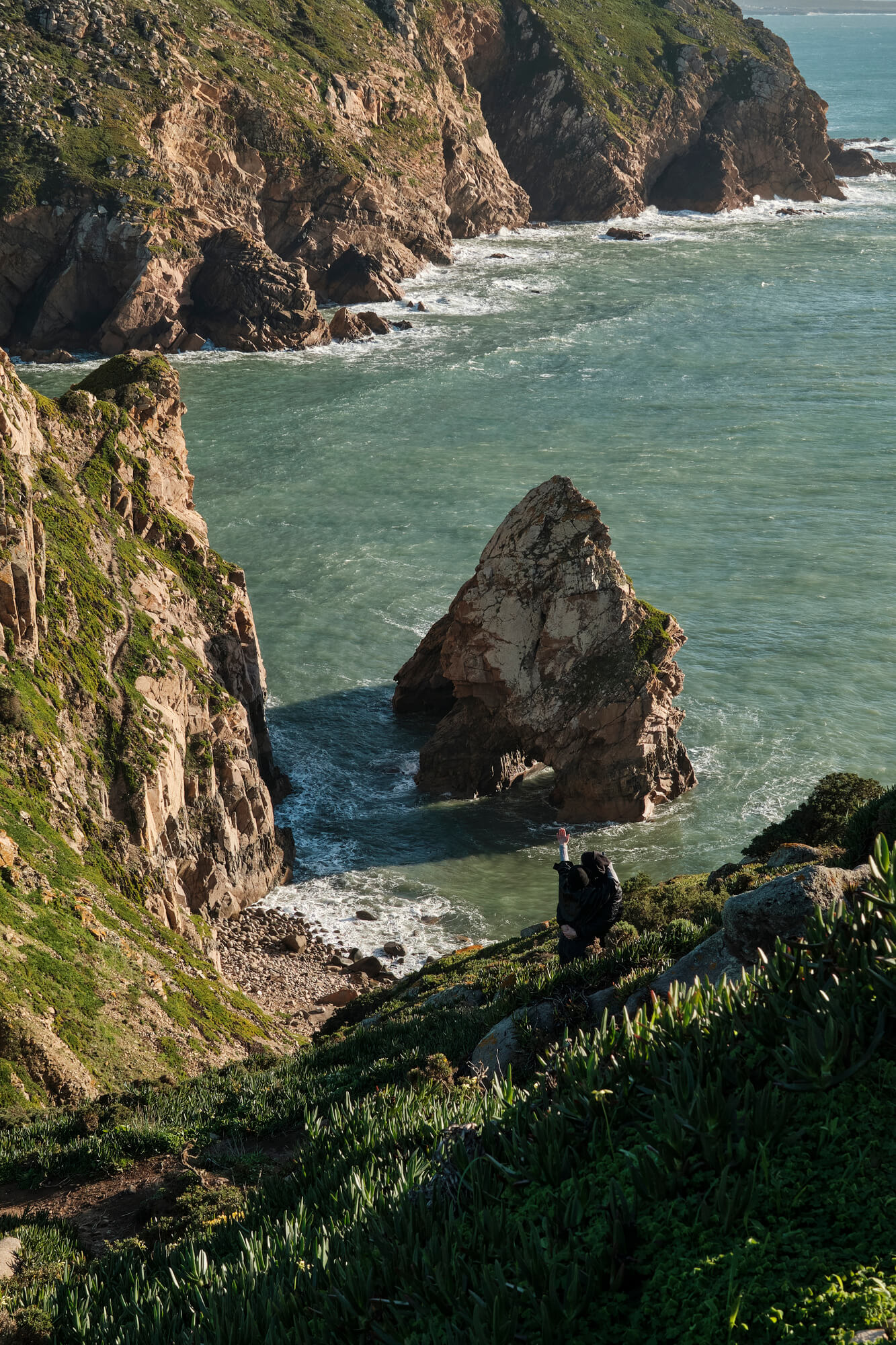
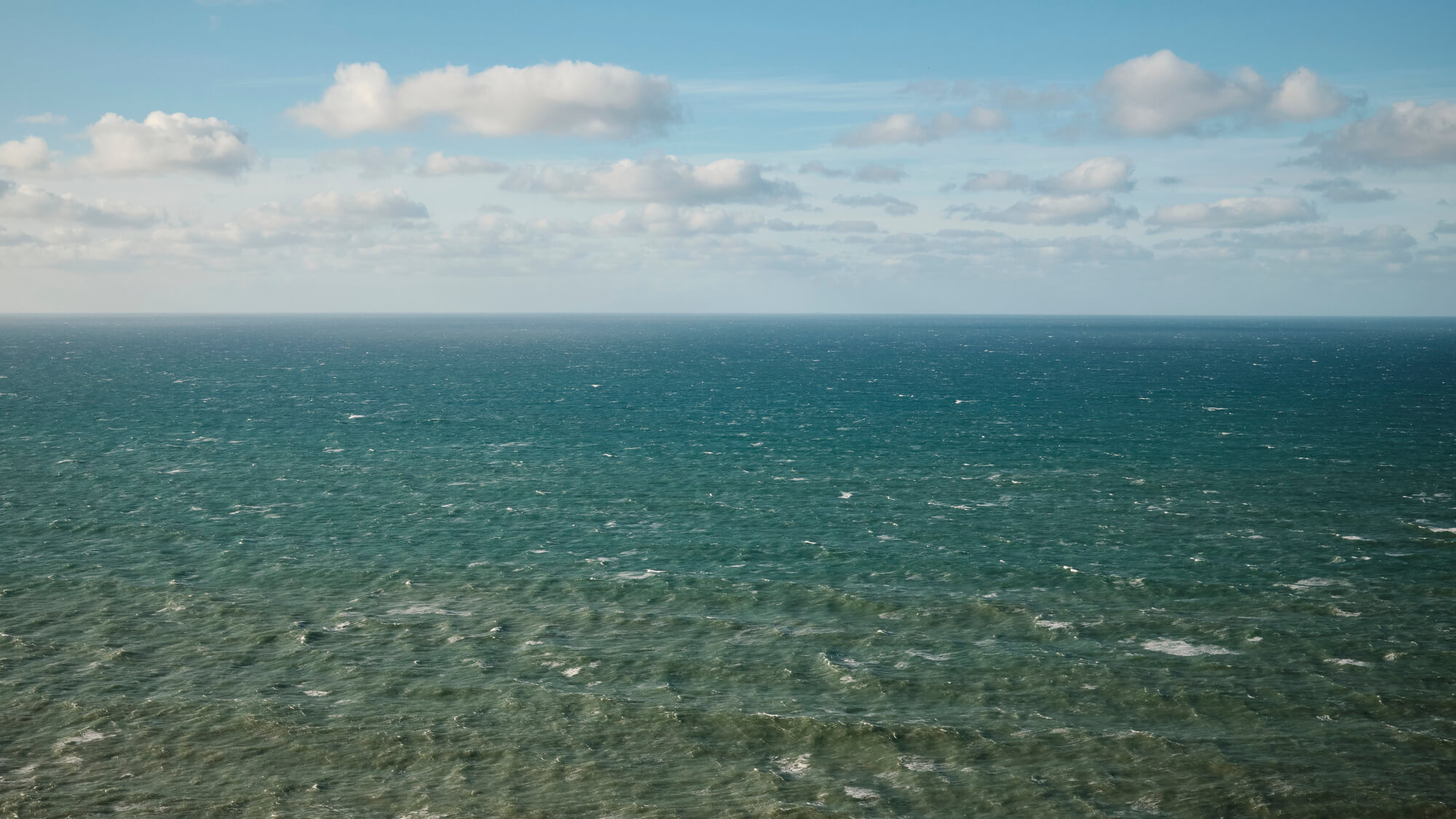
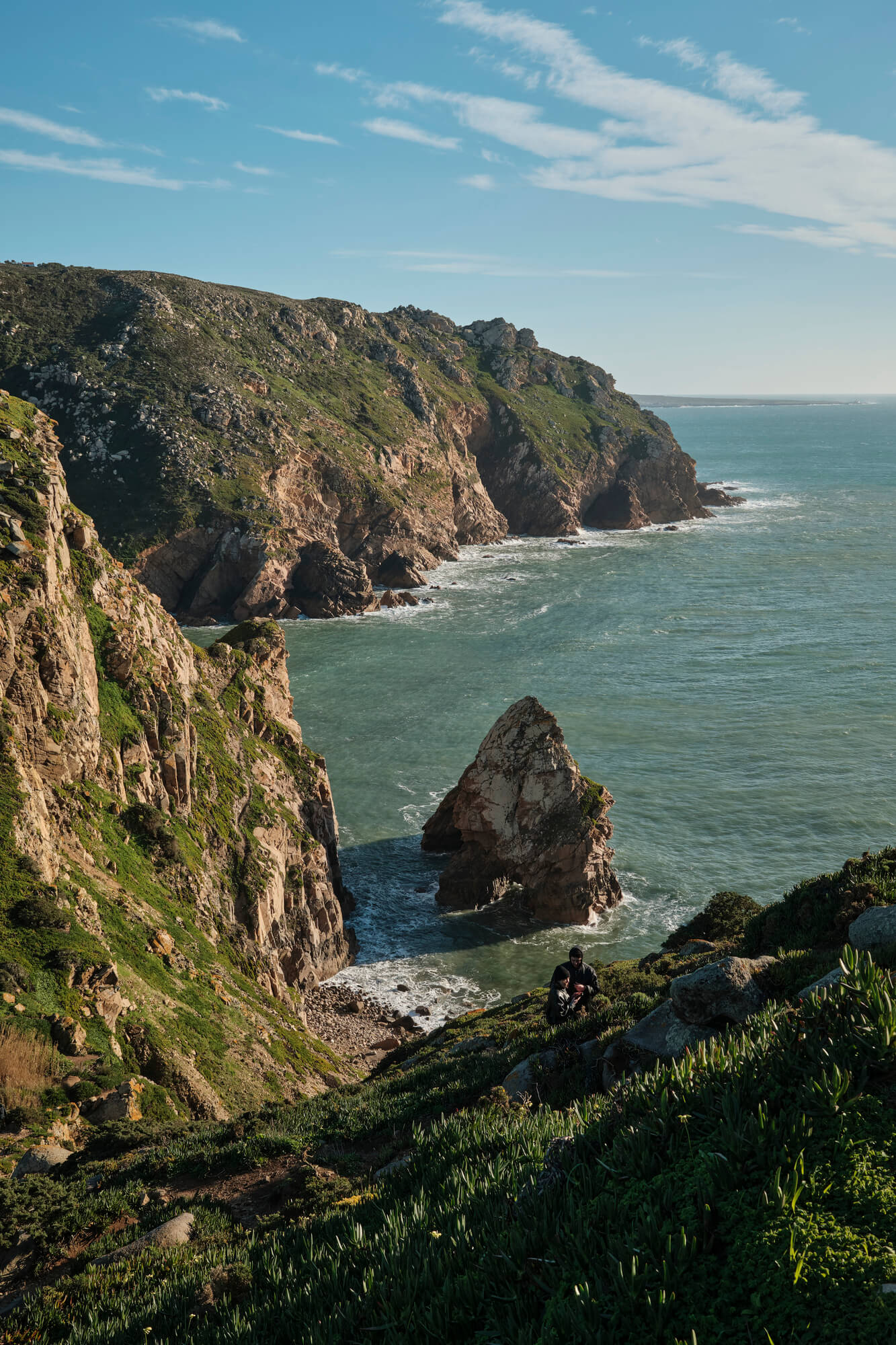
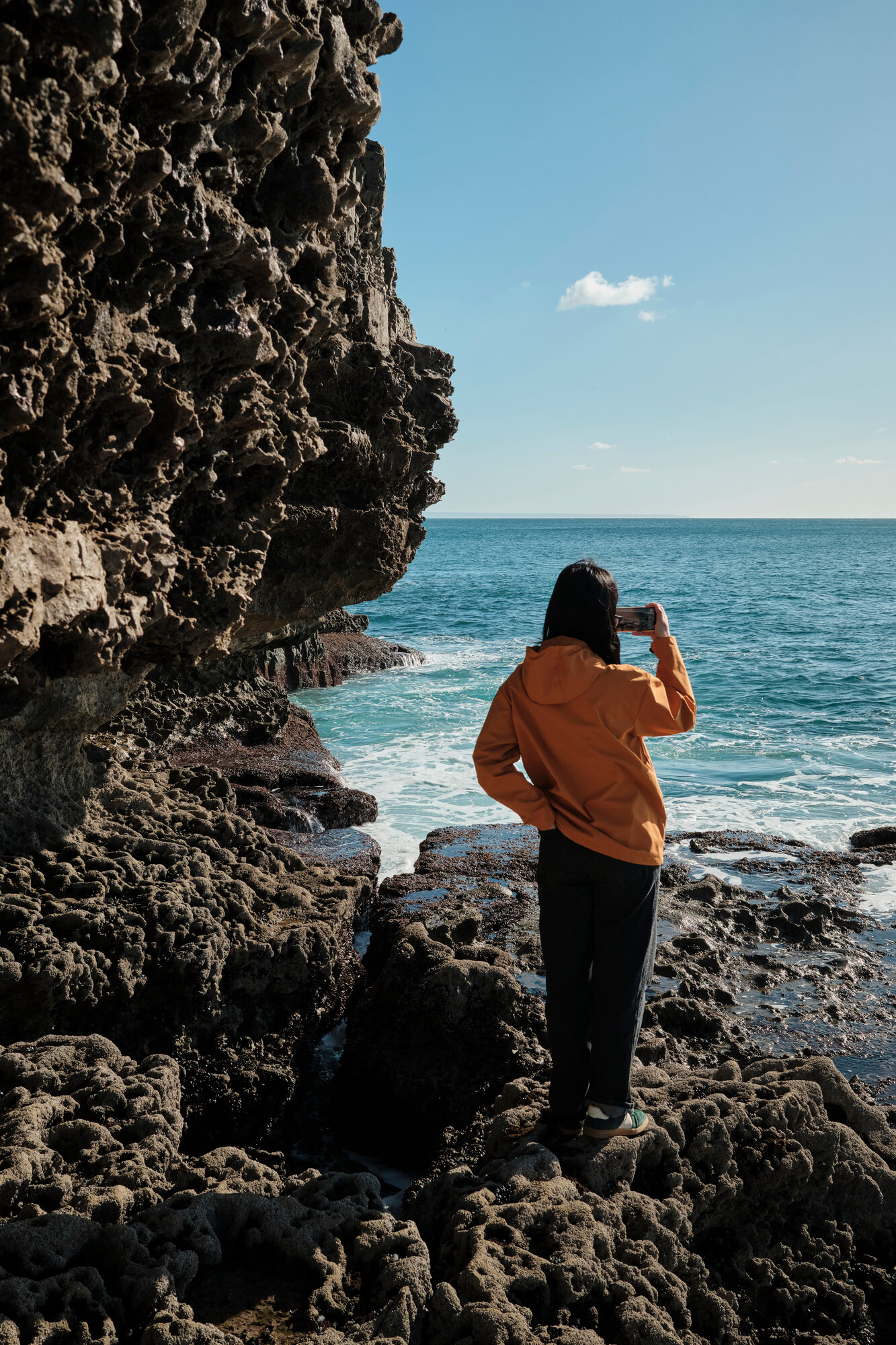
If you want something really worth your time, take a bus to Cabo da Roca — the westernmost part of the continent, bravely facing the Atlantic, standing tall against the ocean waves. It is still just rocks and water, but makes you feel kinda small.
Some other walking destinations within the city I could cautiously recommend are: Miradouro da Graça viewpoint, Time Out Market near Cais do Sodré, LX Factory artsy hipster space, Jardim da Estrela and Eduardo VII parks, and Aqueduto das Águas Livres.
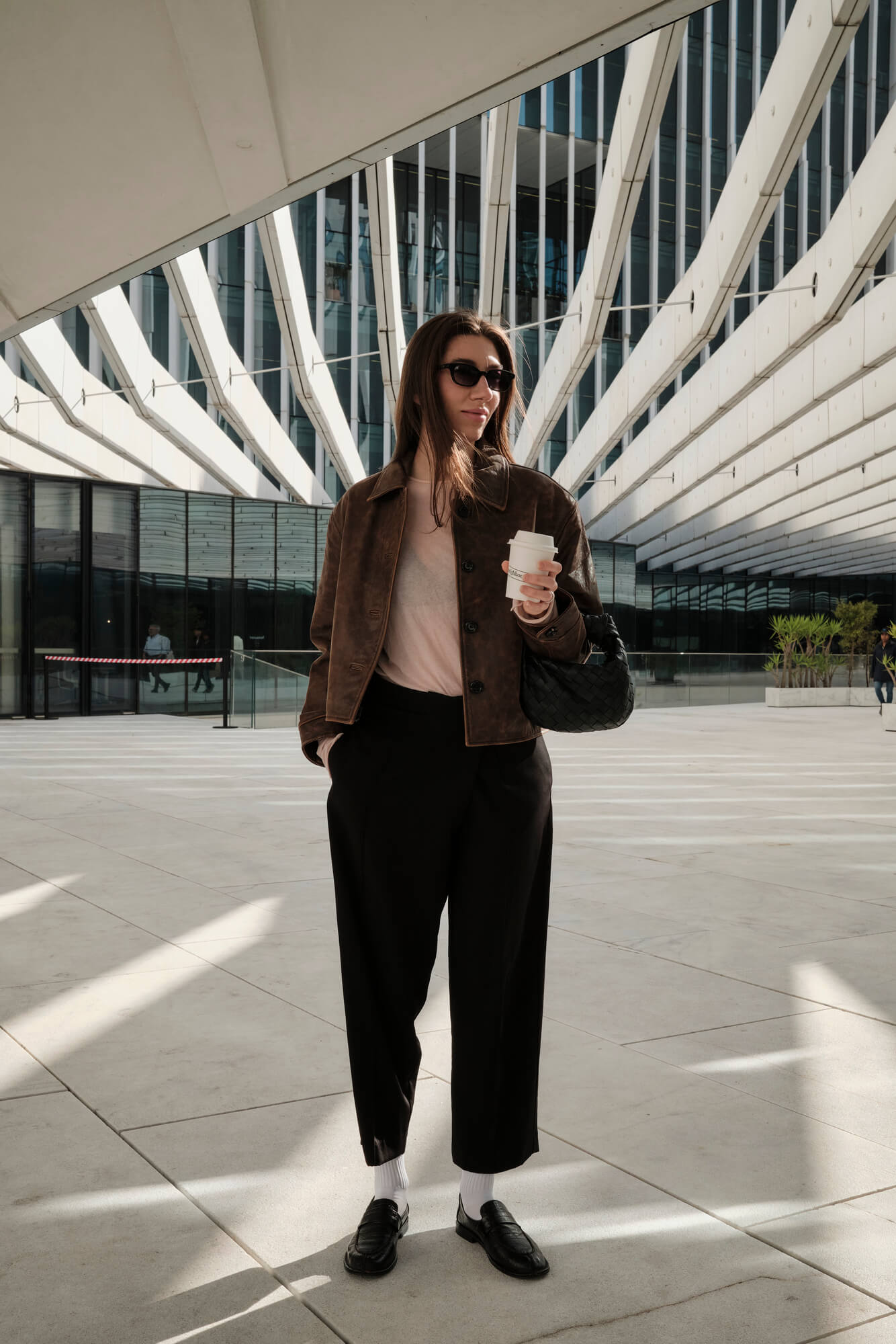
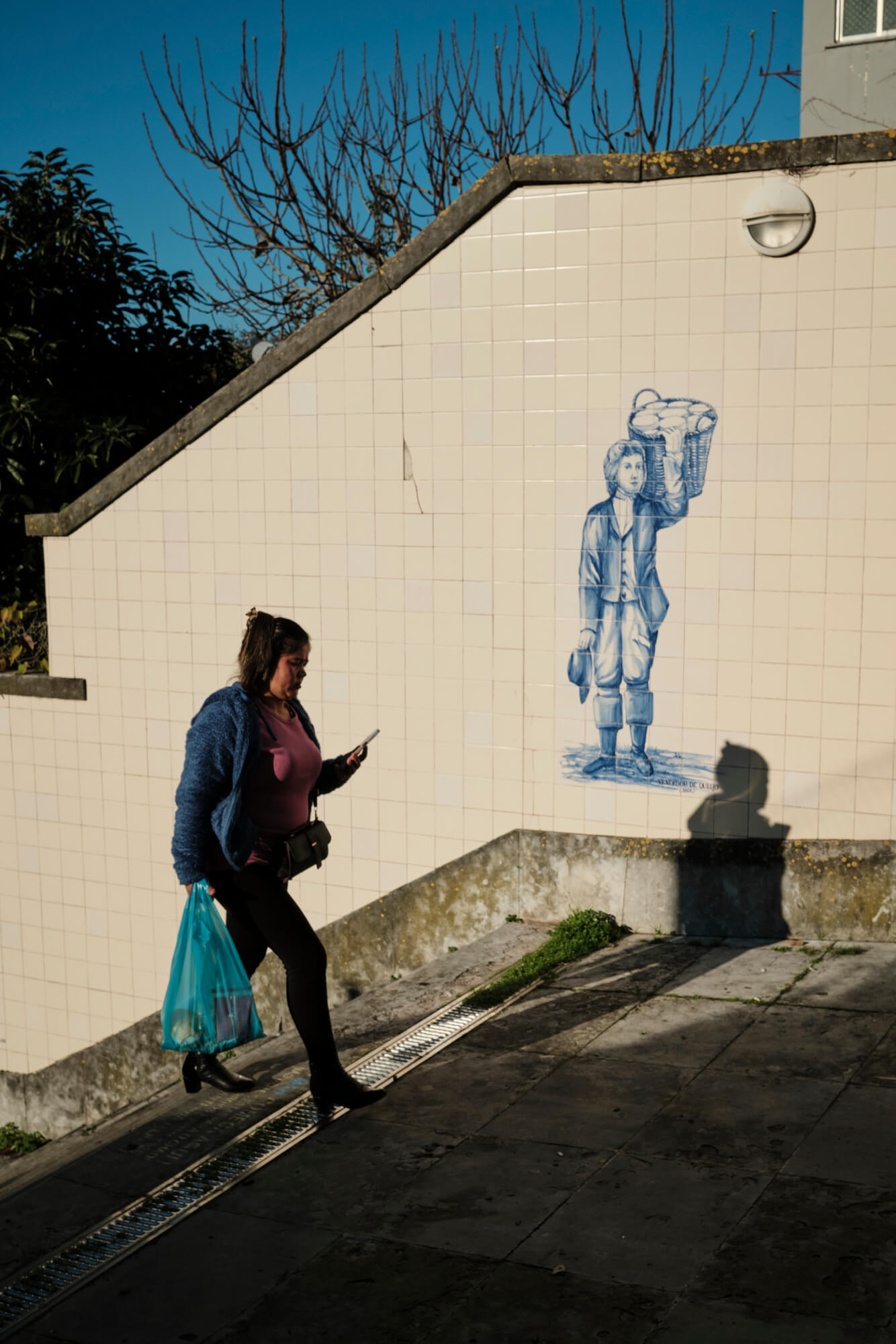
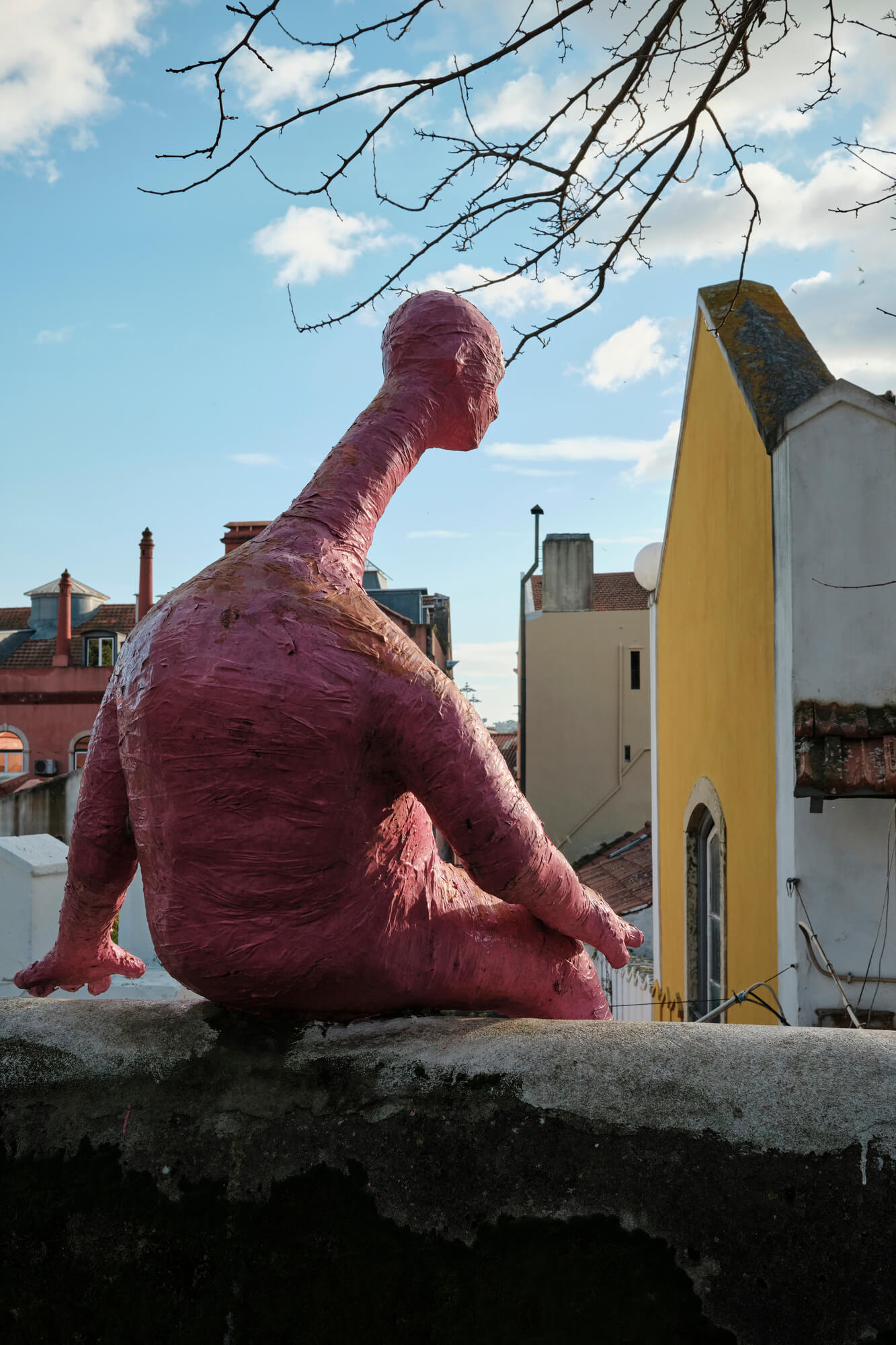
All in all, after 10 days in Lisbon, I see why so many people love it. What I can’t wrap my head around is why nobody ever hates it. I don’t mean to despise it, but how come nobody ever mentions the ugly sides? Is it some kind of retinal sunburn?
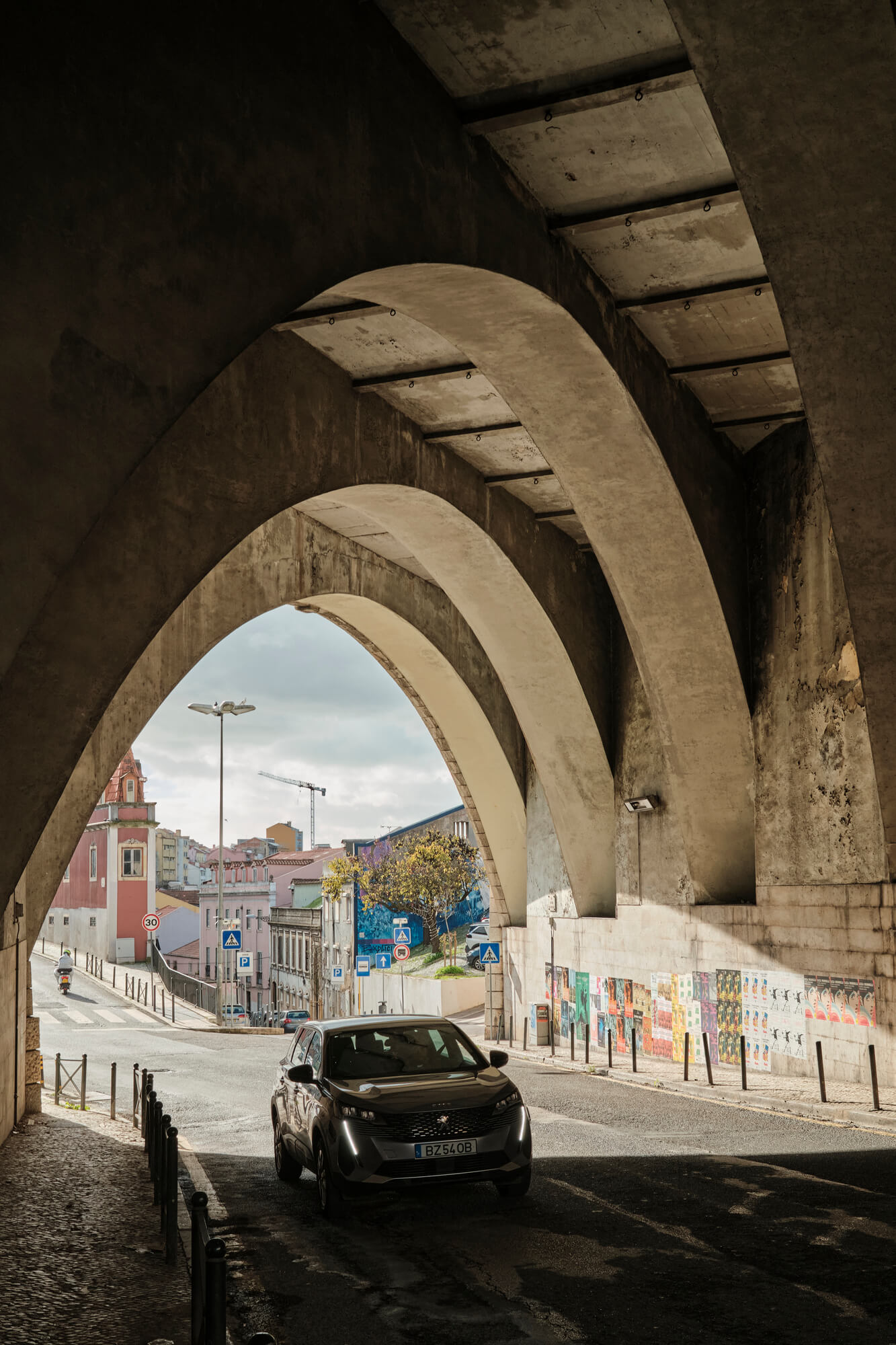
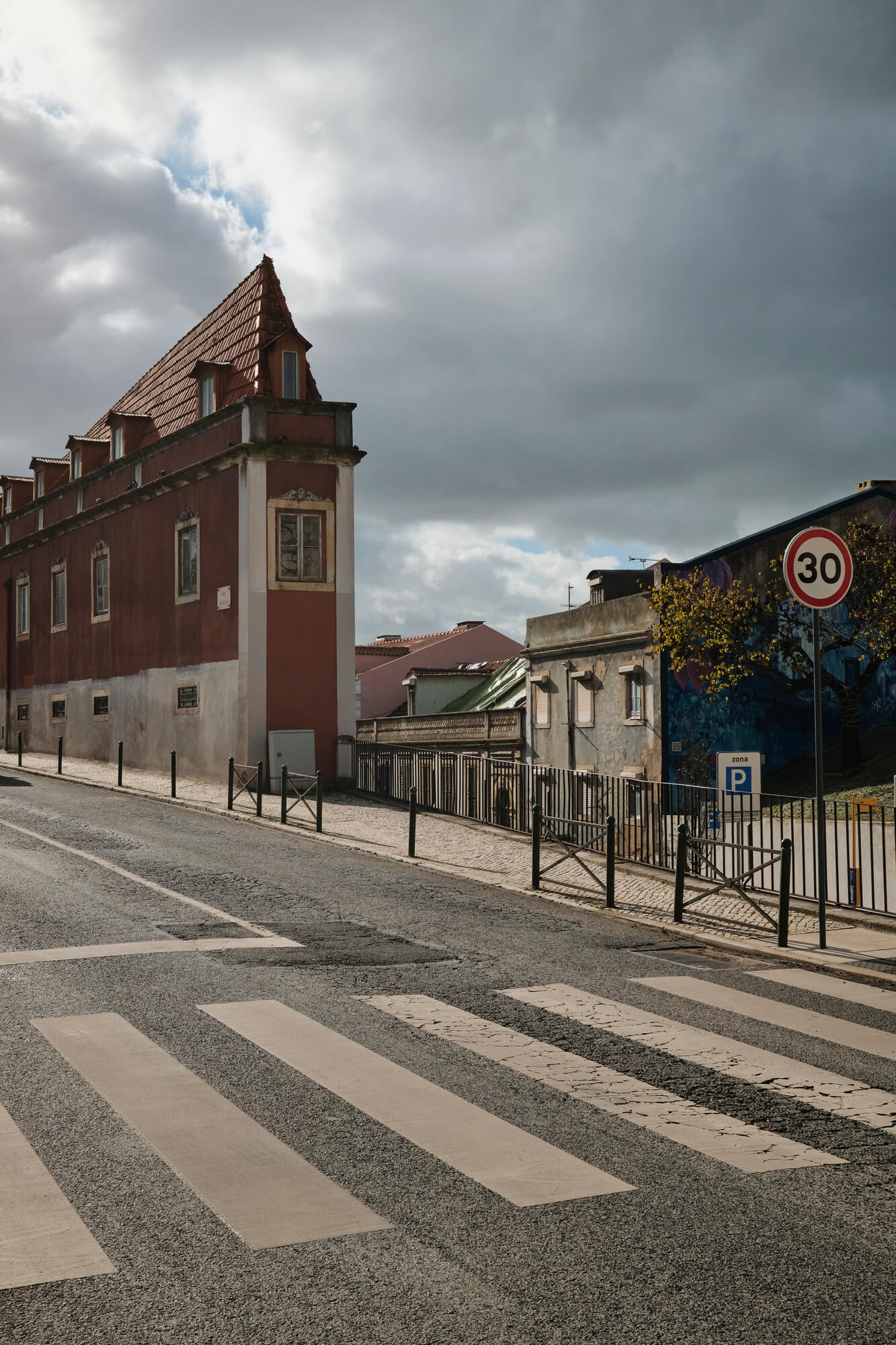
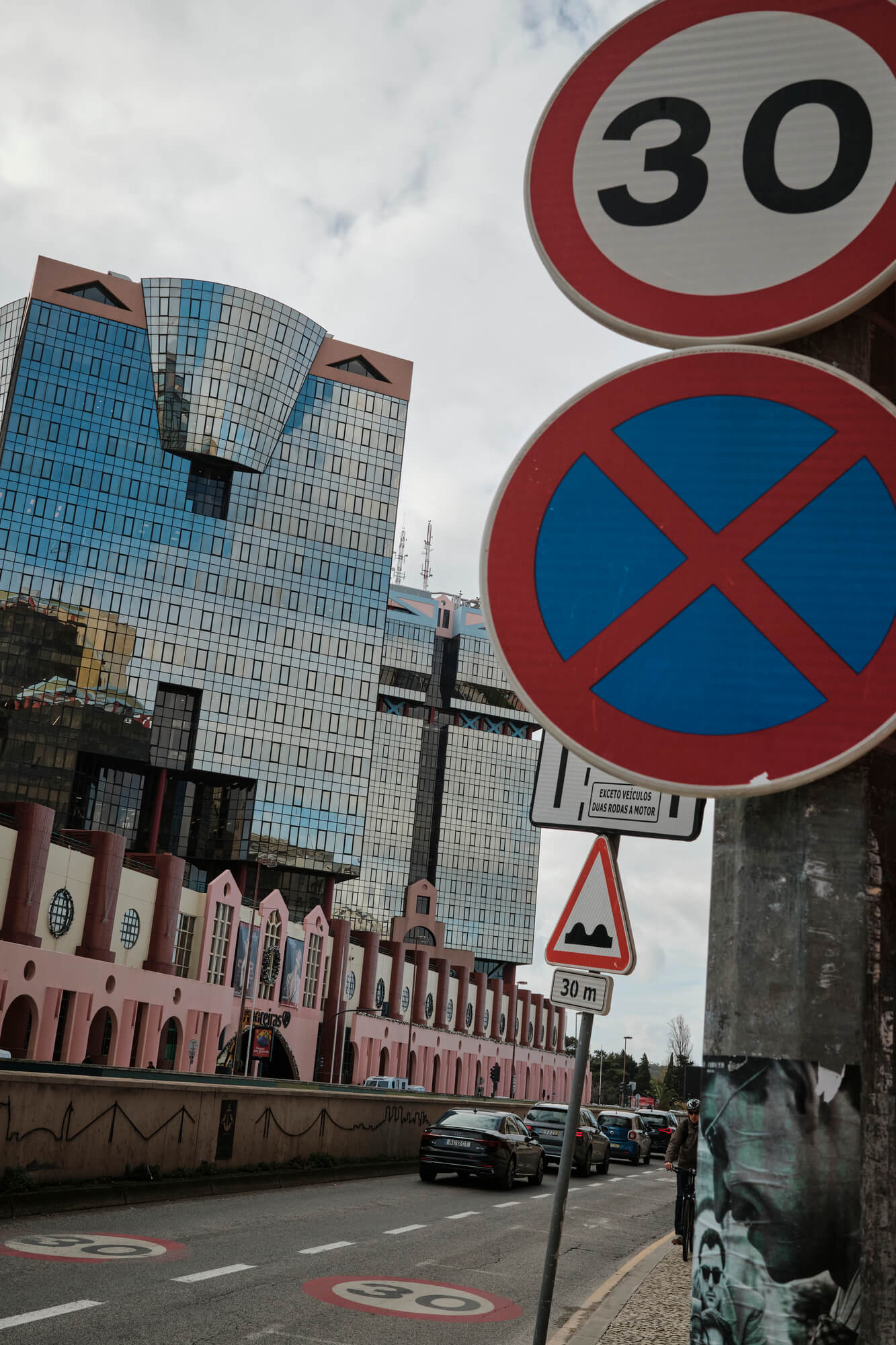
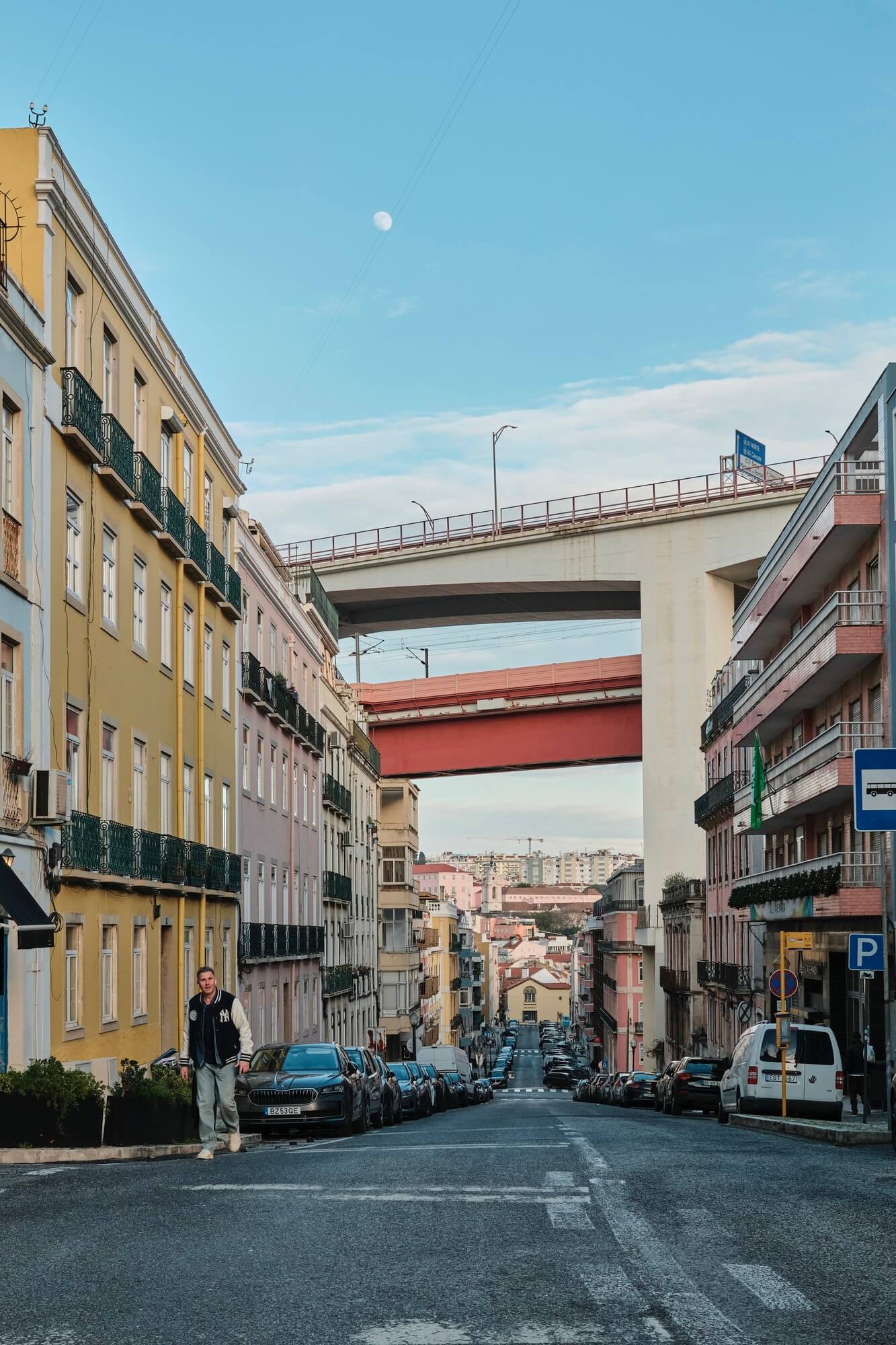
If I wanted to experience Portugal again, I’d probably rather revisit Porto. It may be less fun, but also less fuss than Lisbon. And to be perfectly honest, neither would be my go-to for a winter getaway in Europe unless everything else is sold out.